Meghadūta
The Cloud Messenger
An exiled lover. A passing monsoon cloud. A message that crosses half a continent.
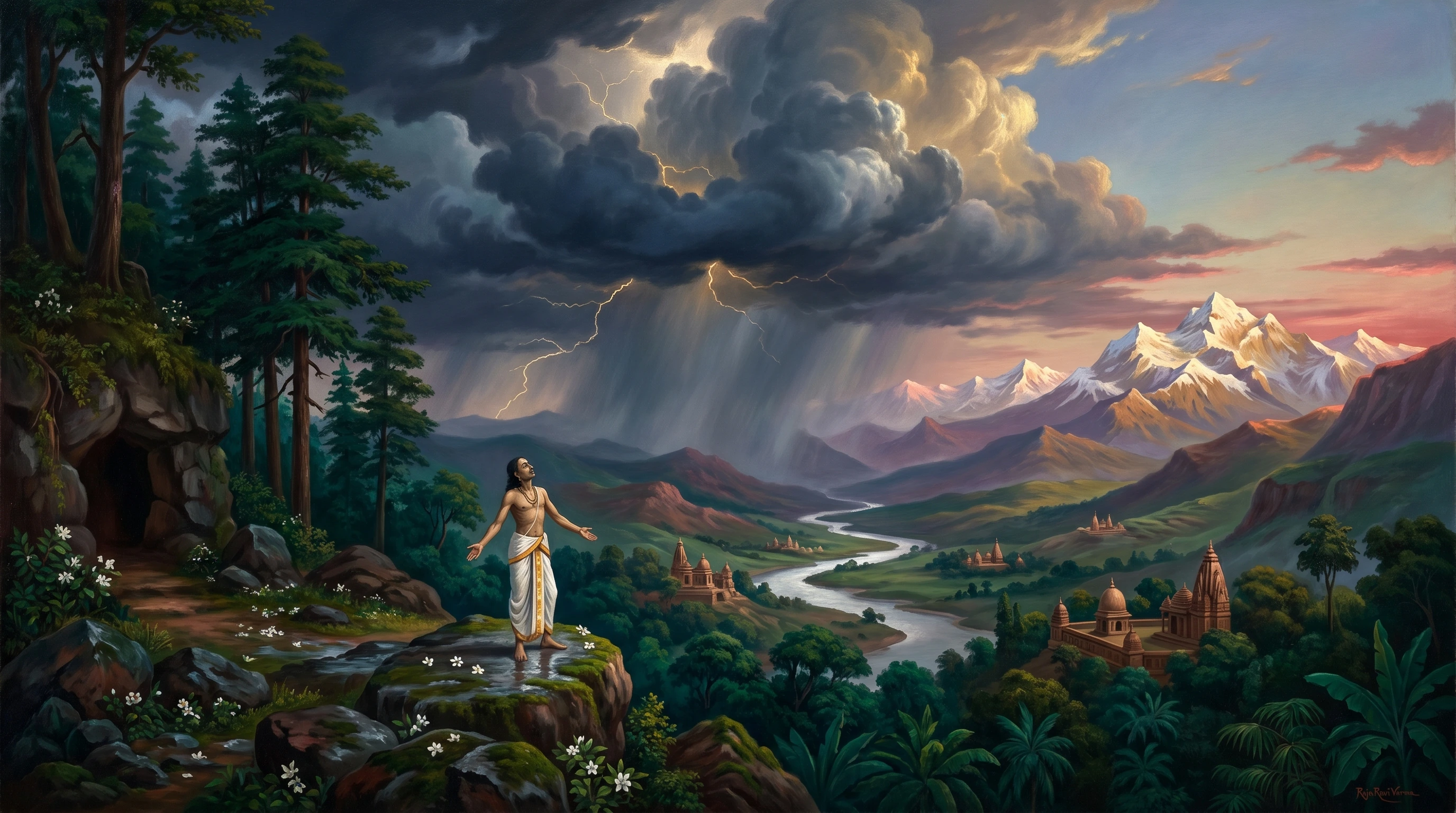
Kalidasa's lyric masterpiece. A yaksha — banished from his Himalayan home for a year — begs a rising monsoon cloud to carry word to his lonely wife in the celestial city of Alaka. 115 stanzas. Pure longing. The poem that taught Sanskrit literature how to ache.
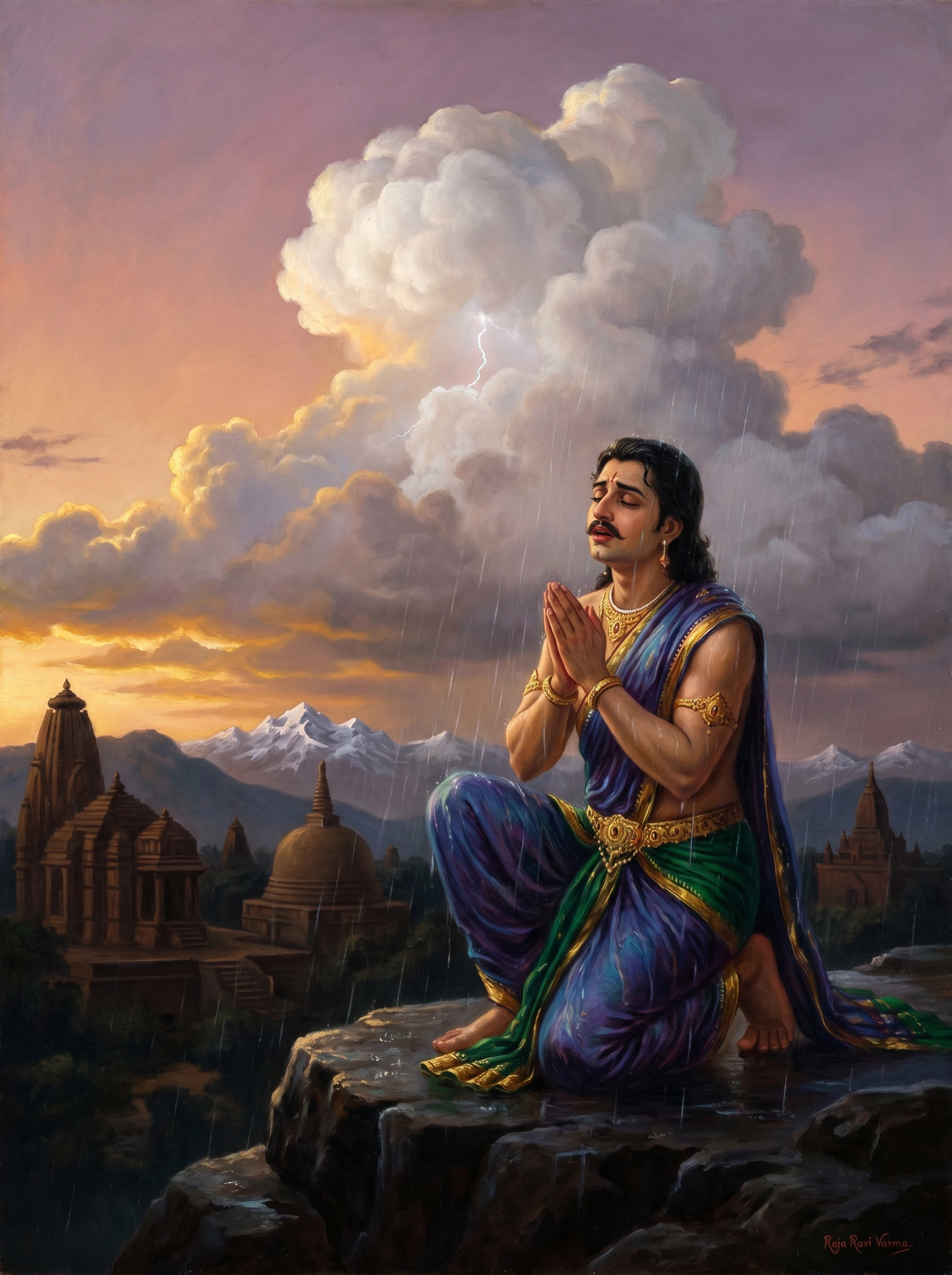
“On Rama's shady peak where hermits roam, mid streams by Sita's bathing sanctified, an erring Yaksha made his hapless home, doomed by his master humbly to abide, and spend a long, long year of absence from his bride.”
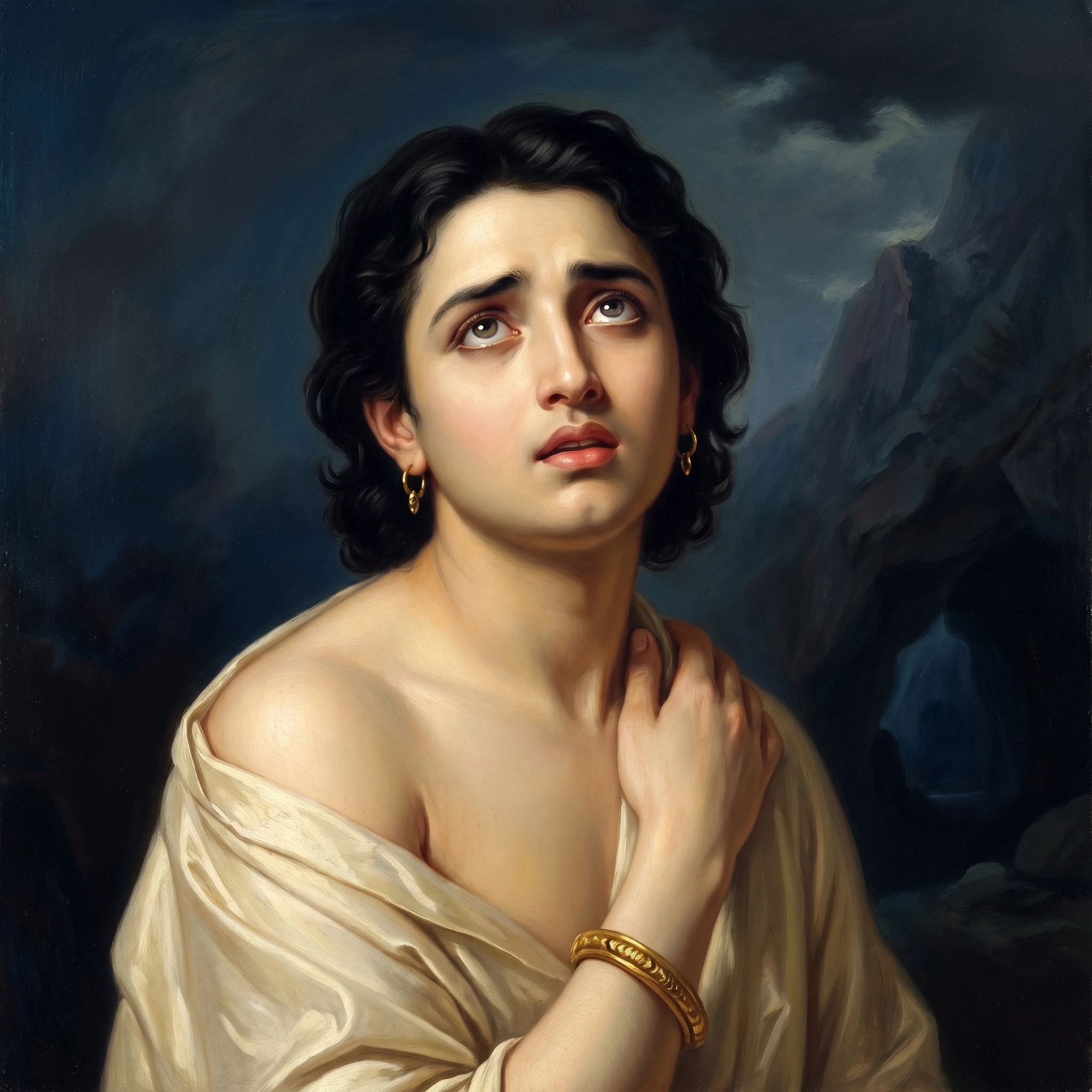
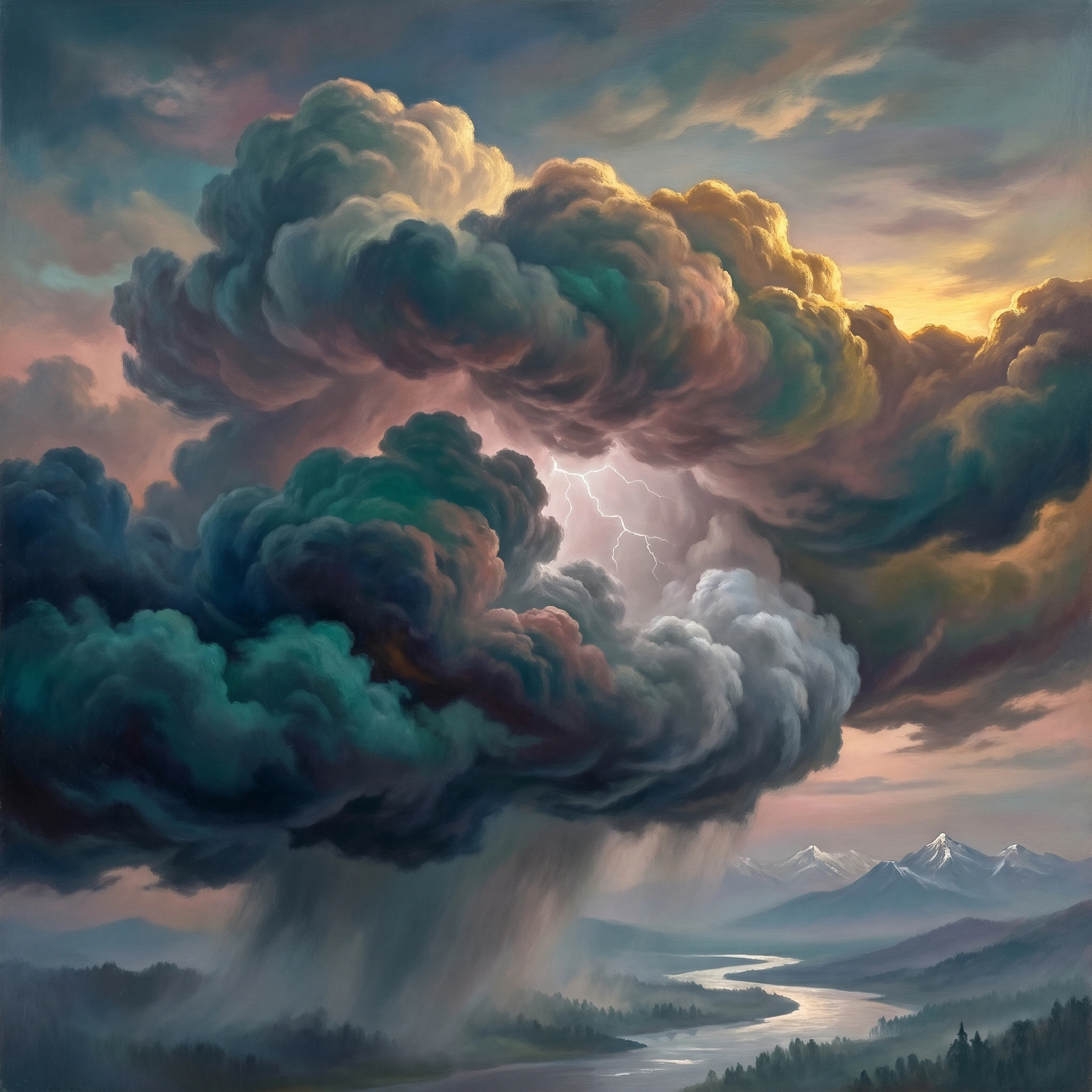
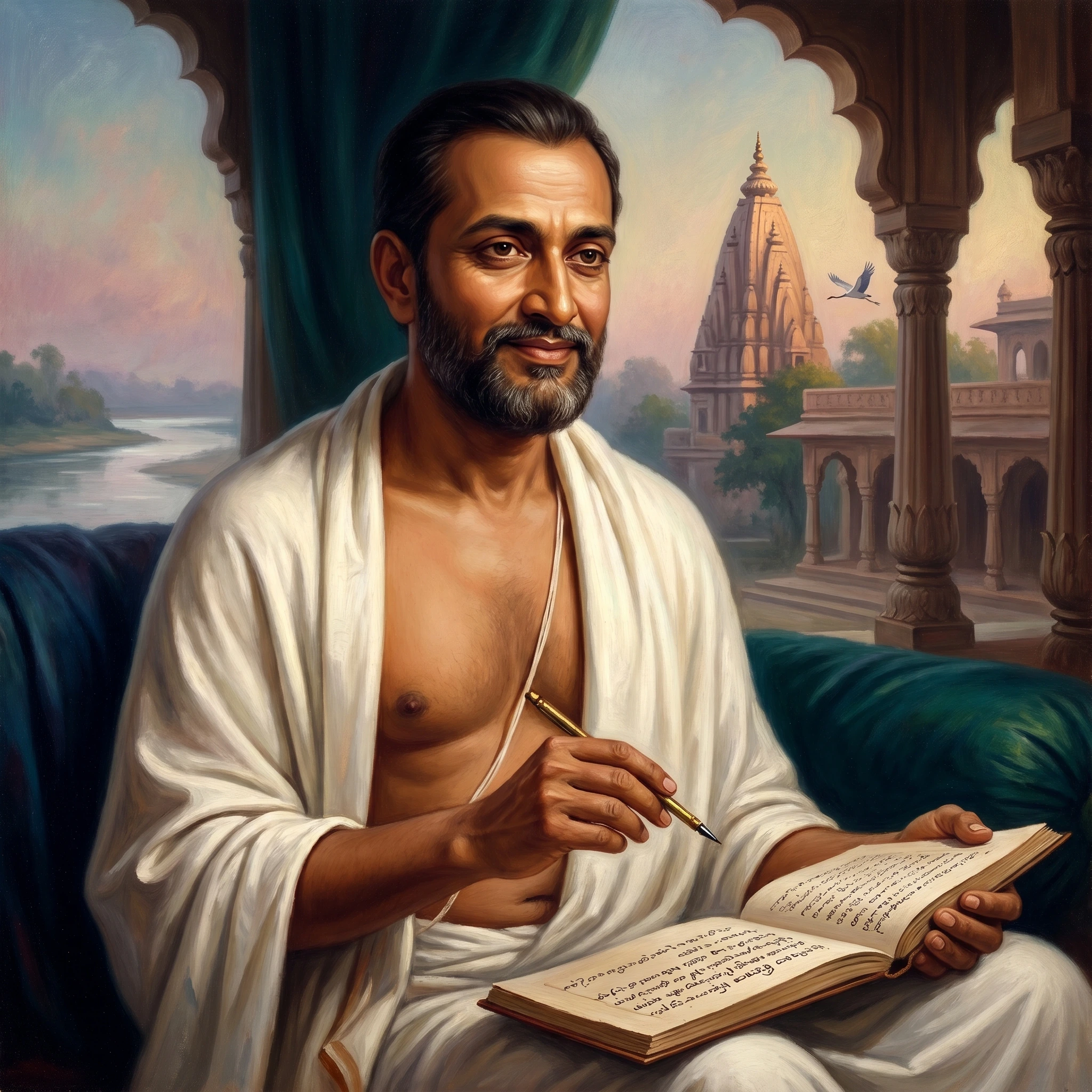
“A cloud, on the first day of Āṣāḍha, hugged the peak — a cloud that bowed like an elephant butting its head against a bank. The thought of his beloved choked his breath.”
Pūrvamegha — The Cloud's Journey North
पूर्वमेघः4 cantos · the route from Ramagiri to Mount Kailasa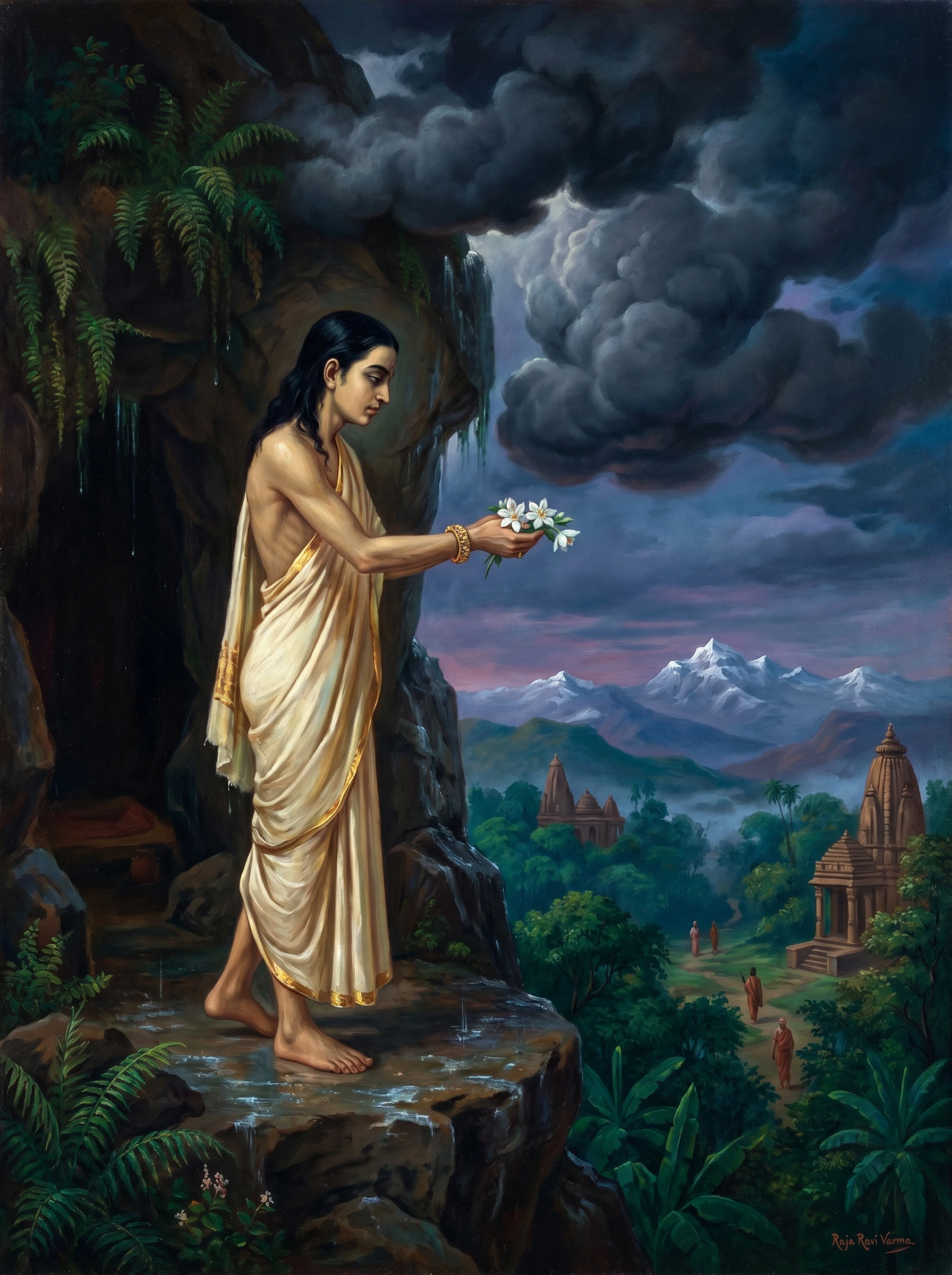
Canto I — Exile at Ramagiri
A banished yaksha, eight months into a year-long exile on Rama's peak in the Vindhyas, sees the first monsoon cloud charge the cliff and begs it — half in grief, half in hope — to carry a message to his distant wife in Alaka.
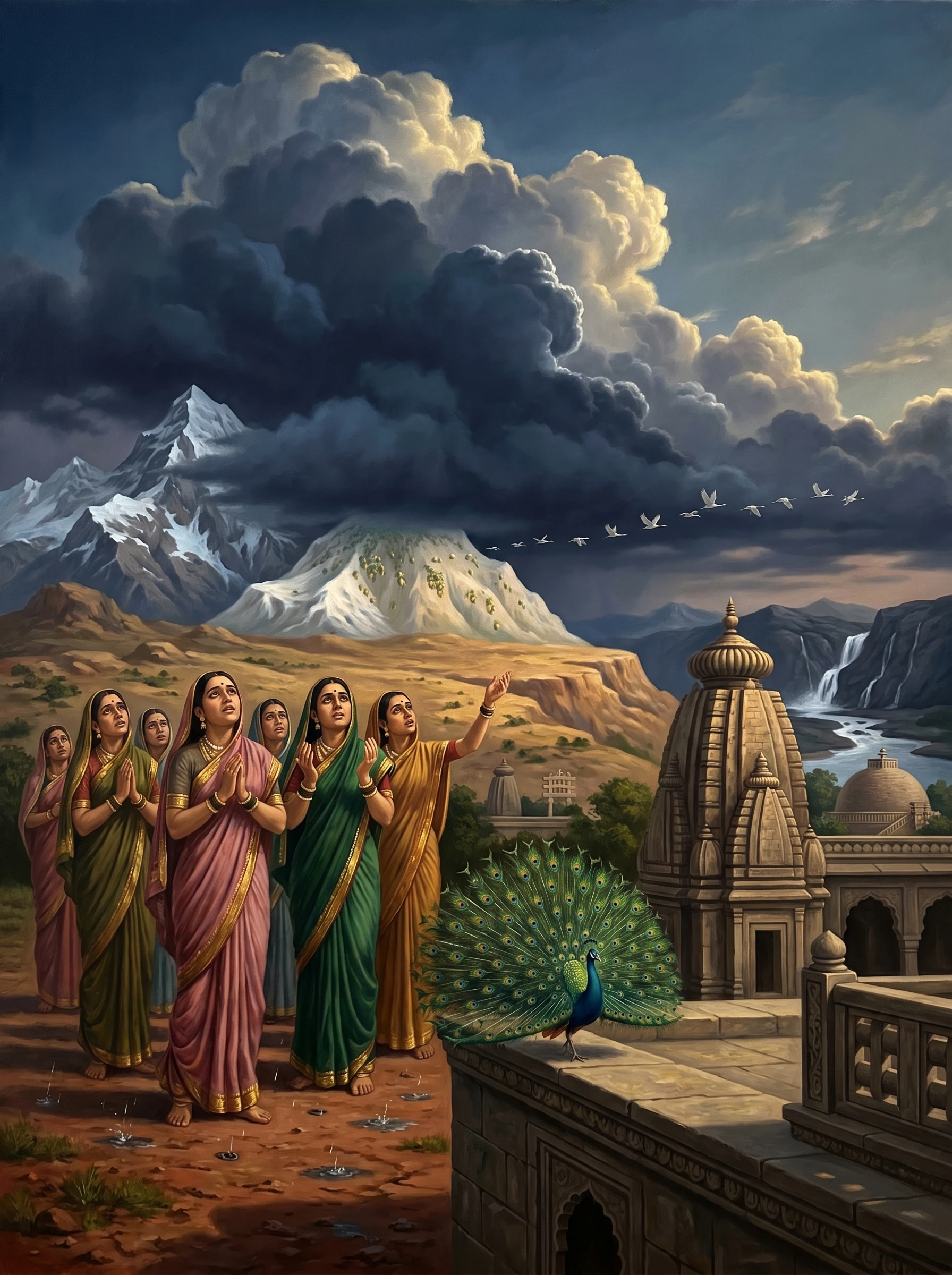
Canto II — The Lifting Cloud
The yaksha turns himself into a guide, sketching the cloud's first stretch of road — past the heavenly elephants of the directions, over the Mala mountains, the mango-ripened slopes, and the dark broad Reva that the cloud must drink from before climbing on.
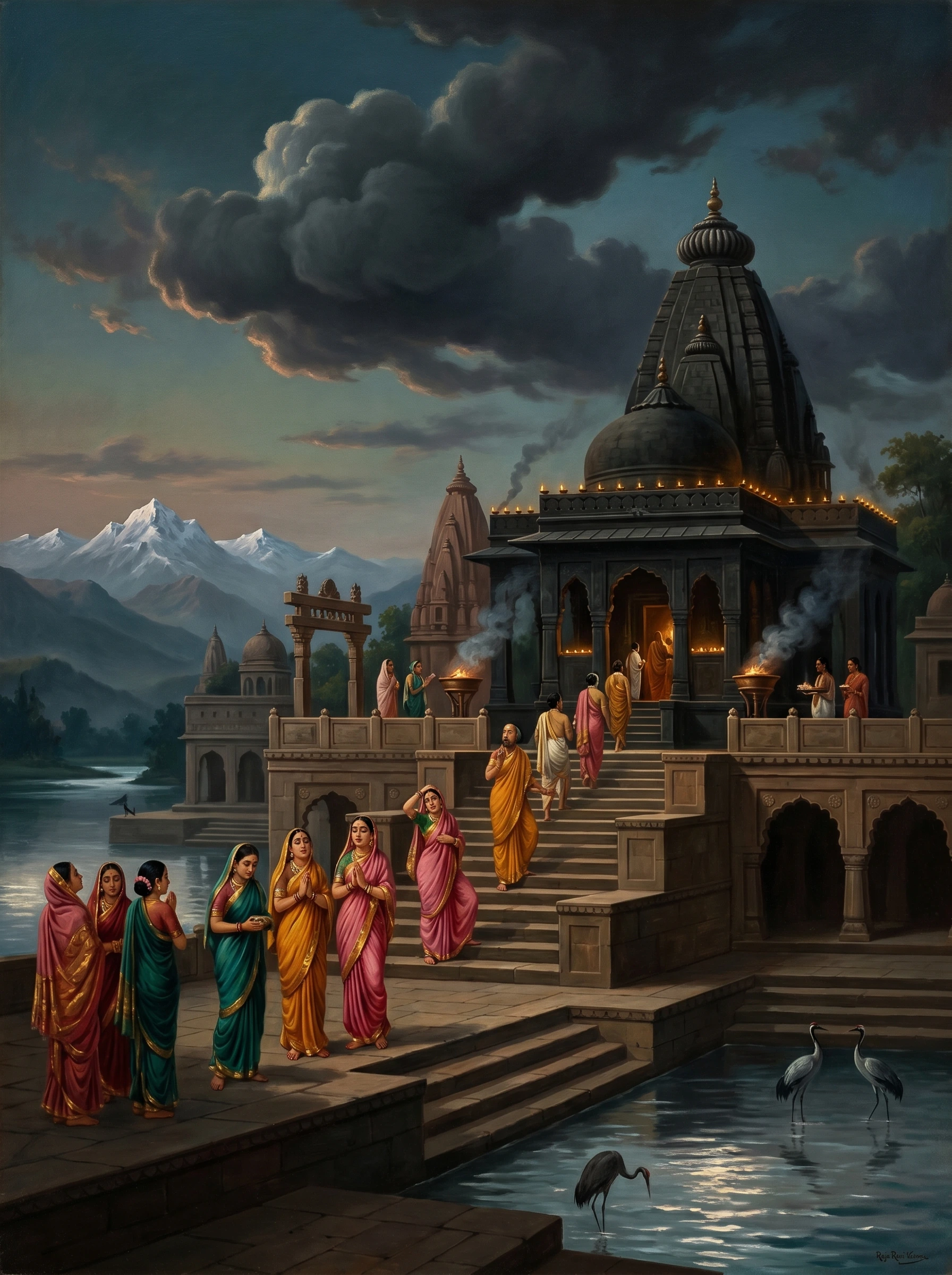
Canto III — The Cities of Avanti
Kalidasa's own beloved country: the Dasarna lands, the river Sindhu thinned by separation, and above all Ujjayini with its evening lamps, painted balconies, and the great Mahakala shrine where the cloud is asked to linger one whole night and serve as Shiva's drum.
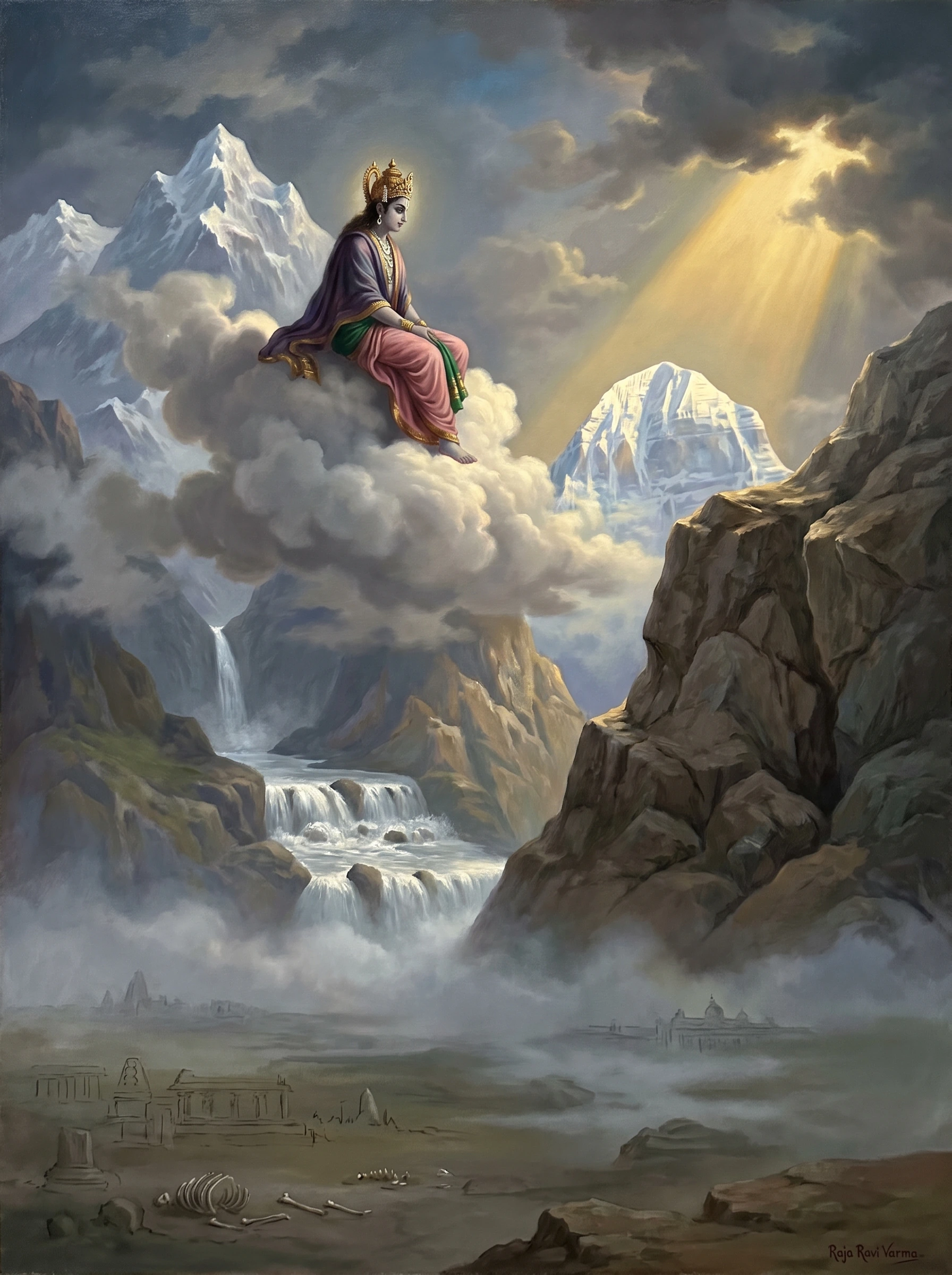
Canto IV — Toward the Sacred Mountains
North of Ujjain the cloud is led past the war-god Skanda's peak Devagiri, the plain of Kurukshetra where the Mahabharata was fought, the field Balarama plowed, and the holy Ganga where she descended through Shiva's matted hair on her way down from heaven.
Uttaramegha — Arrival at Alaka
उत्तरमेघः4 cantos · the city, the home, the wife, the message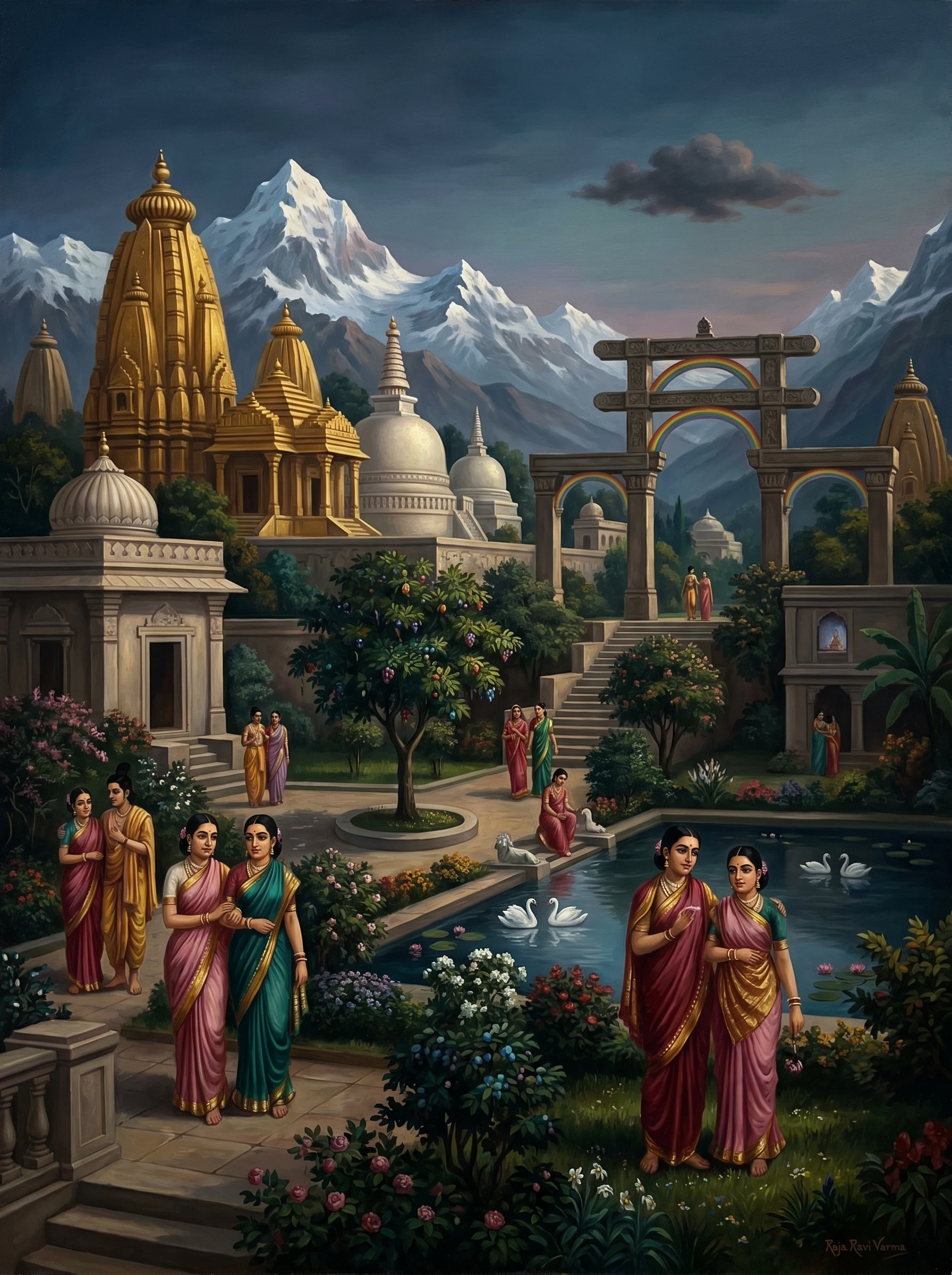
Canto V — The Golden City of Alaka
The cloud climbs the last shoulder of Mount Kailasa and sees, at last, the city of Kubera — domed in gold, hung with wishing-trees and jewelled lamps, peopled by yakshas and their lovers, a city built as if to resemble the cloud himself.
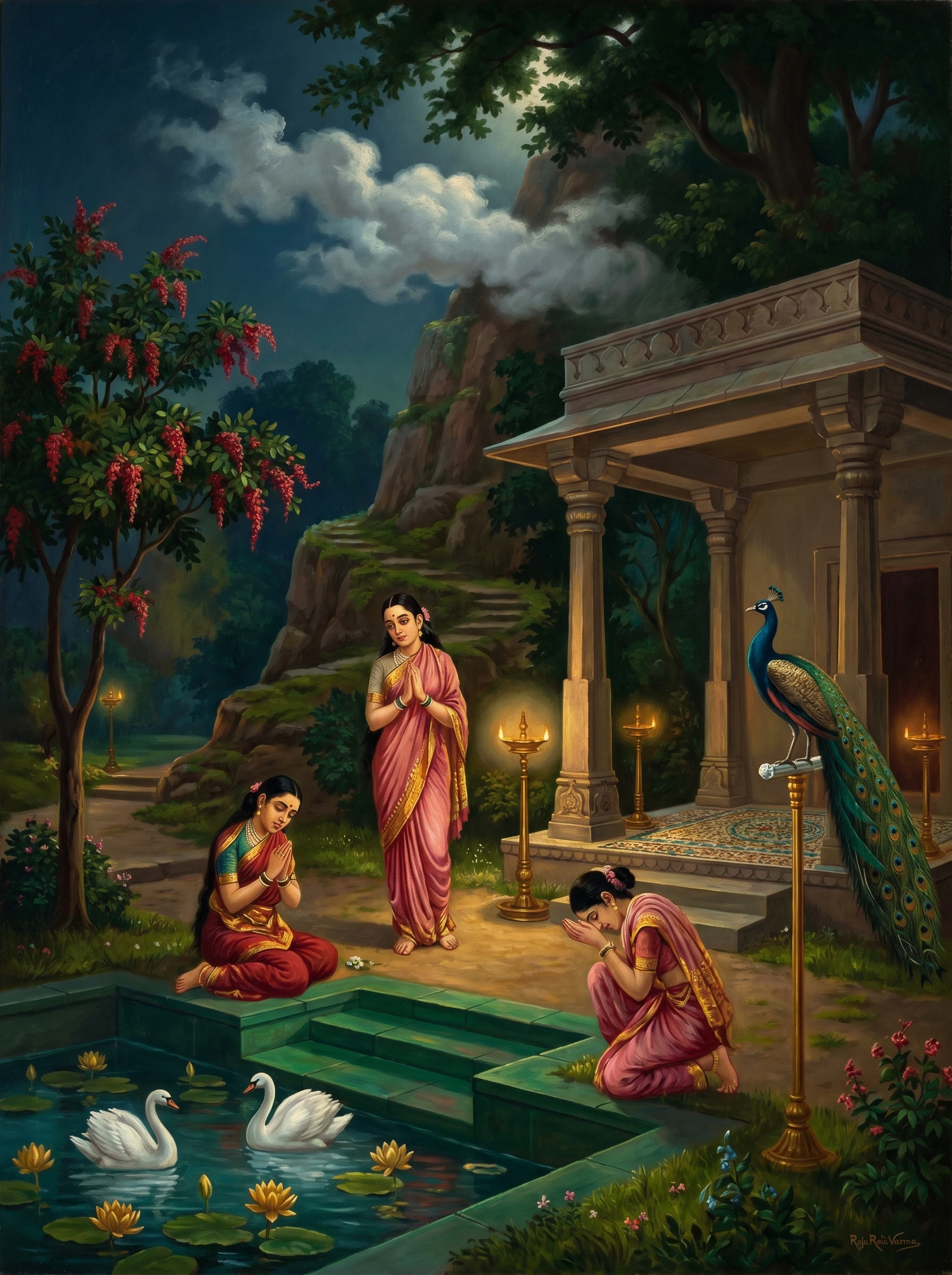
Canto VI — The Yaksha's Home
Among ten thousand identical palaces, one door — marked by a rainbow-gateway, a coral kuruvaka tree, a peacock on a crystal slab, and a miniature mountain built from emeralds — is the only door in the universe that matters: the yaksha's own house, the one he cannot reach.
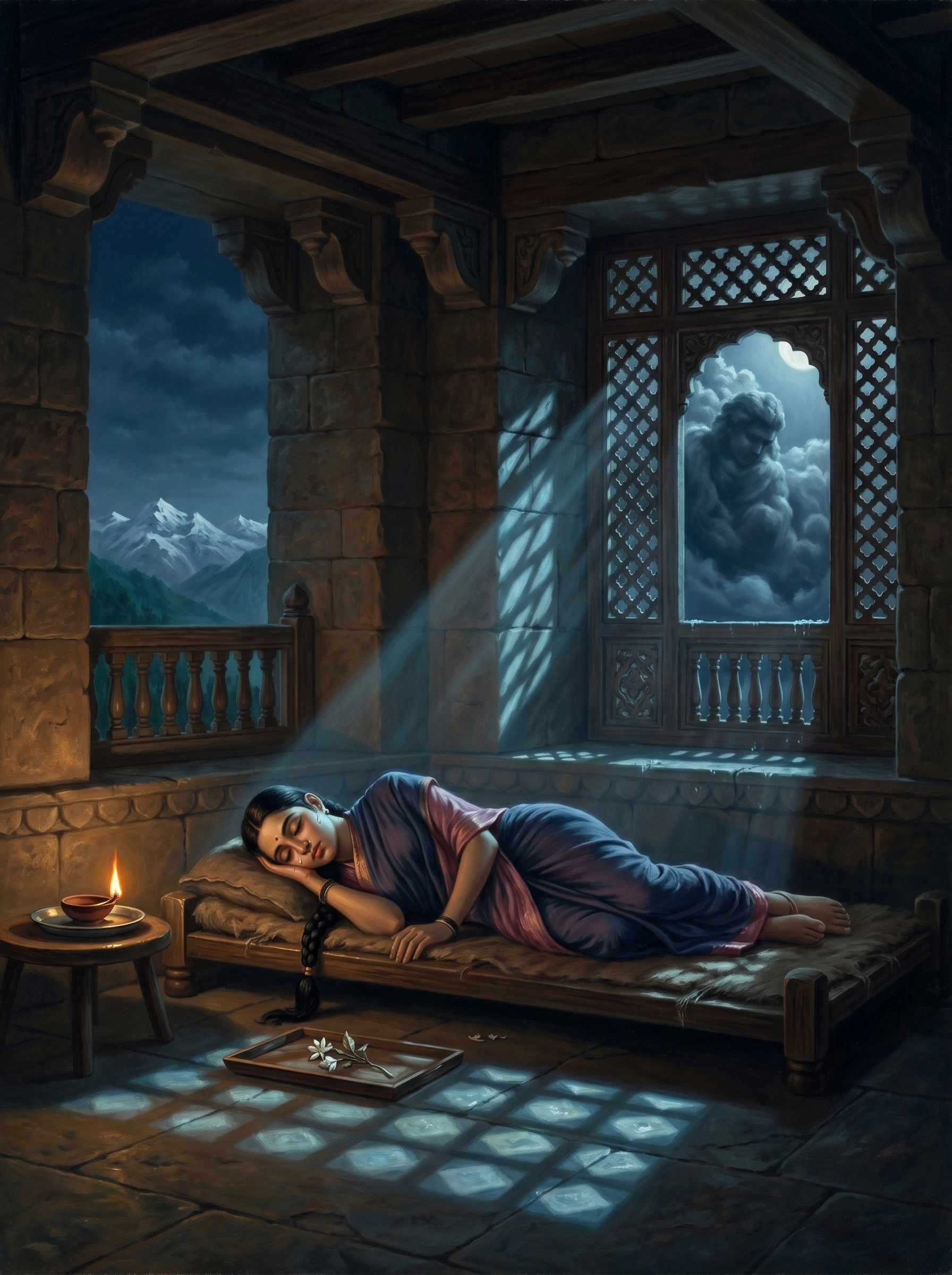
Canto VII — His Sleeping Wife
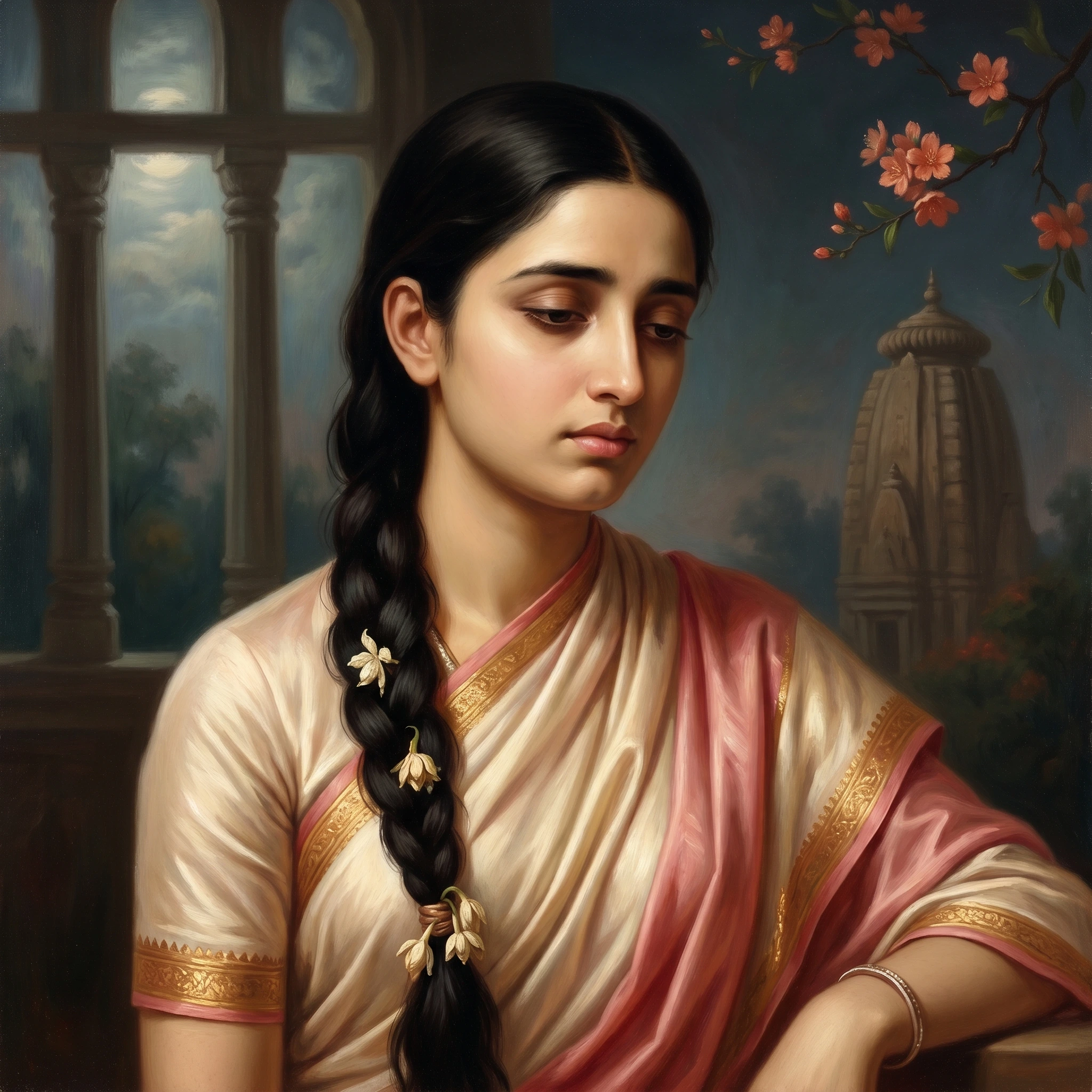
The cloud finds her at the lattice: thinned by waiting, one bracelet rolled loose on a wrist, a dying lamp beside her, jasmine browning in a tray — a woman the yaksha can describe only by what is missing from her, because the whole canto is the act of imagining her into being.
Canto VIII — The Message and Farewell
At last the yaksha speaks the message itself — alive, sleepless, four months remaining, the second-self image as proof — and dismisses the cloud with a benediction that he, too, may never be parted from his lightning-wife for even a moment.
Kalidasa, probably writing in the 4th–5th century CE at the Gupta court of Ujjayini, was hailed as the greatest poet in the Sanskrit language even within a few generations of his death. The English text used here is Arthur W. Ryder's 1912 verse translation, the standard literary rendering for a century.
The Meghadūta founded an entire Sanskrit genre — the sandeśa-kāvya, or messenger-poem — imitated for a thousand years by poets writing in Sanskrit, Tamil, Prakrit, and Tibetan. None of them ever caught the original.