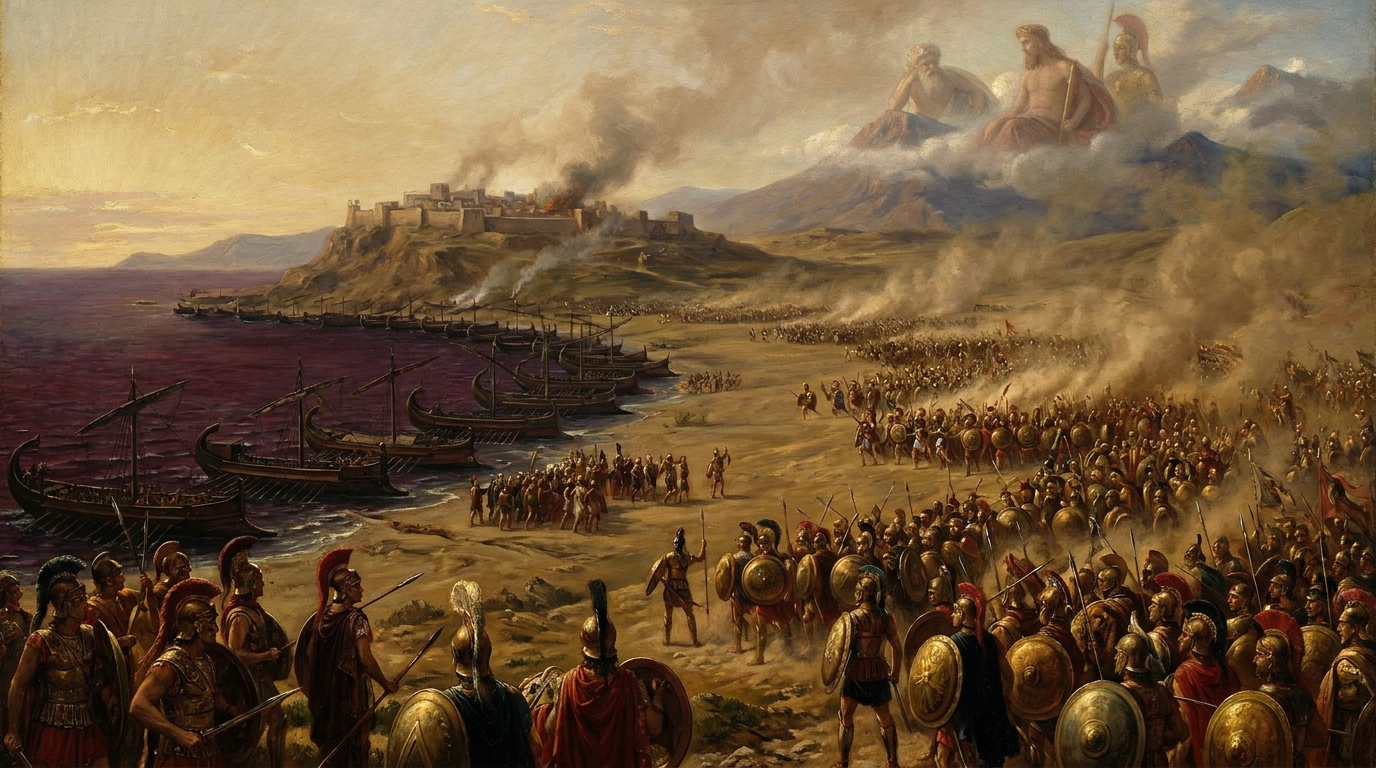
The Iliad
The Wrath of Achilles
Homer's epic poem of the Trojan War, rendered into English prose by Samuel Butler. Follow the wrath of Achilles through twenty-four books of heroism, tragedy, and the human cost of war.
Short on Time?
The Whole Story: The Wrath of Achilles in One Sitting
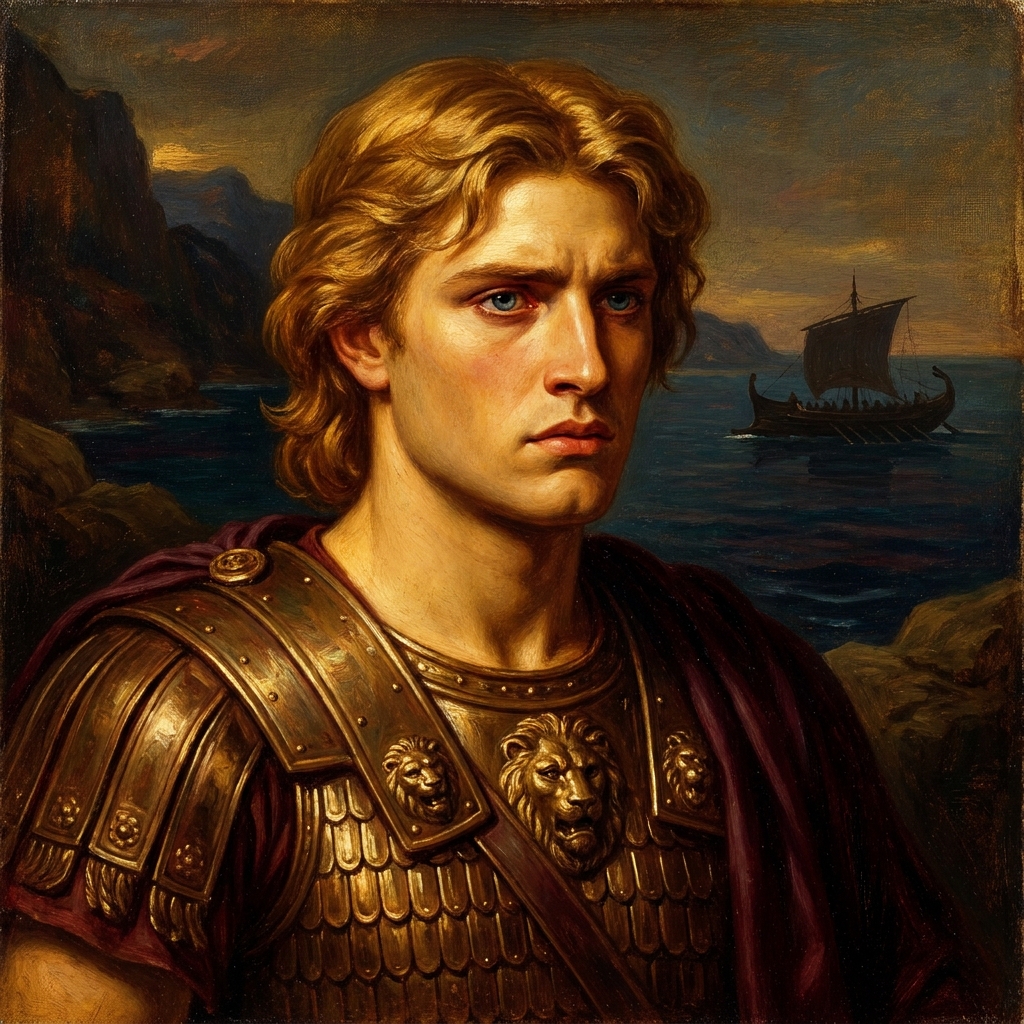
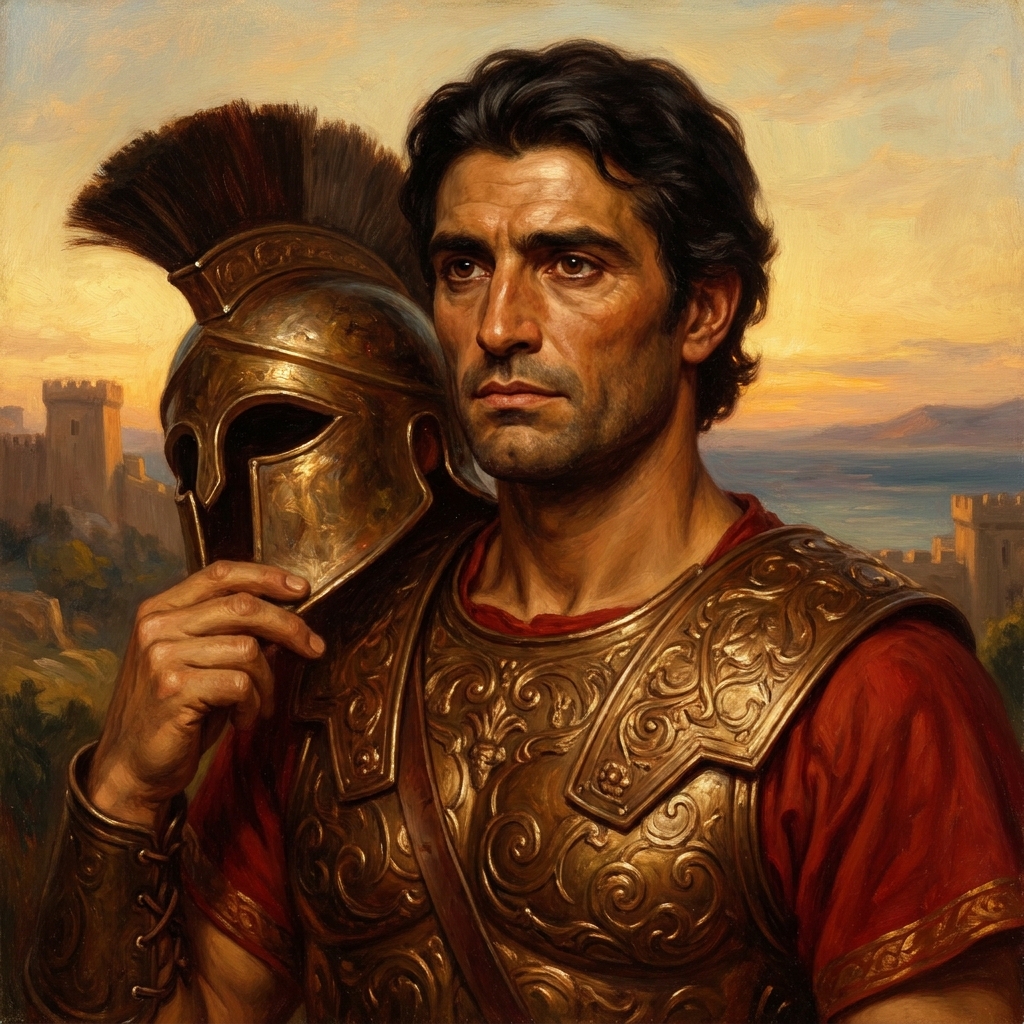
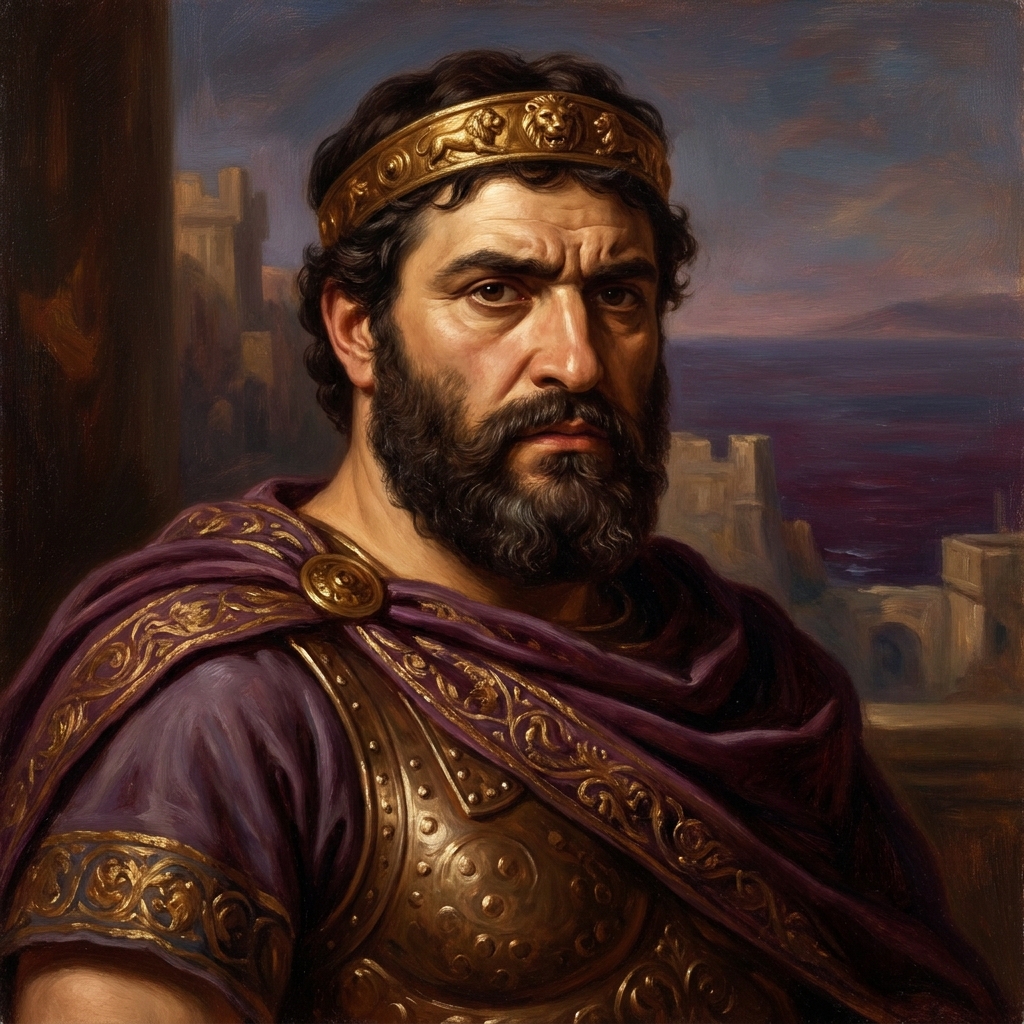
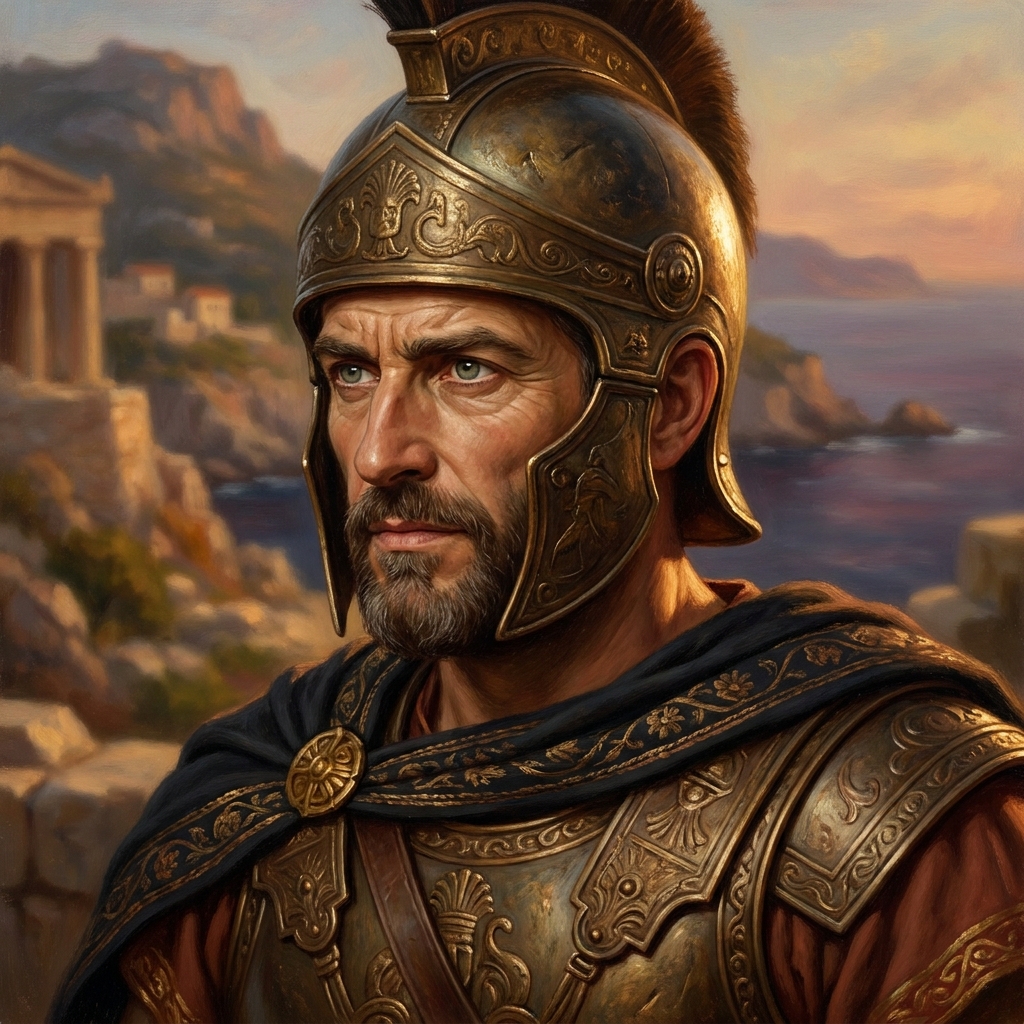
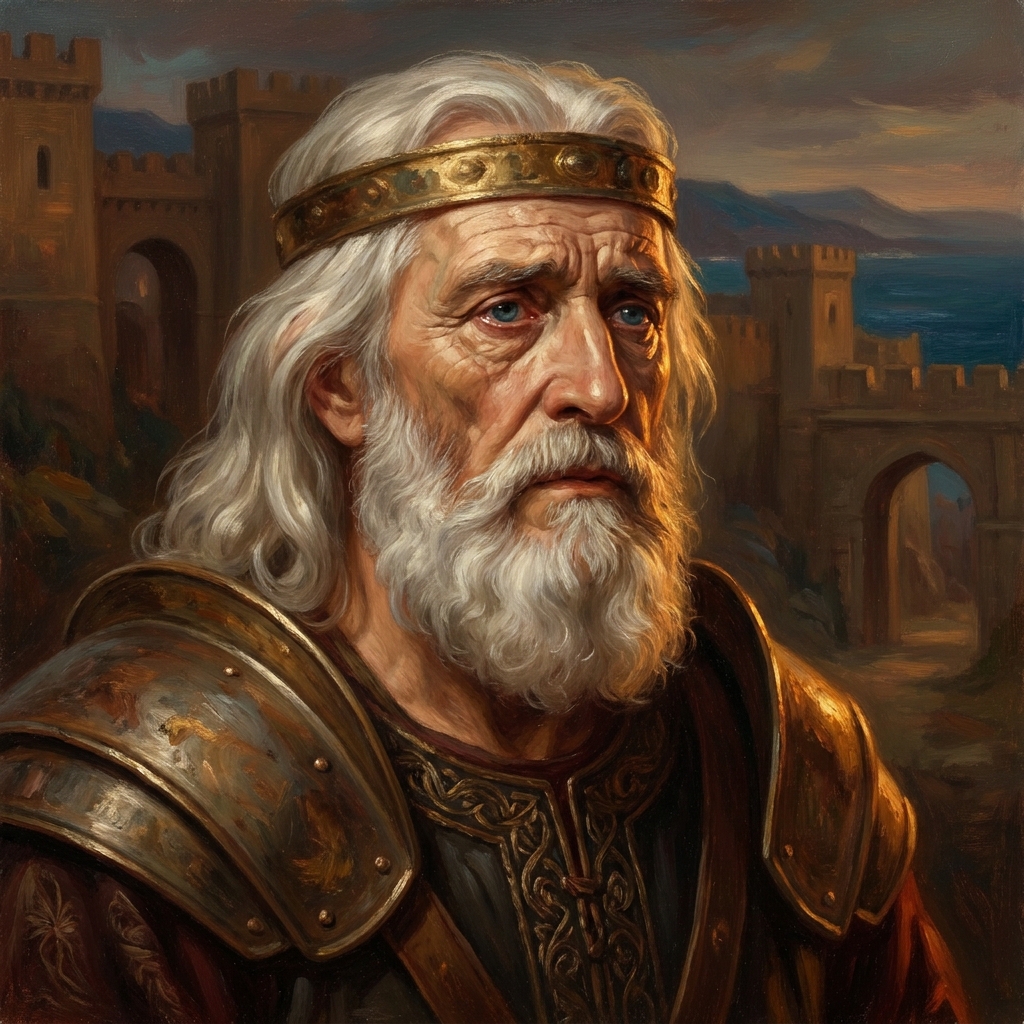
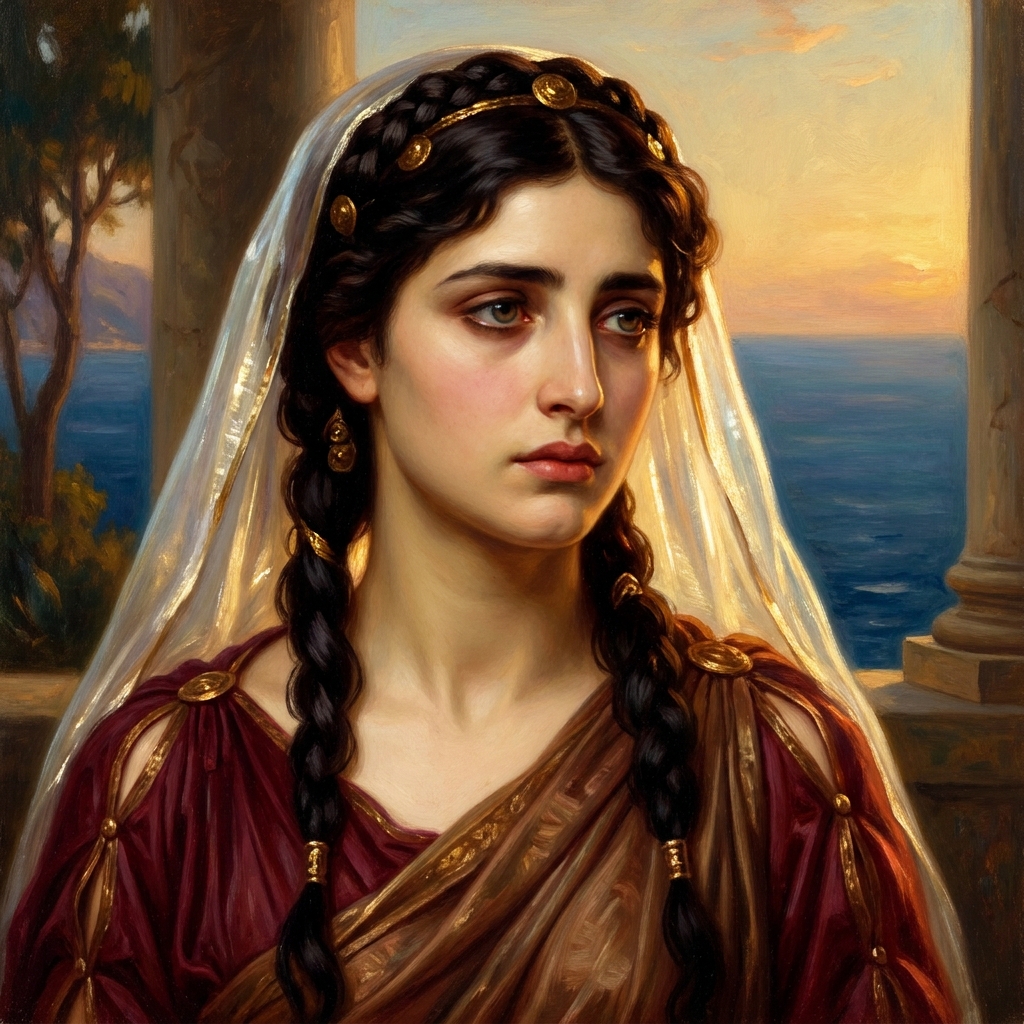
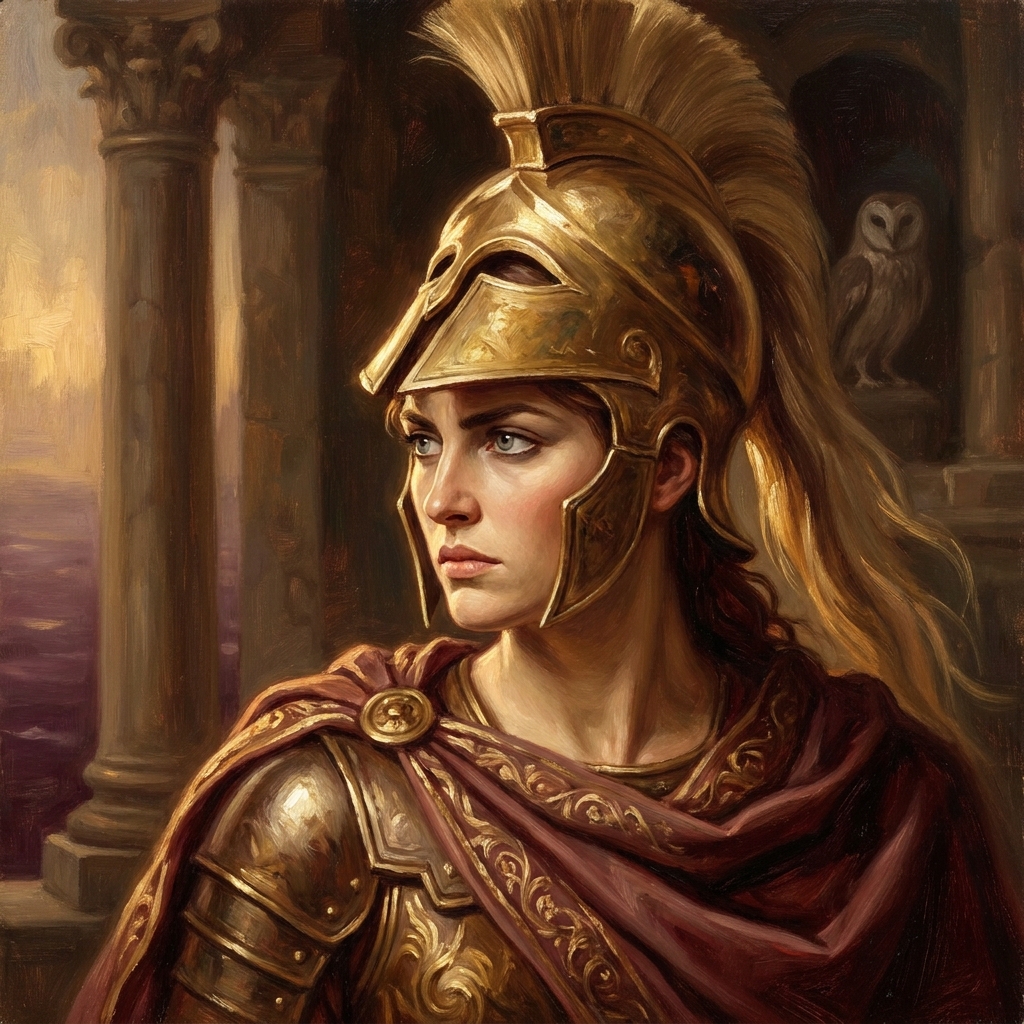
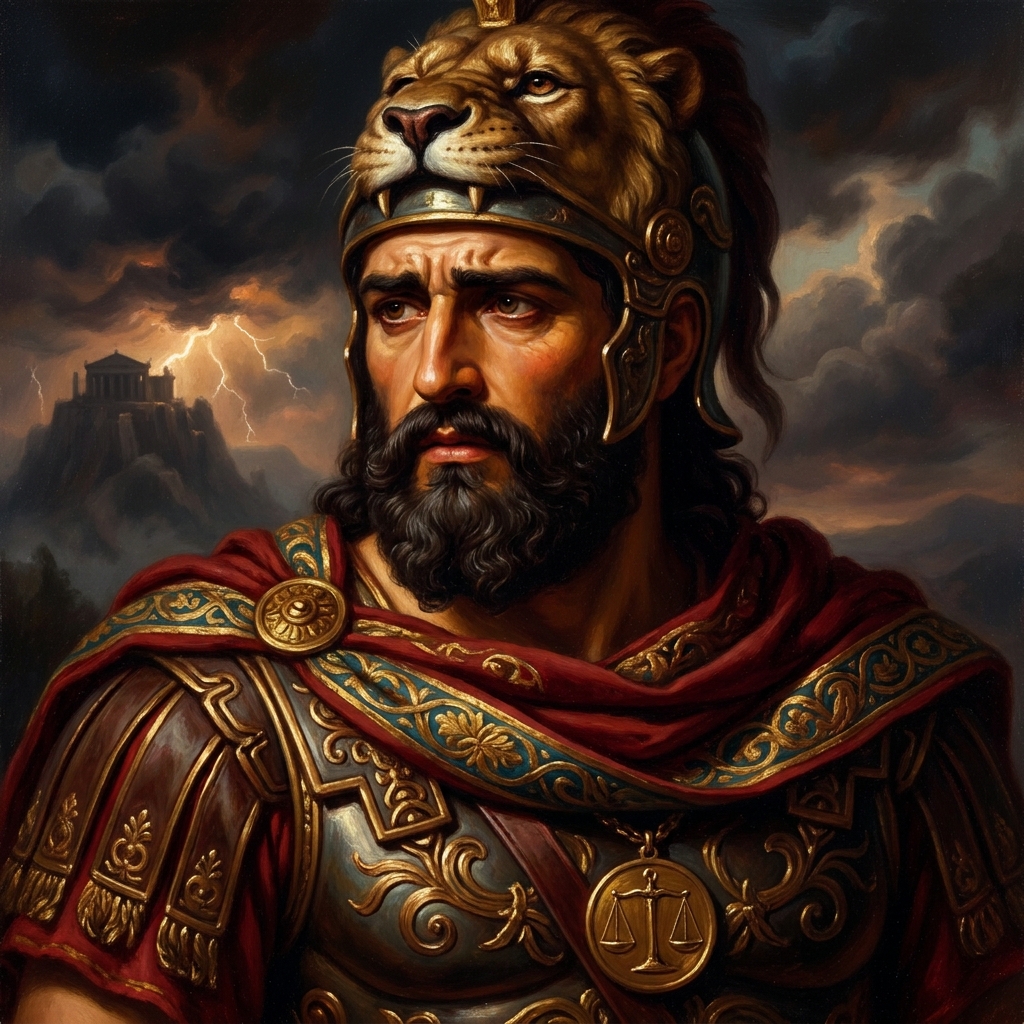
The Iliad is the foundational epic of Western literature. Composed in the eighth century BCE, it tells the story of a few weeks during the tenth year of the Trojan War, centering on the devastating consequences of Achilles' rage after his honor is slighted by Agamemnon.
This edition presents Samuel Butler's celebrated prose translation in an immersive reading format, with AI-generated illustrations inspired by the Pre-Raphaelite tradition.
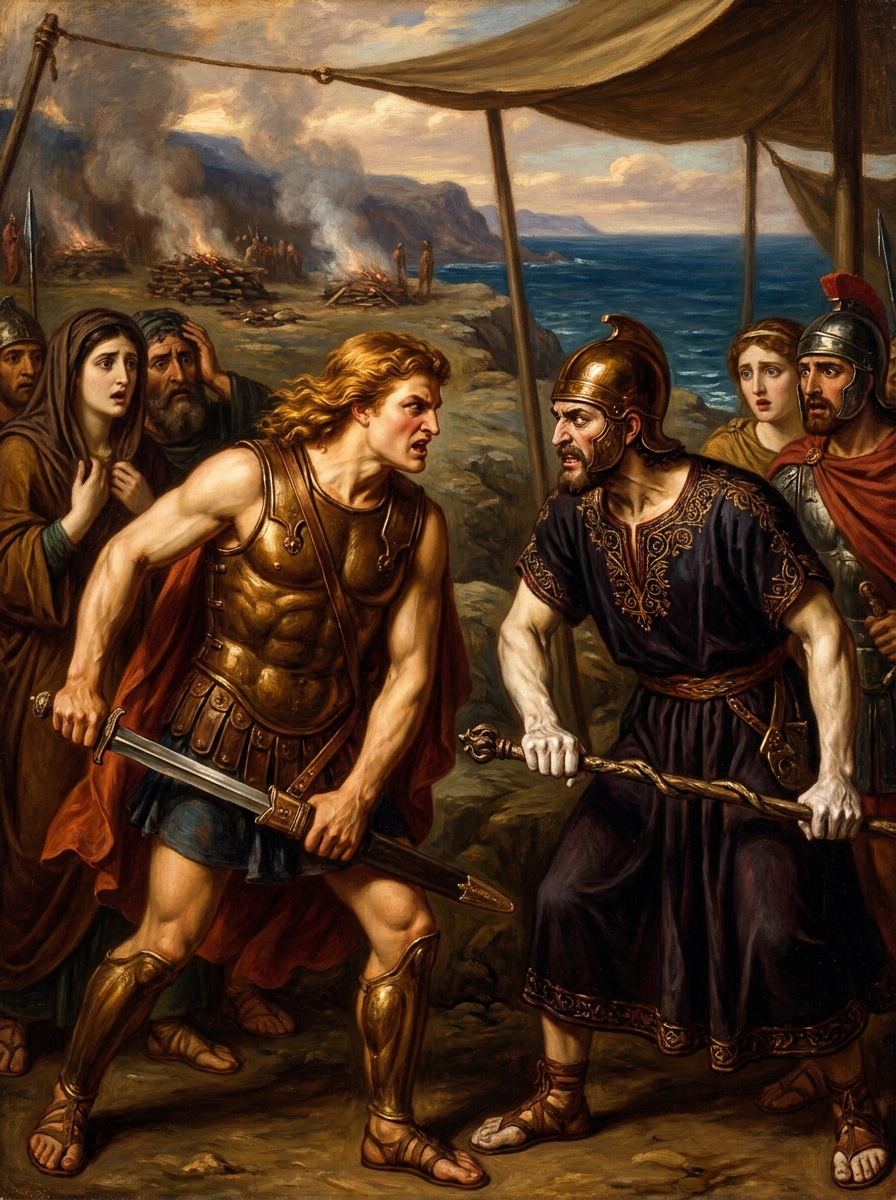
The Quarrel of Agamemnon and Achilles
Apollo sends a plague upon the Greek camp after Agamemnon refuses to return the priest's daughter Chryseis. When forced to relent, Agamemnon seizes Achilles' prize Briseis, provoking the hero's devastating withdrawal from battle.
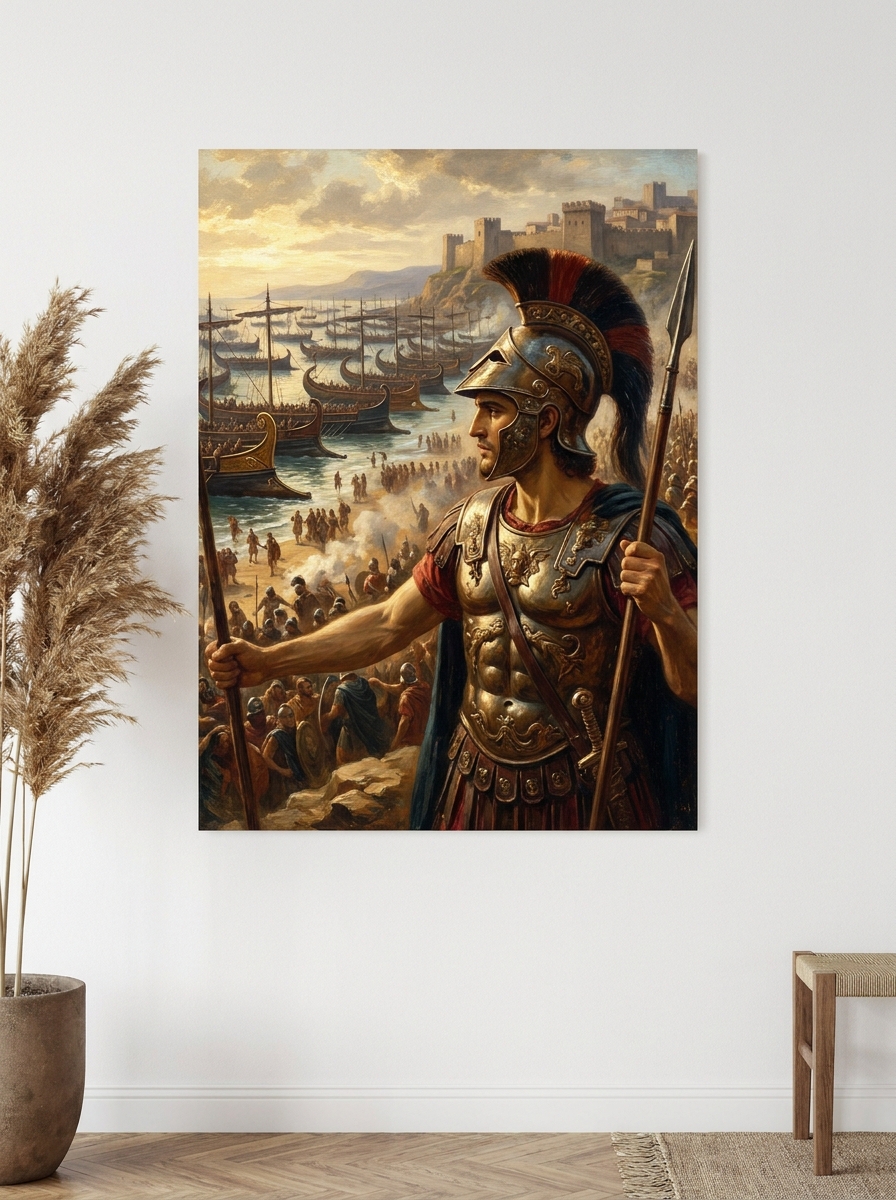
The Gathering of the Armies
Zeus sends Agamemnon a false dream of victory. The king tests his troops' resolve, nearly losing them to desertion, before Odysseus restores order. The great Catalogue of Ships enumerates the Greek and Trojan forces.
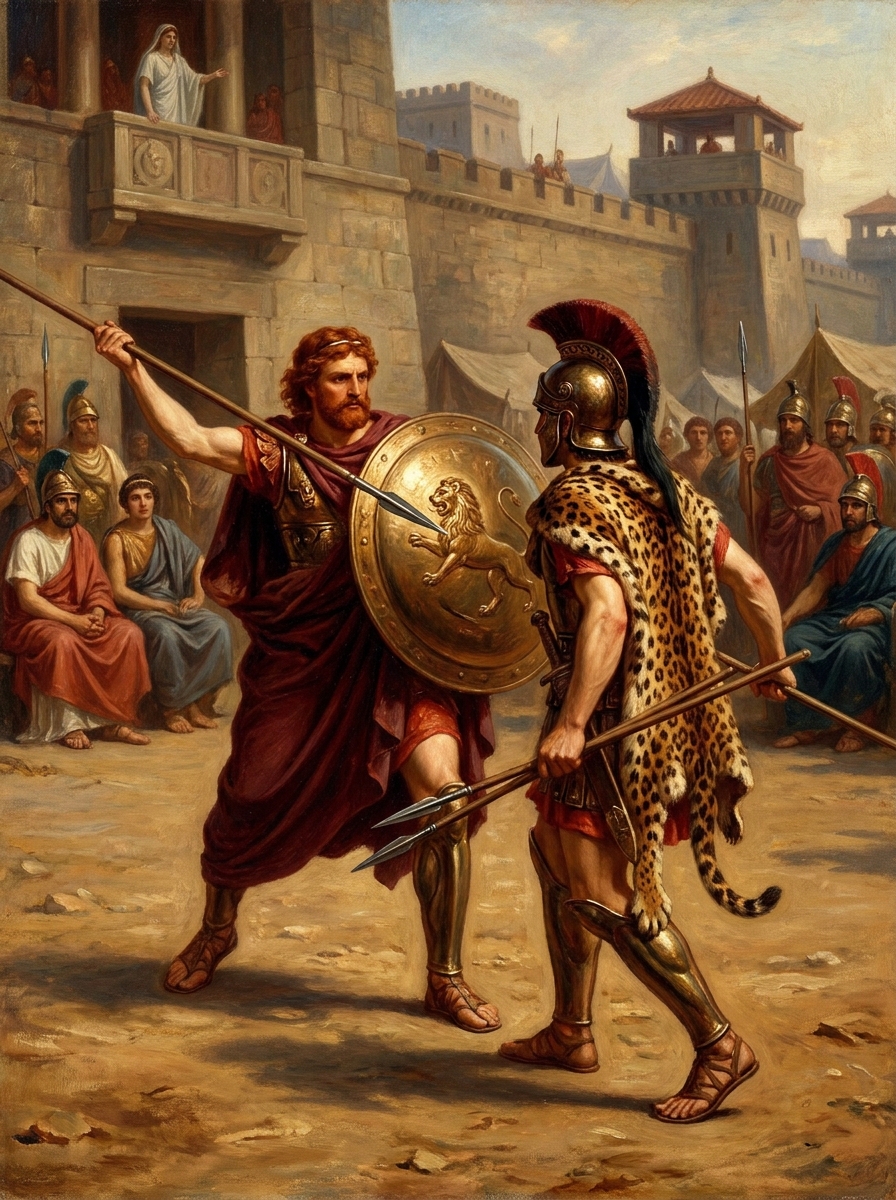
Paris and Menelaus
Paris and Menelaus agree to settle the war in single combat. Menelaus nearly kills Paris, but Aphrodite snatches her favorite to safety, leaving the duel without a clear resolution.
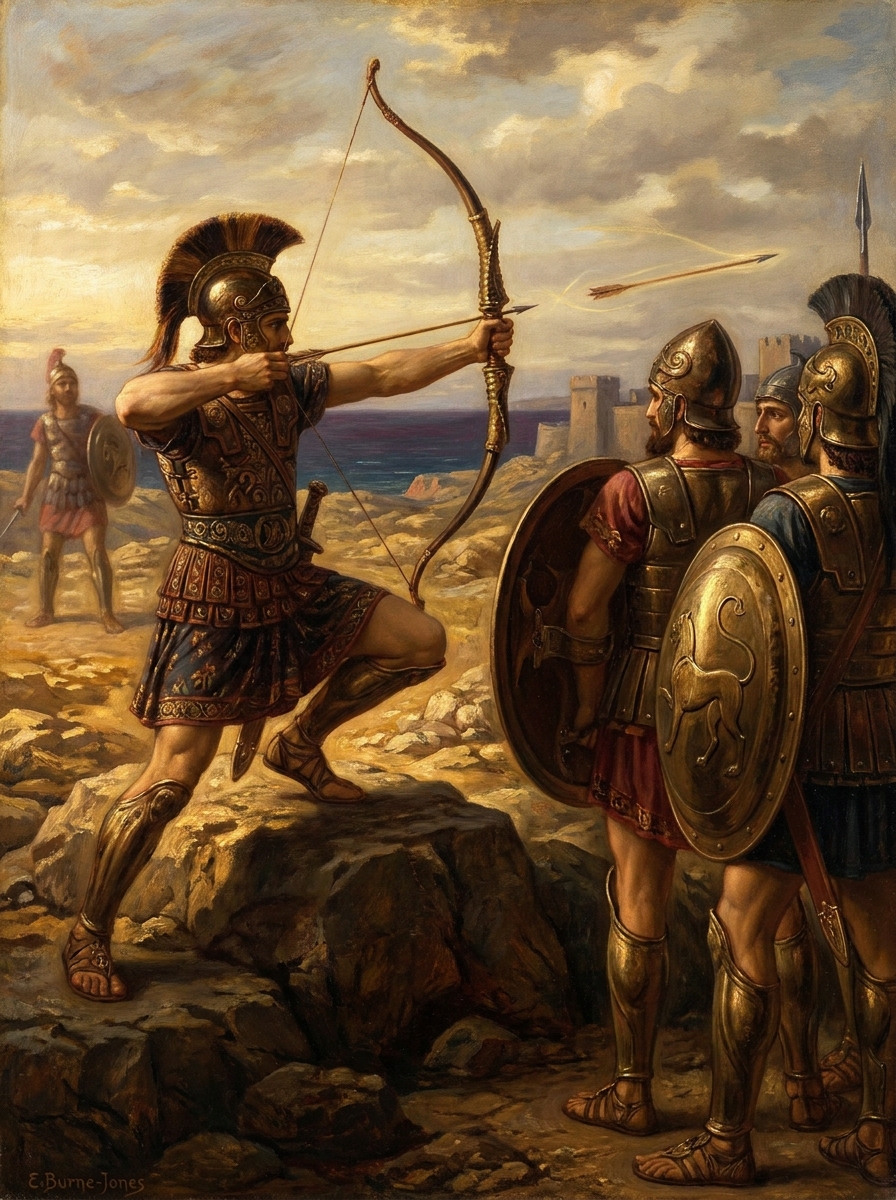
The Breaking of the Truce
Athena tricks the Trojan Pandarus into wounding Menelaus with an arrow, shattering the truce. Full-scale battle erupts again as the gods manipulate mortals toward continued war.
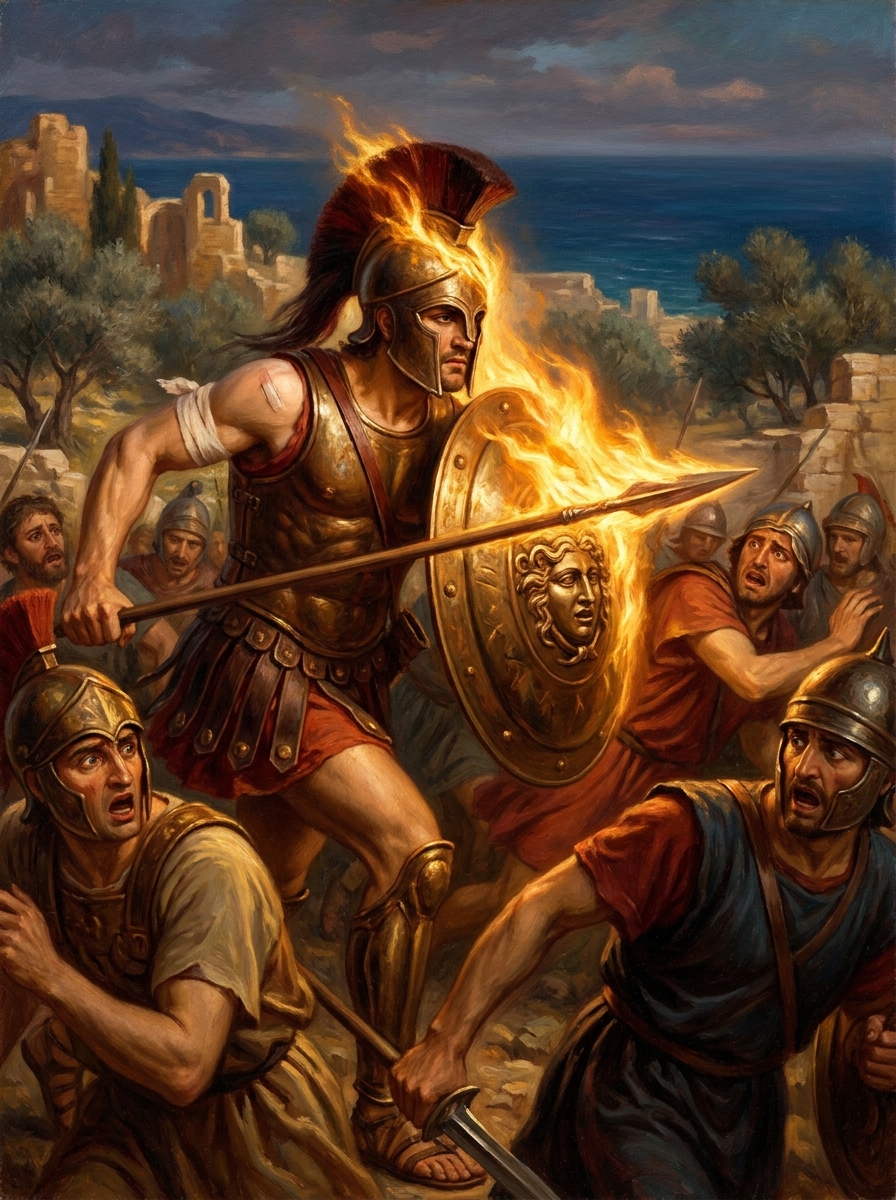
The Exploits of Diomedes
Diomedes, empowered by Athena, rampages across the battlefield. He wounds Aphrodite herself when she tries to rescue Aeneas, and even strikes the war god Ares, driving him howling from the field.
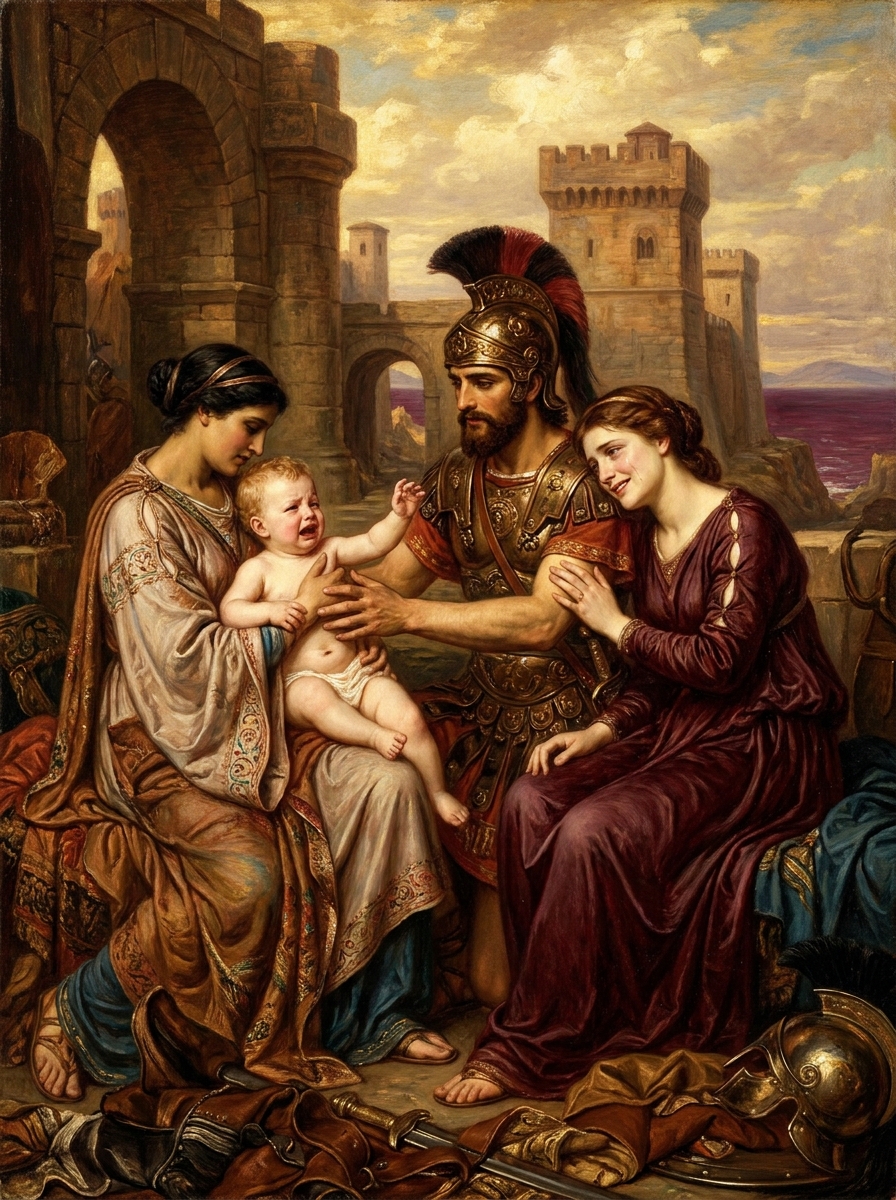
Hector and Andromache
Hector returns to Troy and bids farewell to his wife Andromache and infant son Astyanax at the Scaean gates — the most tender and human scene in the poem, shadowed by the certainty of death.
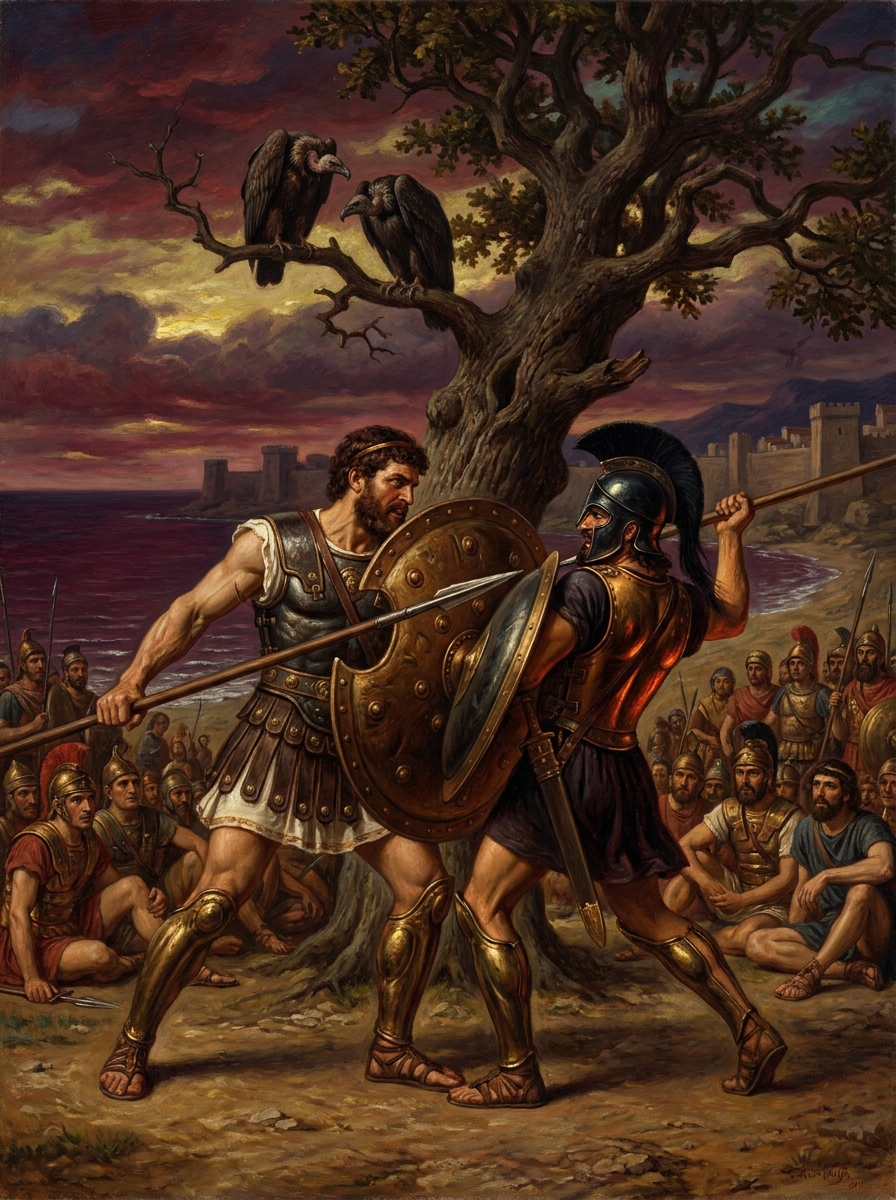
Ajax and Hector
Ajax and Hector meet in single combat that ends at nightfall without a victor. The armies agree to a truce to bury their dead, and the Greeks build a wall to protect their ships.
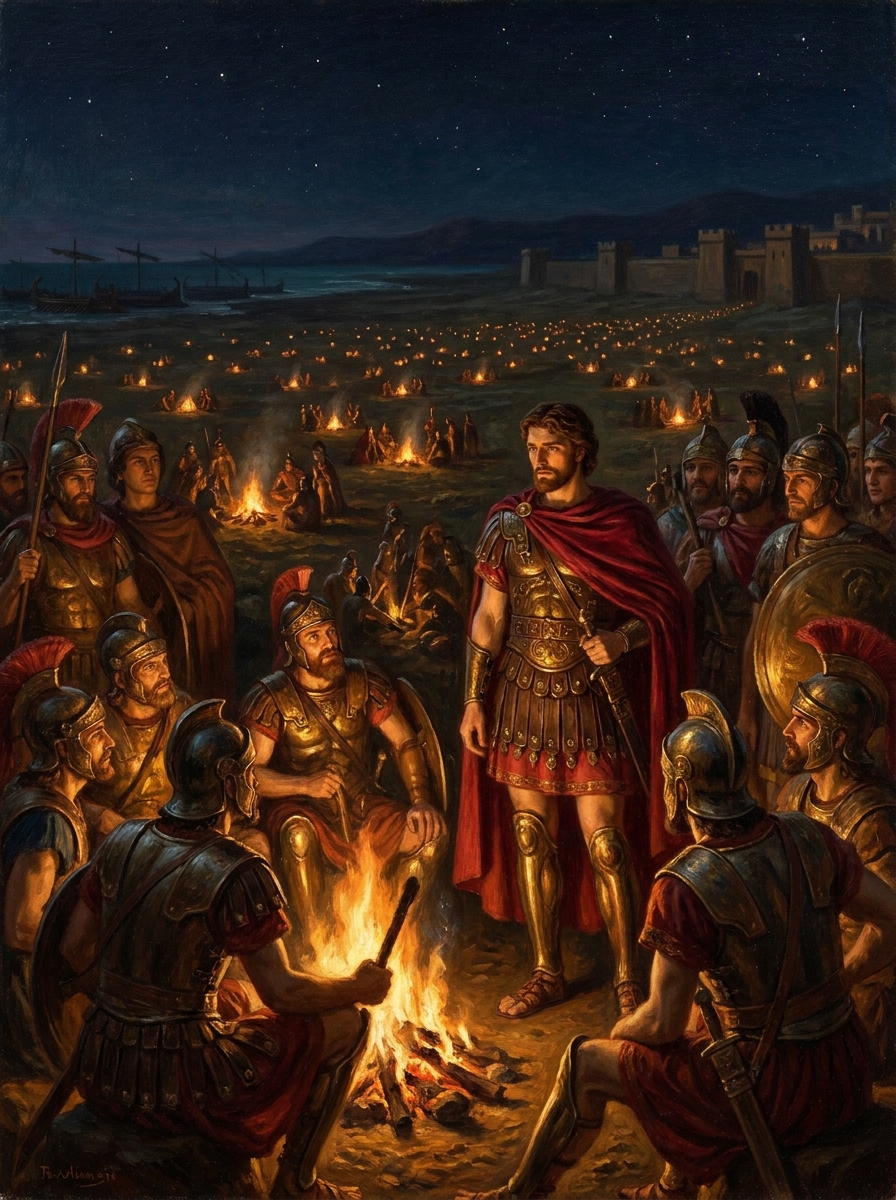
Zeus Forbids the Gods
Zeus forbids the other gods from intervening and turns the battle in Troy's favor. The Trojans, led by Hector, drive the Greeks back to their ships and camp on the plain for the first time.
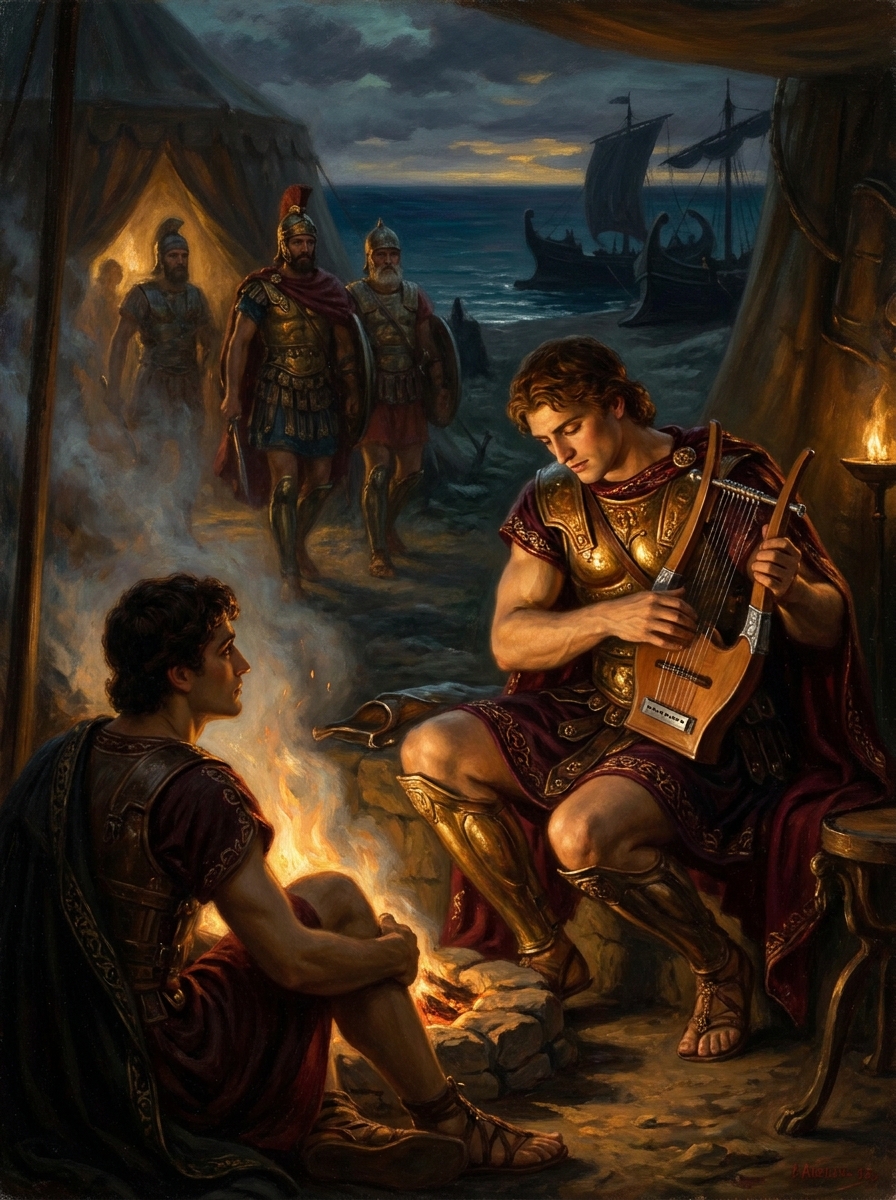
The Embassy to Achilles
Desperate, Agamemnon sends Phoenix, Ajax, and Odysseus to offer Achilles lavish gifts and the return of Briseis. Achilles refuses them all, choosing his anger over glory, in one of literature's great refusal scenes.
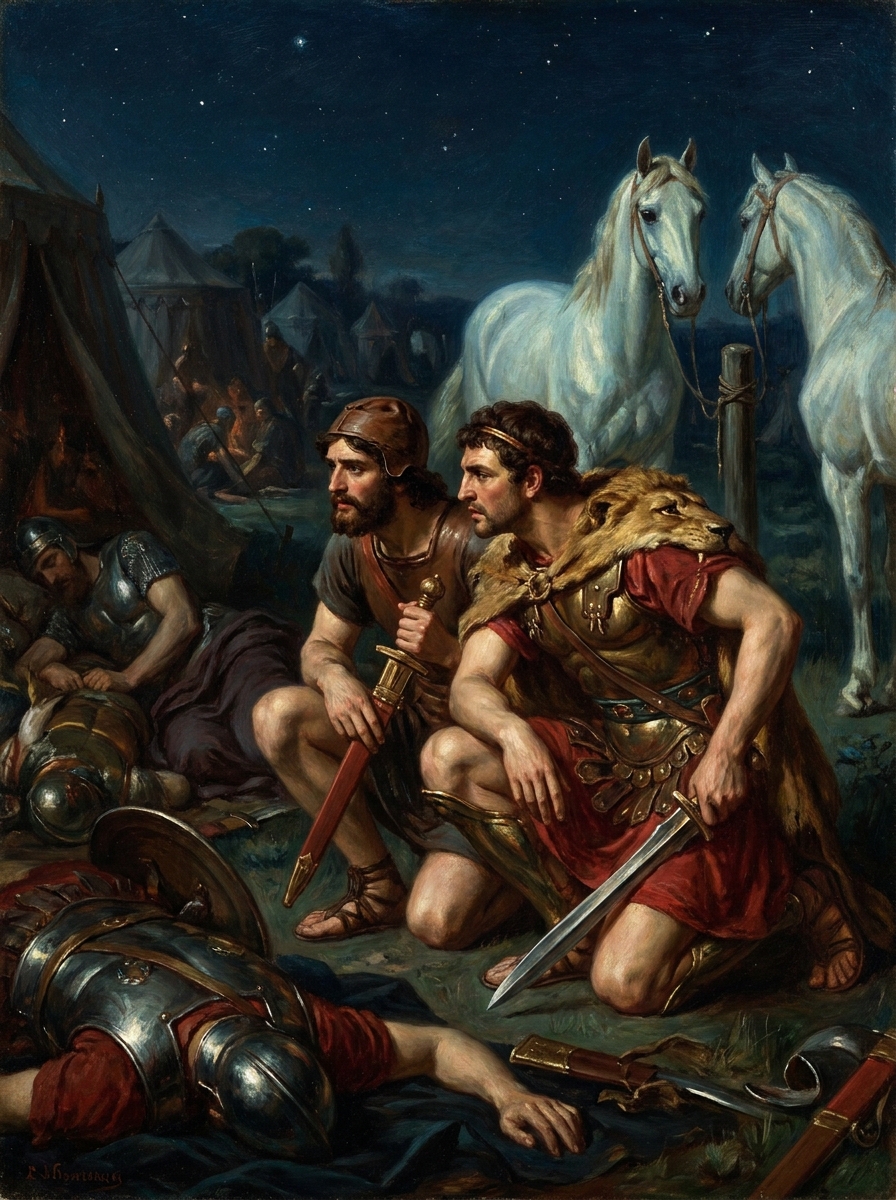
The Night Raid
Under cover of darkness, Odysseus and Diomedes infiltrate the Trojan camp. They capture the spy Dolon, learn the position of the Thracian allies, and slaughter King Rhesus and his men in a daring night raid.
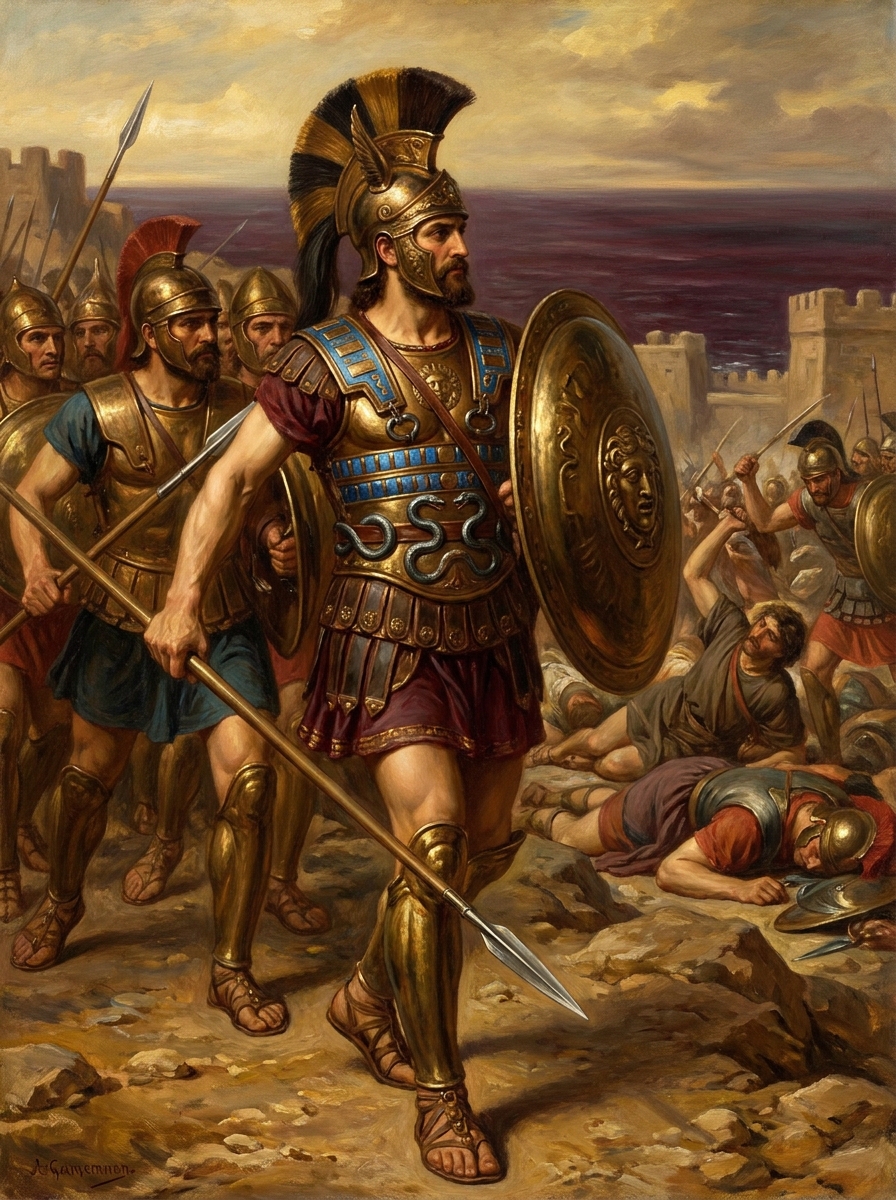
Agamemnon's Day of Glory
Agamemnon fights brilliantly at dawn but is wounded and forced to withdraw. One by one the Greek champions — Diomedes, Odysseus, Machaon — fall wounded, leaving the army increasingly desperate.
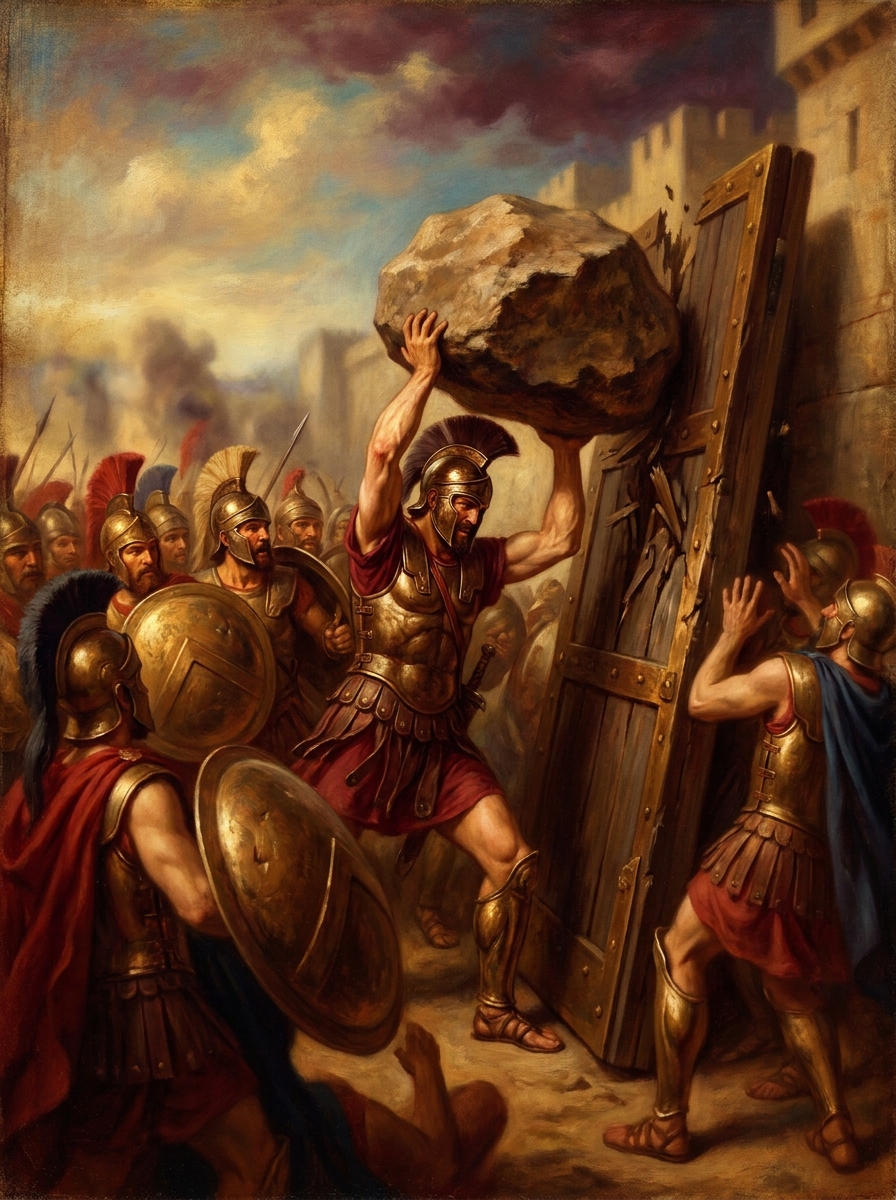
The Assault on the Wall
The Trojans, led by Hector and Sarpedon, storm the Greek camp wall. Despite ominous omens, Hector smashes through the gates with a great stone, and Trojan warriors pour into the Greek encampment.
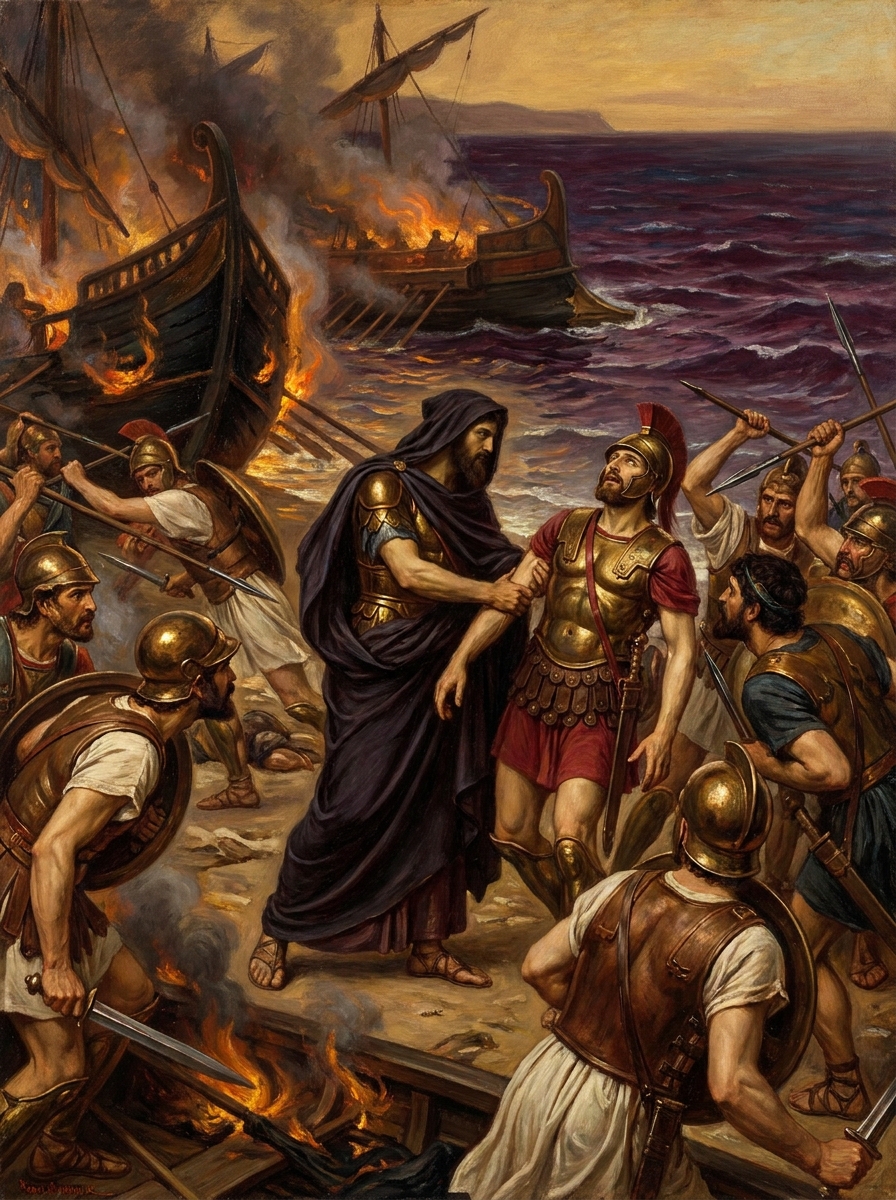
The Battle at the Ships
While Zeus looks away, Poseidon secretly enters the battle disguised as a mortal and rallies the demoralized Greeks. Fierce fighting rages around the beached ships as the tide of war sways back and forth.
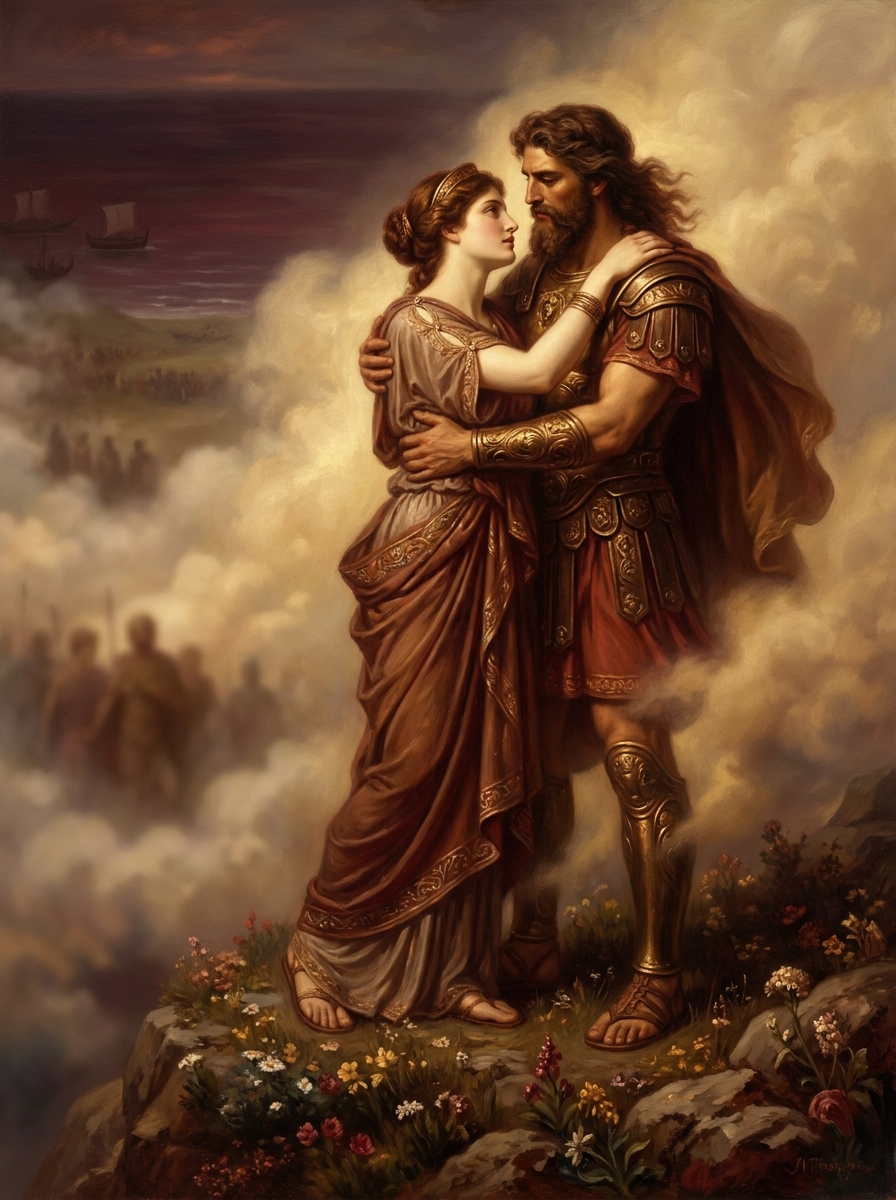
The Deception of Zeus
Hera borrows Aphrodite's girdle of desire and seduces Zeus on Mount Ida, lulling him to sleep so that Poseidon can openly aid the Greeks. Ajax strikes Hector with a boulder, and the Trojans are driven back.
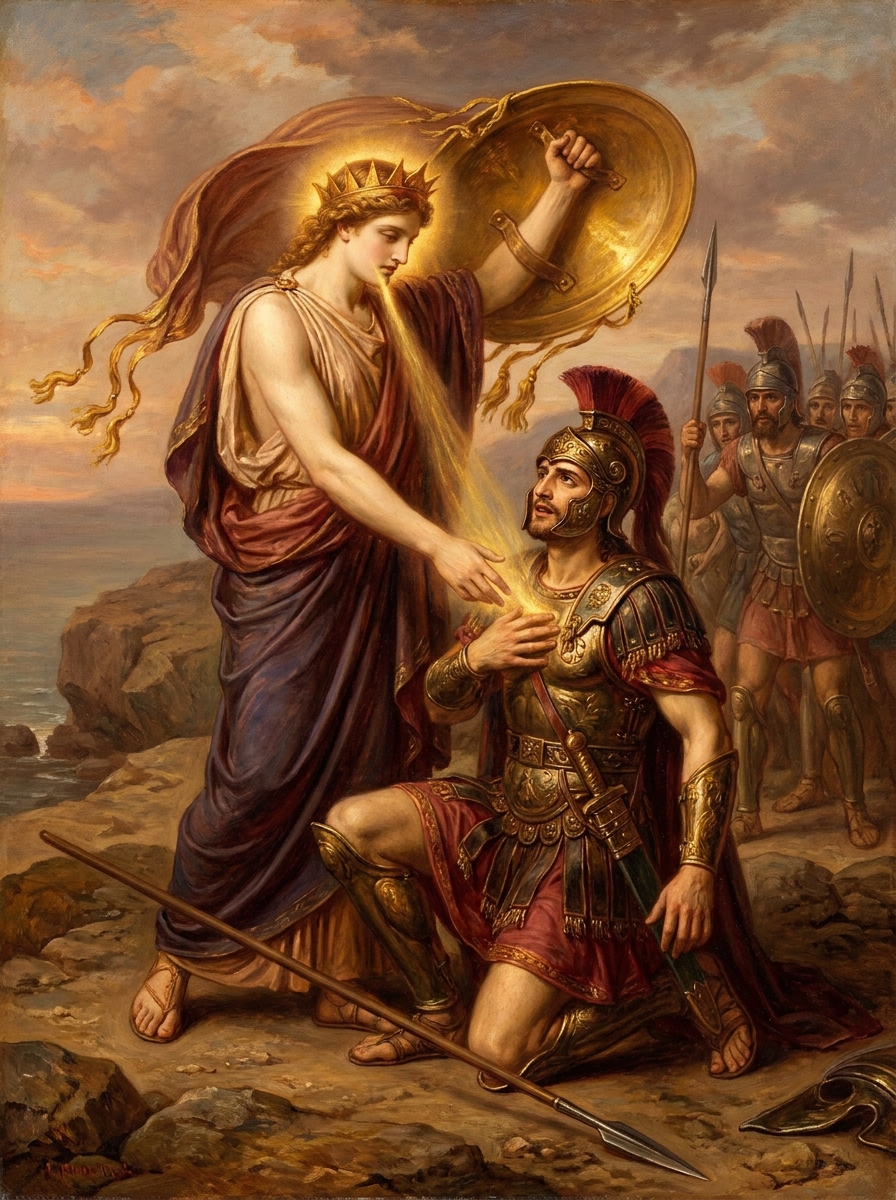
The Counter-Attack
Zeus wakes in fury, orders Poseidon out of the battle, and sends Apollo to heal Hector and revive the Trojan assault. The Trojans push all the way to the Greek ships and Hector calls for fire.
The Death of Patroclus
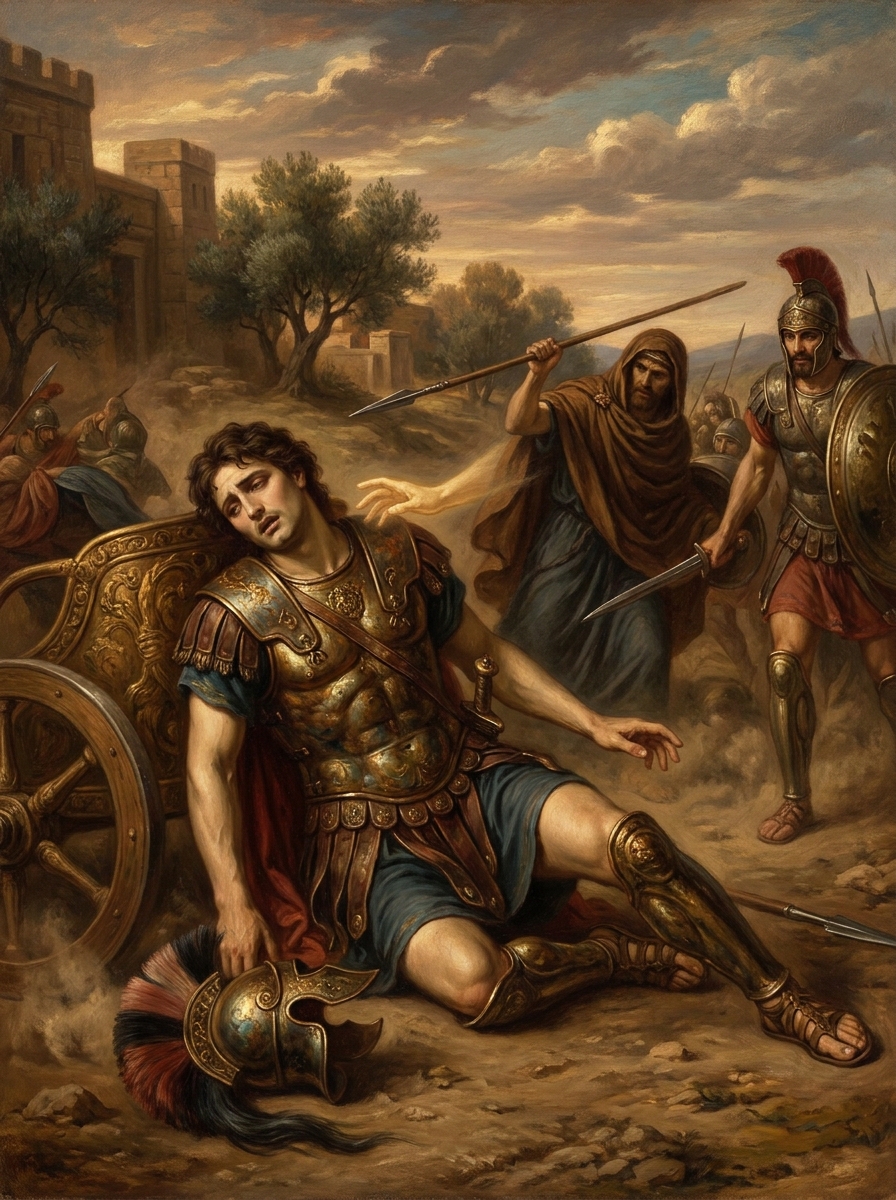
Patroclus begs Achilles to let him fight in his armor. He drives the Trojans back and kills Sarpedon, but ignores Achilles' warning and pushes too far. Apollo stuns him, and Hector delivers the killing blow.
The Fight over Patroclus
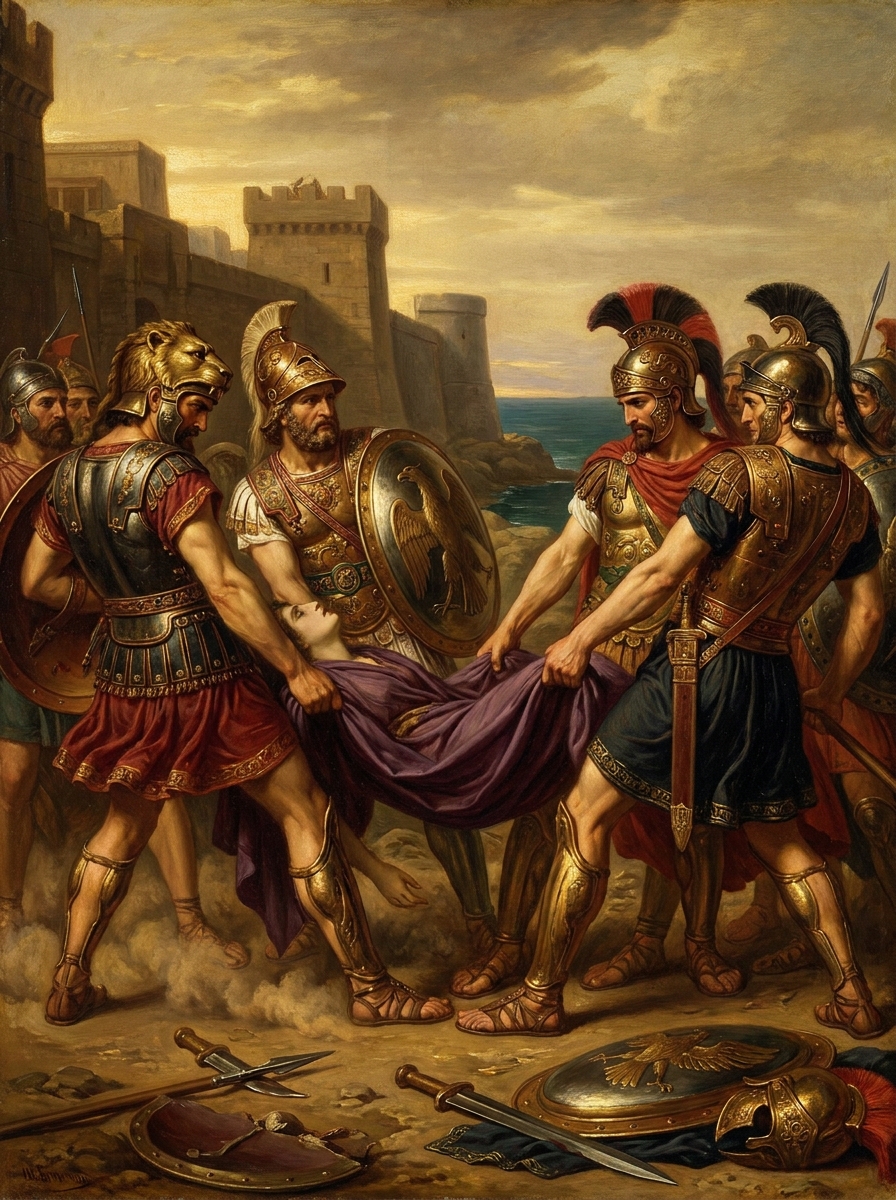
A ferocious battle erupts over the body of Patroclus. Menelaus and Ajax defend the corpse while Hector strips Achilles' divine armor. The Greeks manage to carry the body back as Antilochus races to tell Achilles.
The Shield of Achilles
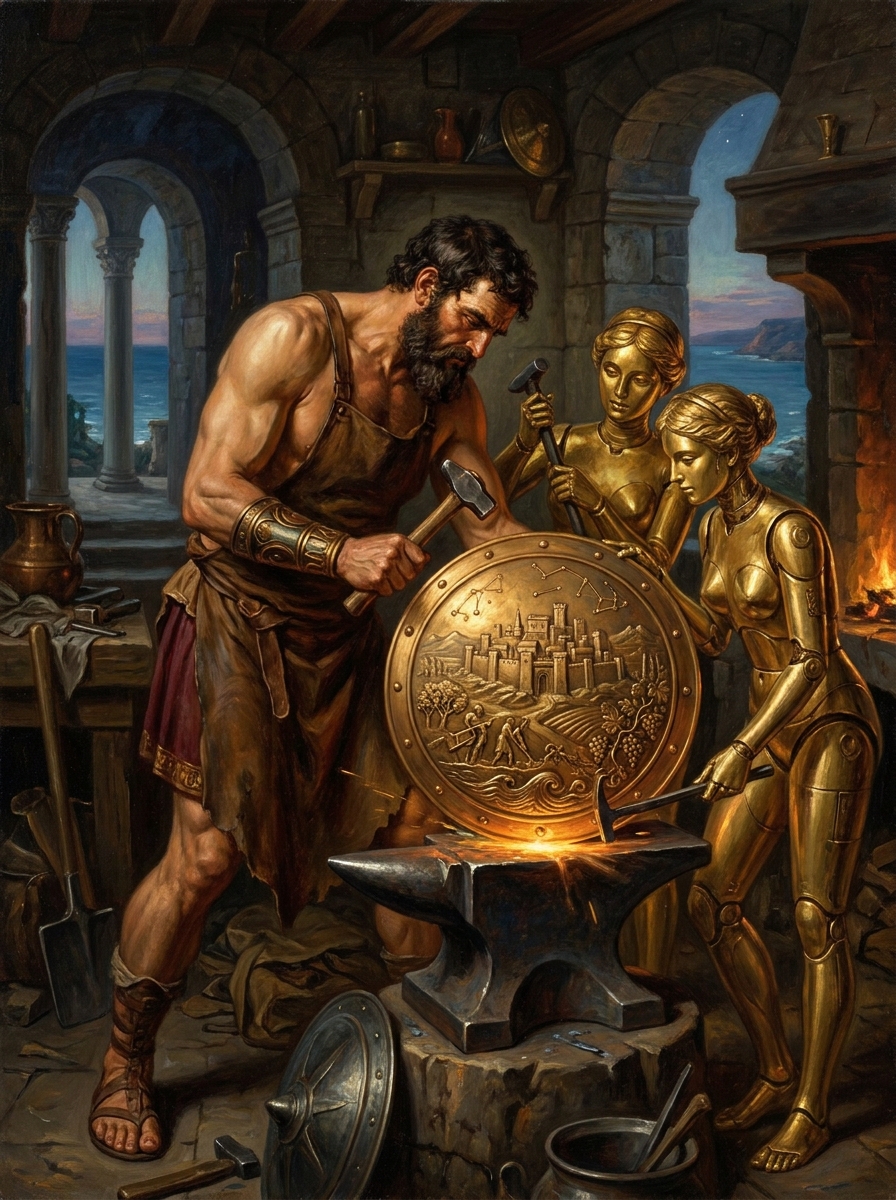
Achilles learns of Patroclus's death and is shattered by grief. His mother Thetis commissions Hephaestus to forge new armor, including the famous shield depicting the entire world of gods and mortals.
The Reconciliation
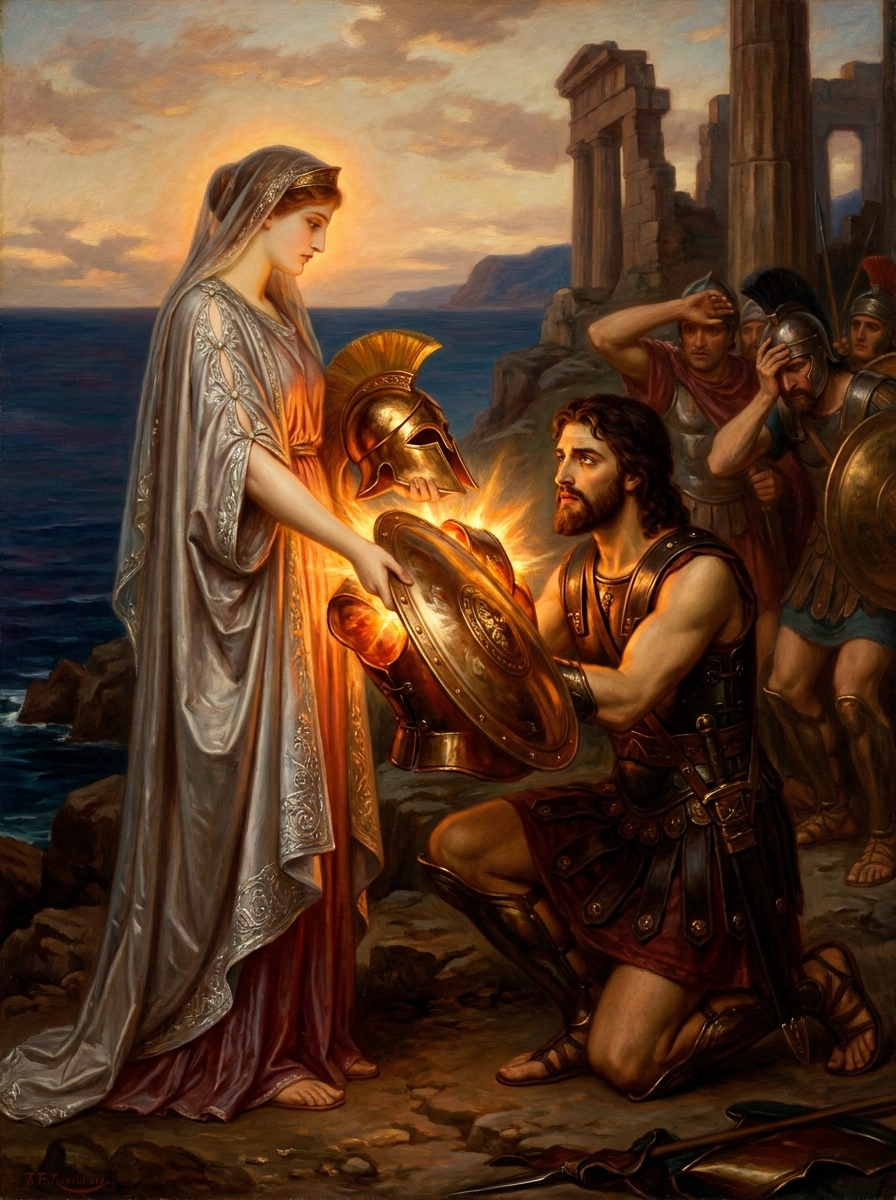
Achilles publicly renounces his wrath against Agamemnon and is reconciled with the Greek army. He receives his divine armor, and his immortal horse Xanthus prophesies his approaching death.
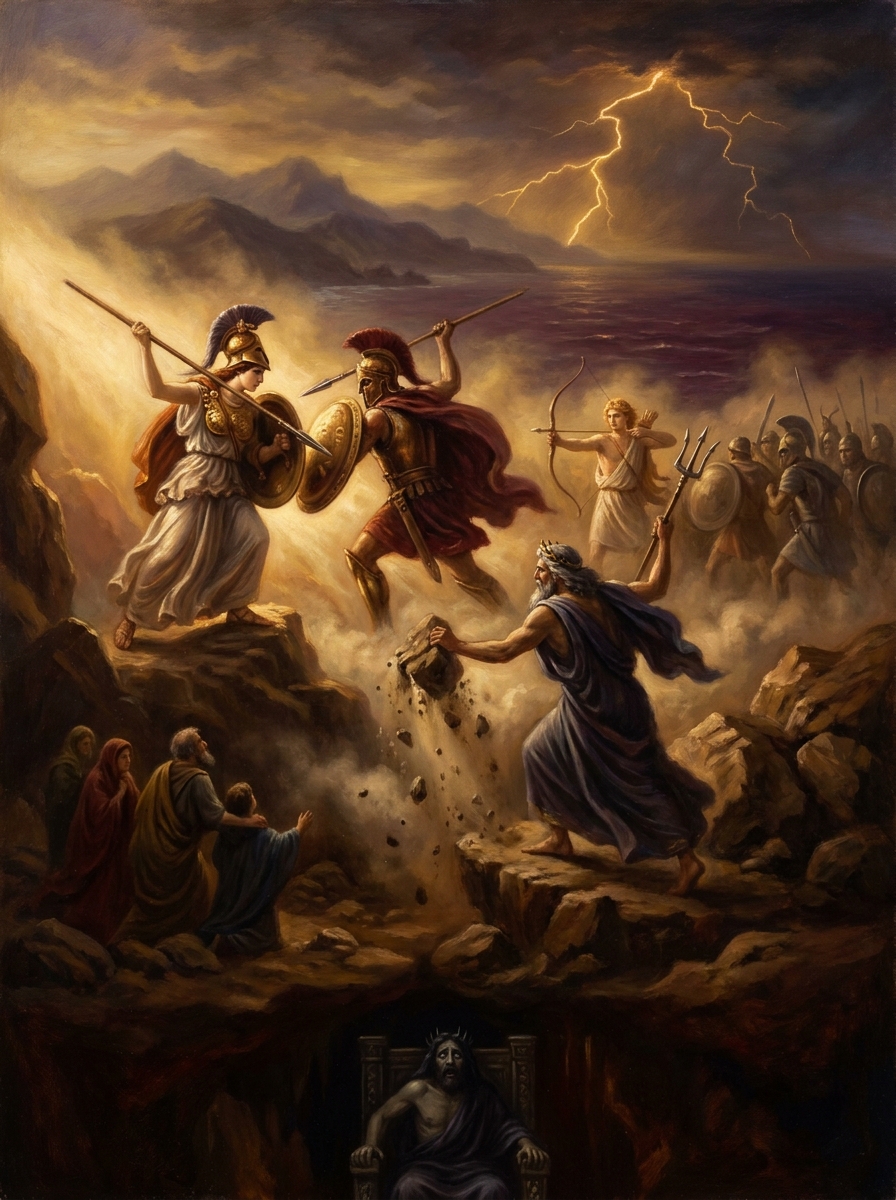
The Battle of the Gods
Zeus lifts his ban and the gods descend openly into battle — Athena against Ares, Hera against Artemis, Poseidon against Apollo. Achilles re-enters the fighting and nearly kills Aeneas before Poseidon intervenes.
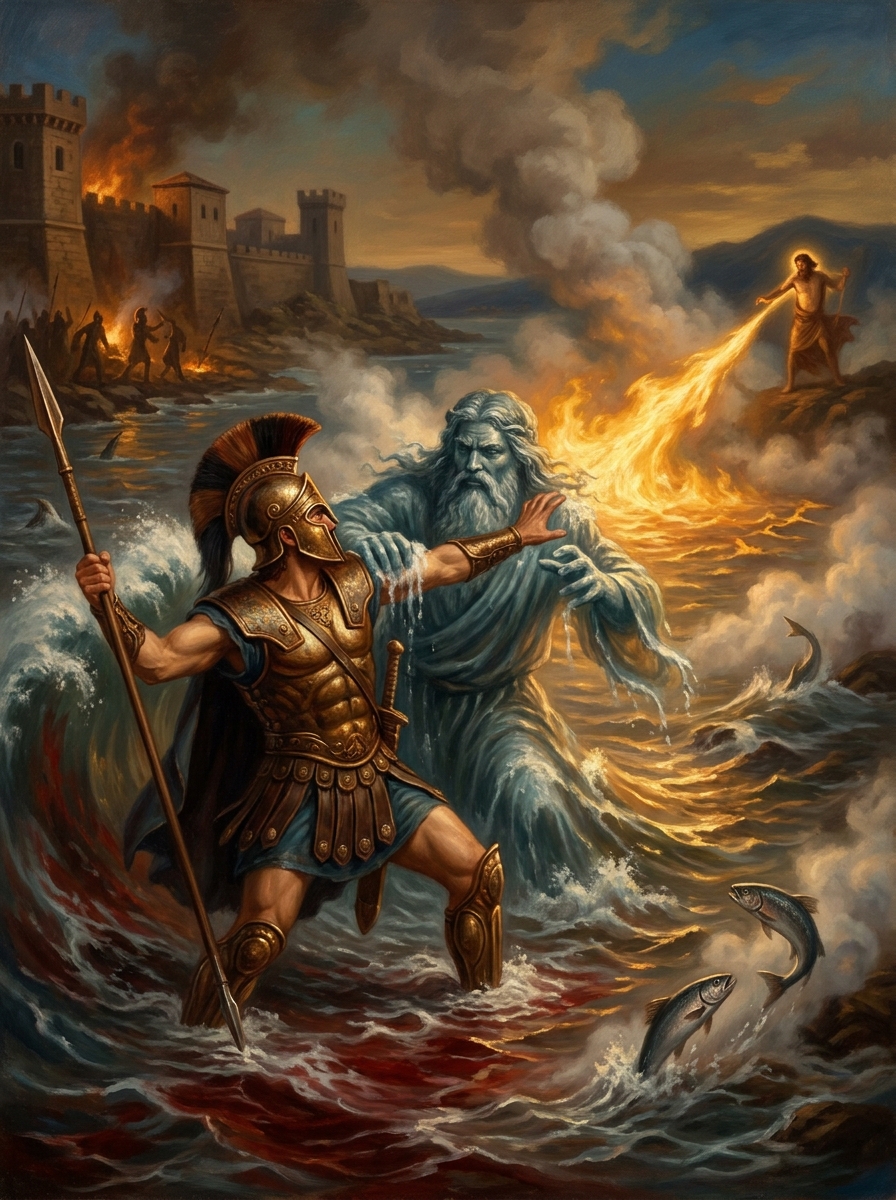
The Fight at the River
Achilles fills the river Scamander with Trojan dead until the river god rises in fury against him. Hephaestus saves Achilles by setting the river ablaze, and the Trojans flee behind their walls.
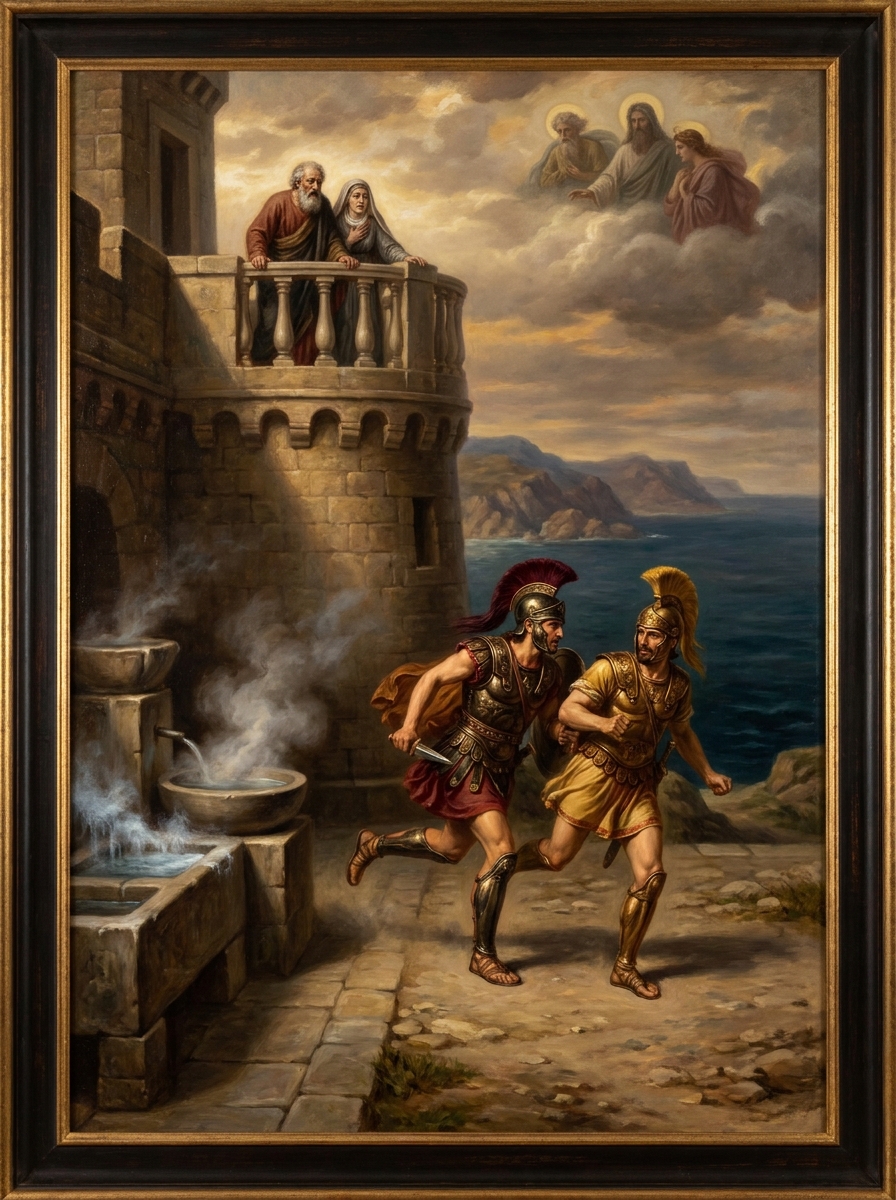
The Death of Hector
Achilles chases Hector three times around the walls of Troy. Athena deceives Hector into standing his ground, and Achilles kills him, then drags his body behind his chariot in savage triumph.
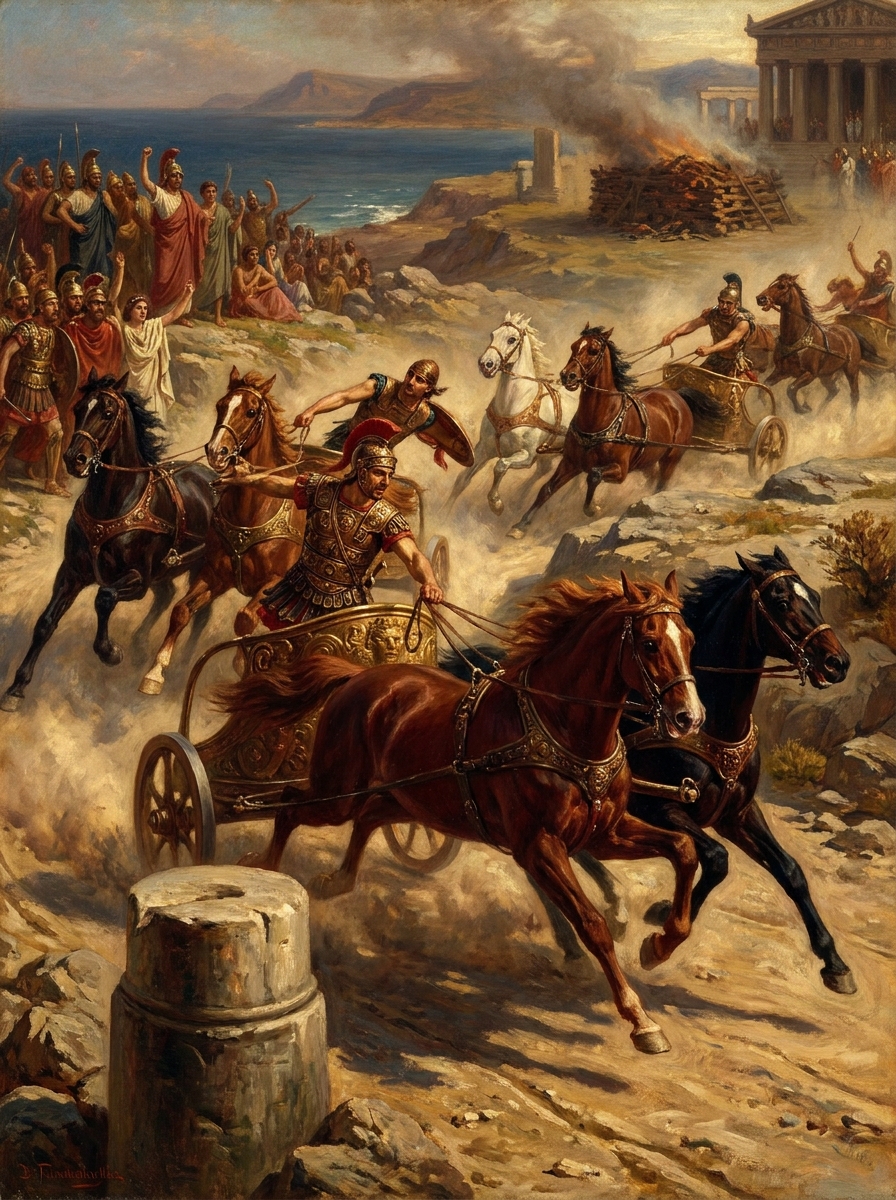
The Funeral Games
The ghost of Patroclus visits Achilles, begging for burial. After the funeral pyre, Achilles holds elaborate athletic games — chariot races, boxing, wrestling — honoring his fallen companion.
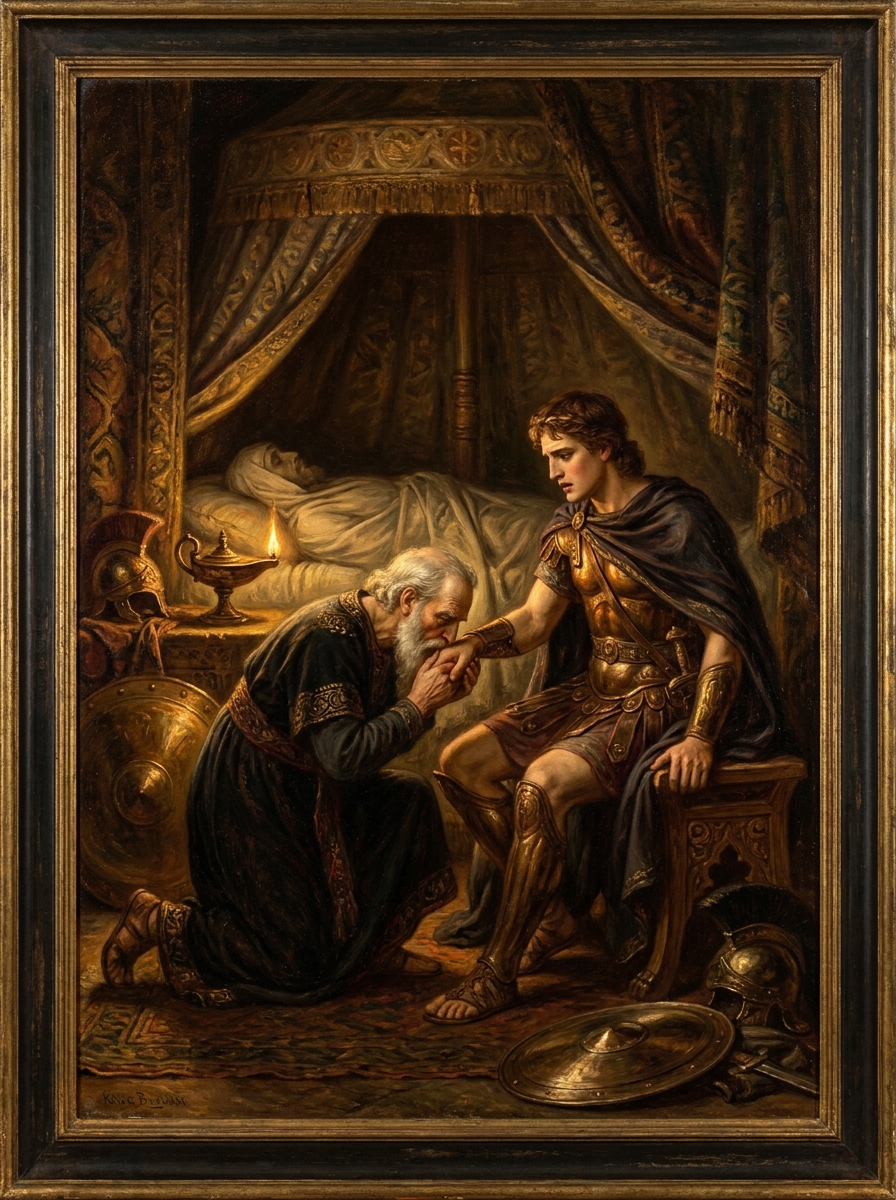
The Ransom of Hector
Old King Priam, guided by Hermes, enters the Greek camp alone at night to ransom Hector's body. He and Achilles weep together over their losses, achieving a moment of shared humanity that transcends war.