The Zend-Avesta
Ahura Mazda, the prophet Zarathustra, and the cosmic battle between truth and the lie — James Darmesteter’s translation of the Zoroastrian scriptures as an immersive reader.

Short on Time?
Ahura Mazda and the War Between Truth and the Lie
The Prophet of the Wise Lord
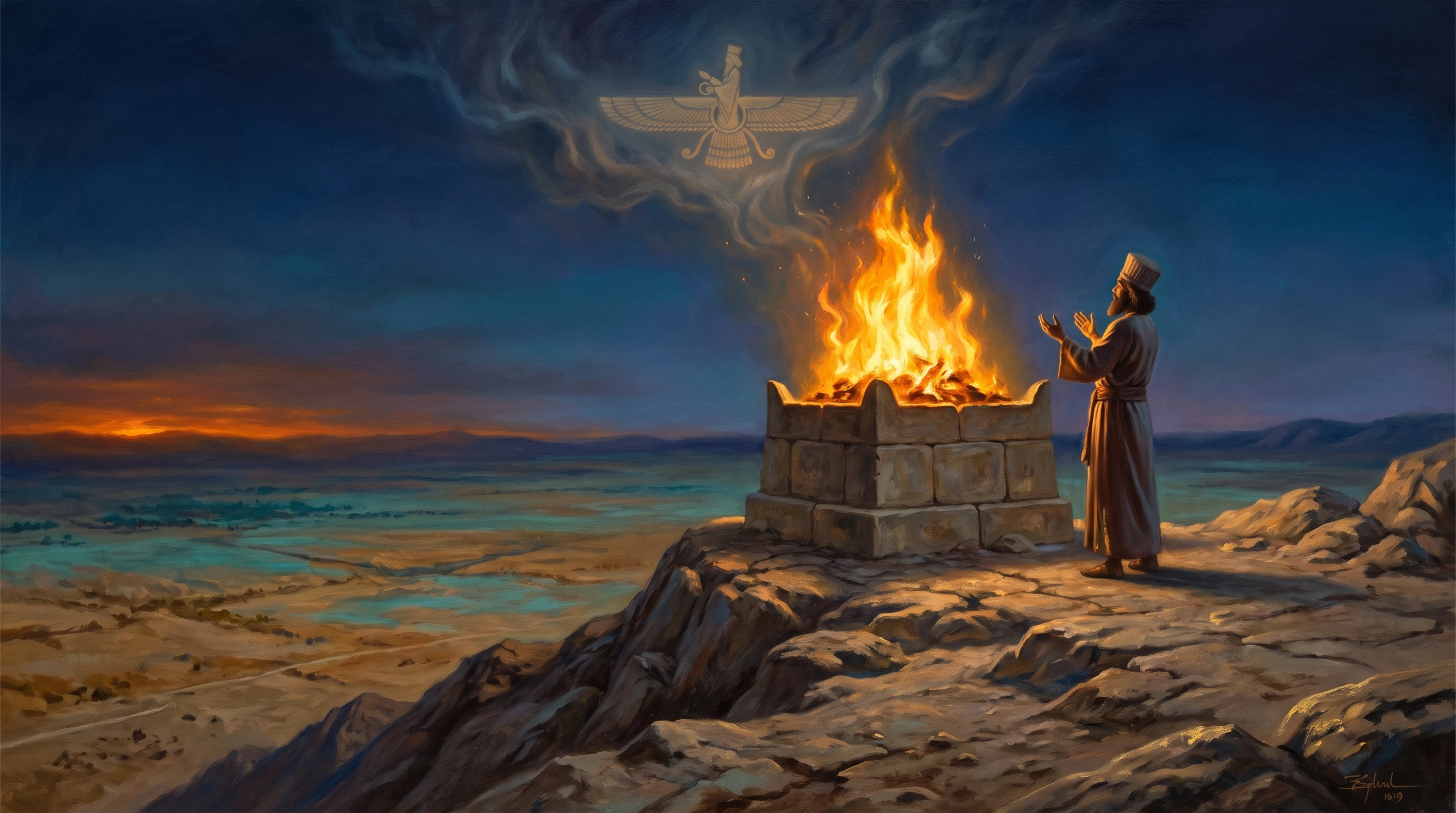
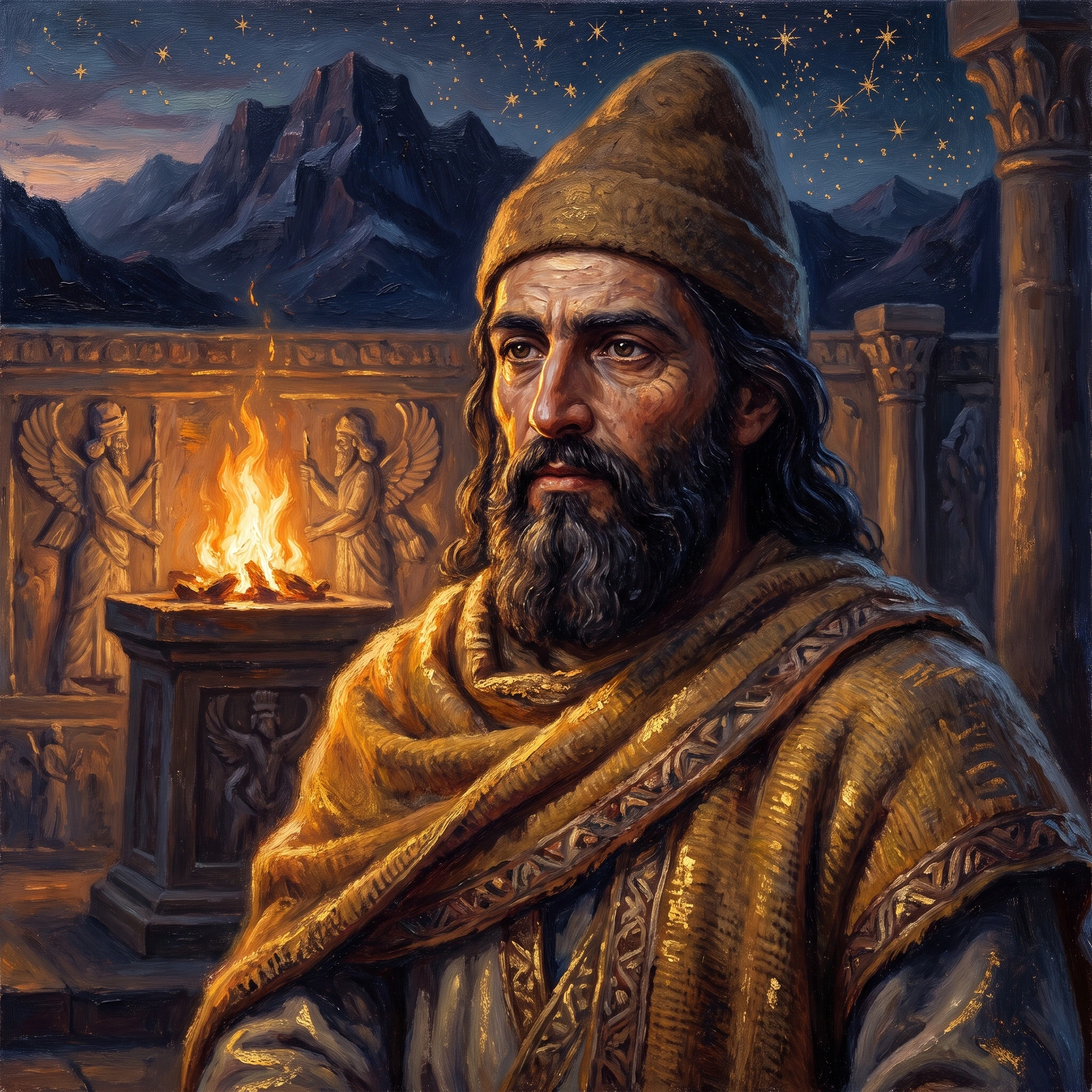
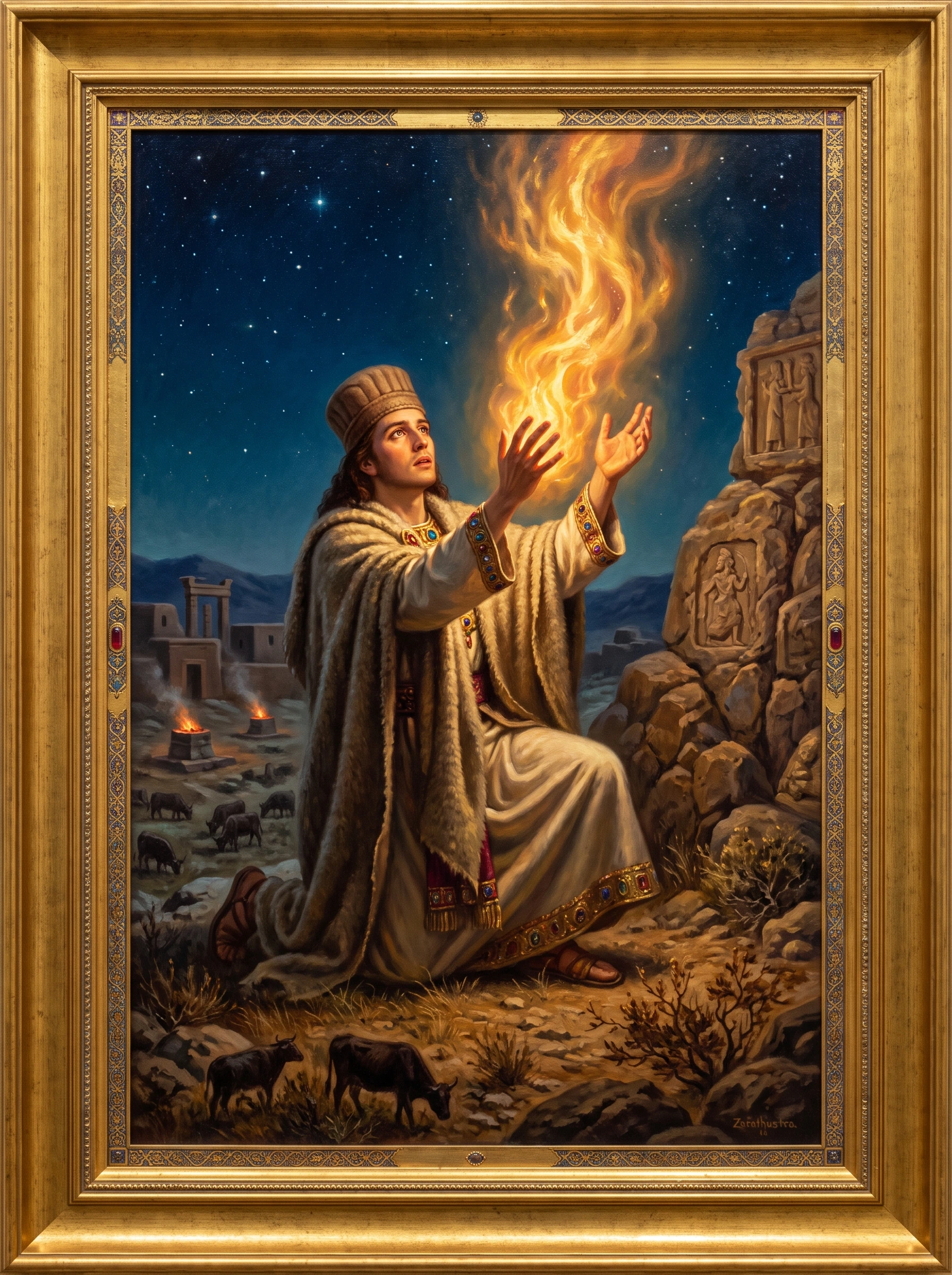
Before Cyrus, before the Greeks, a prophet rose among the herdsmen of ancient Iran — Zarathustra, whom the Greeks called Zoroaster and counted five thousand years before the fall of Troy. Plutarch preserved his doctrine; the scholars still argue over his century. What survives is his reform: a working people's faith of truth spoken and land tilled, the refusal to worship the old daeva gods, and the revelation that the world is a choice between Asha, the truth, and Druj, the Lie.
Asha and Druj — The Cosmic Battle
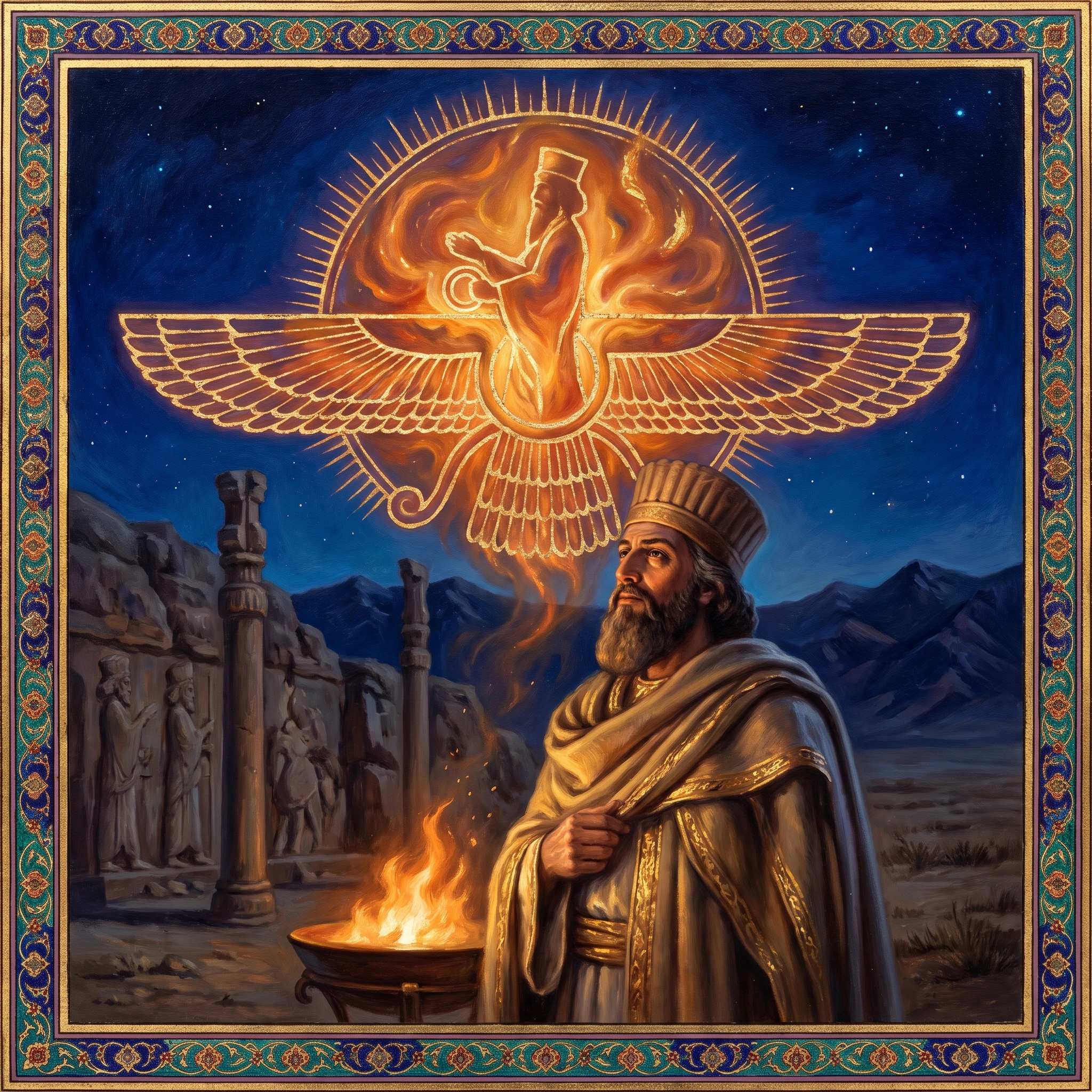
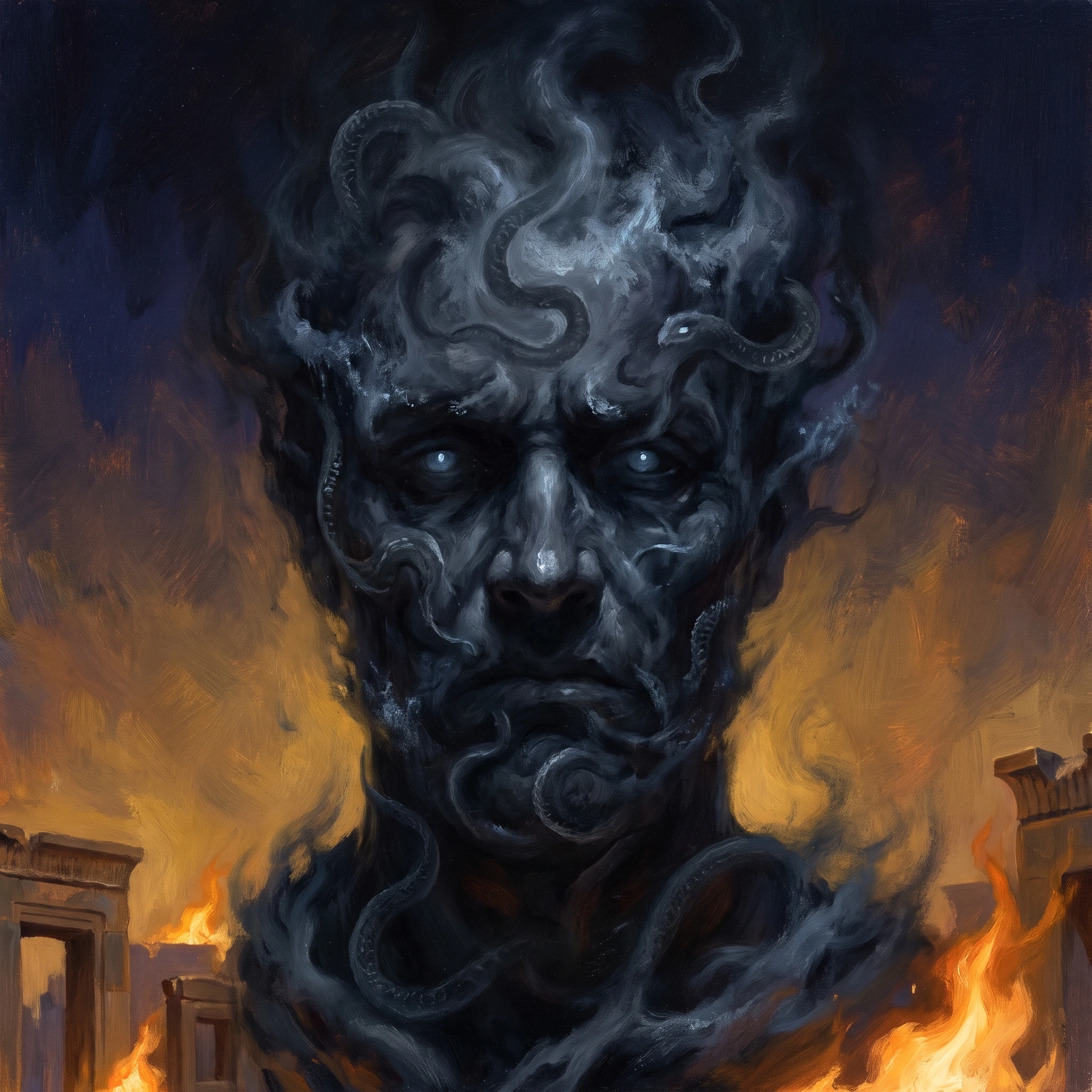
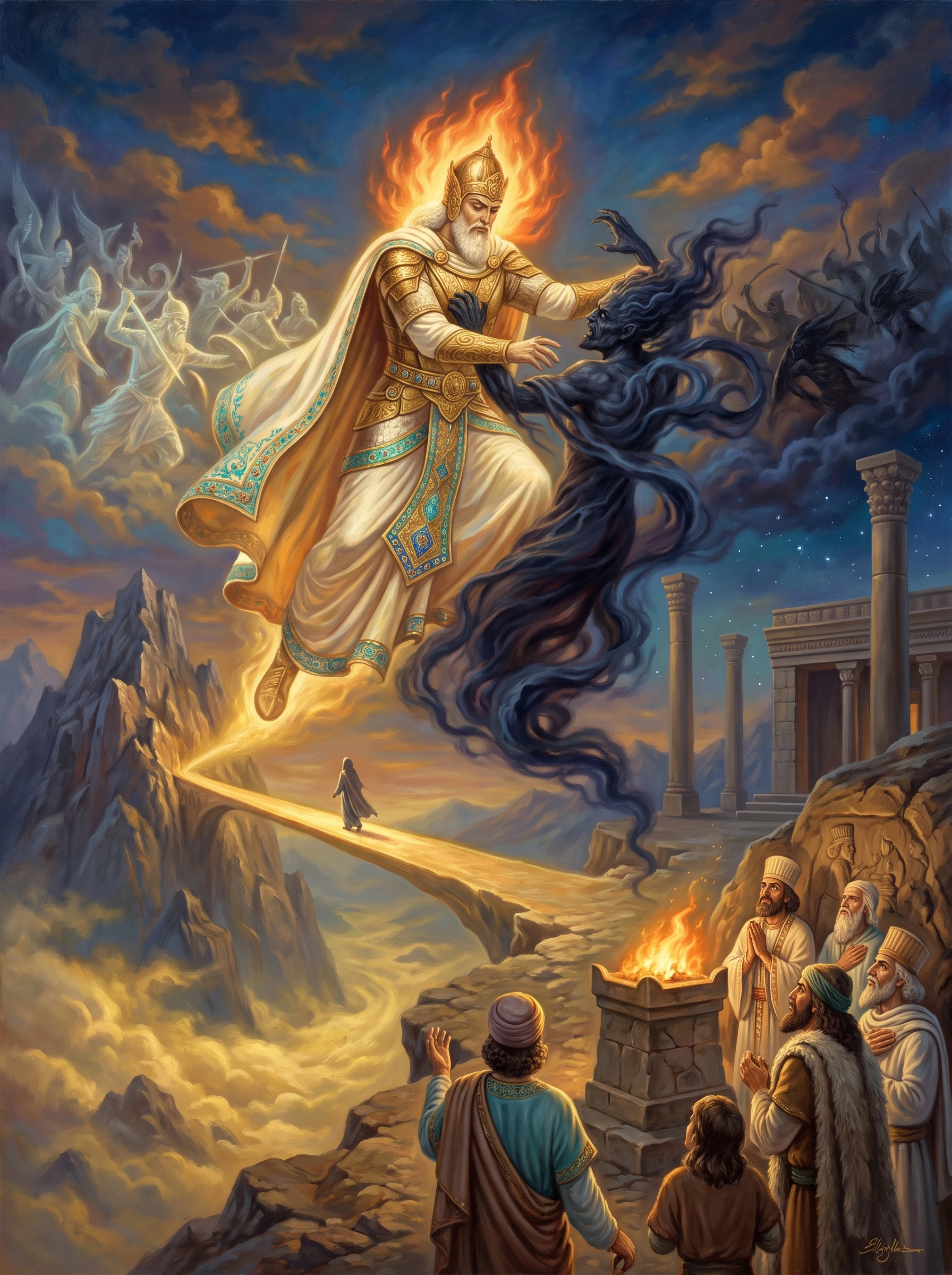
The doctrine at the heart of the Avesta: Ahura Mazda, the all-wise creator of light and life, opposed through twelve thousand years by Angra Mainyu, who is all death. Every human being is a soldier in that war — the farmer's spade as holy as the priest's prayer. At death each soul walks the Chinvat bridge to judgment; at the end of time the world is renewed, evil destroyed, and the dead raised. Heaven, hell, and a final judgment — the ideas that flowed from Persia into Judaism, Christianity, and Islam.
The Sixteen Perfect Lands
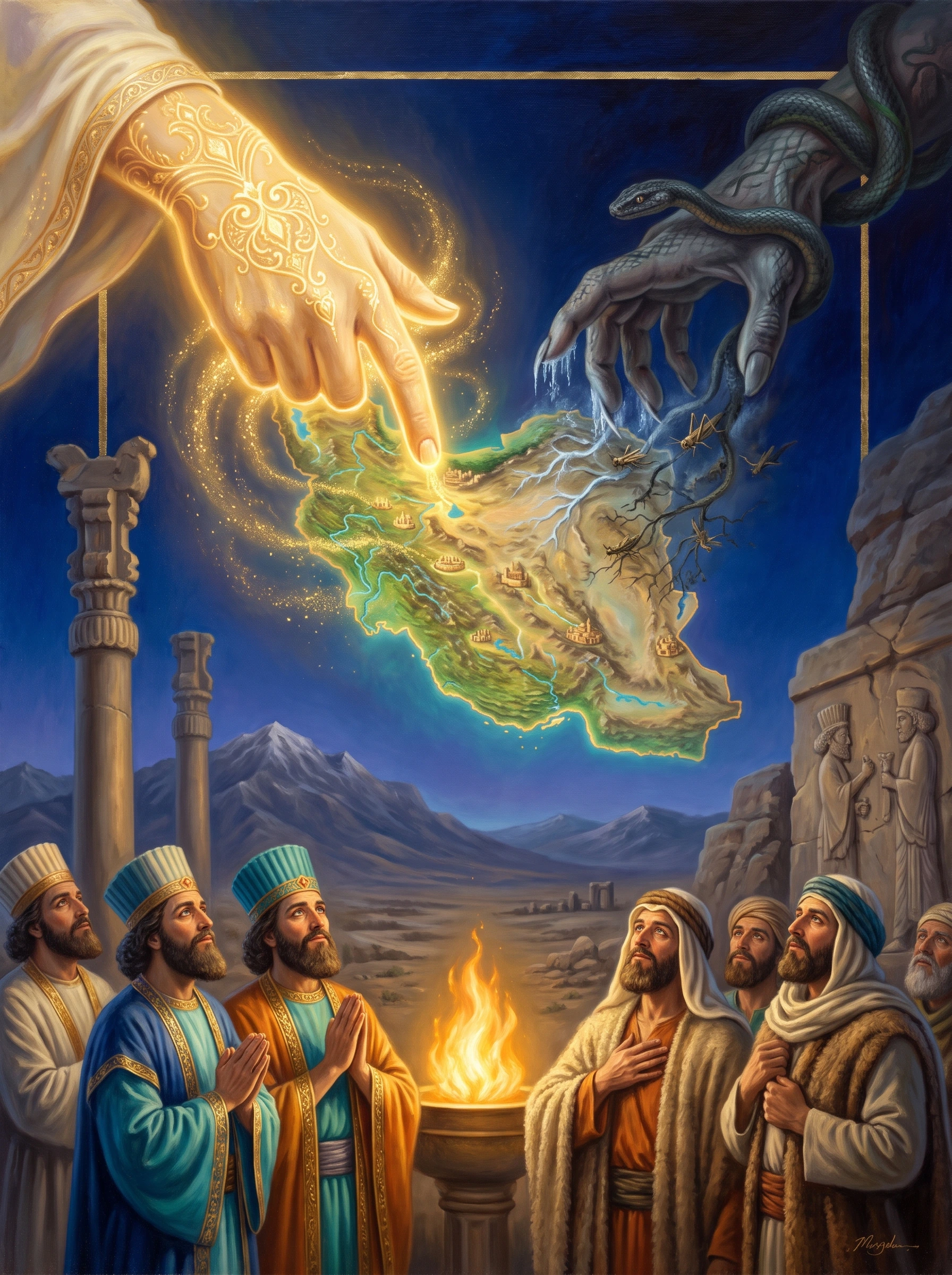
Ahura Mazda tells Zarathustra how the world was made: sixteen good lands, each created perfect — and each answered by Angra Mainyu with a counter-creation. Against the first and best land he sent winter, a work of the demons; against the others the locust, plunder, unbelief, the burying of the dead. The Vendidad's opening chapter is creation as a duel, the map of ancient Iran drawn as a battlefield between the Wise Lord and the spirit who is all death.
Yima and the Deadly Winters
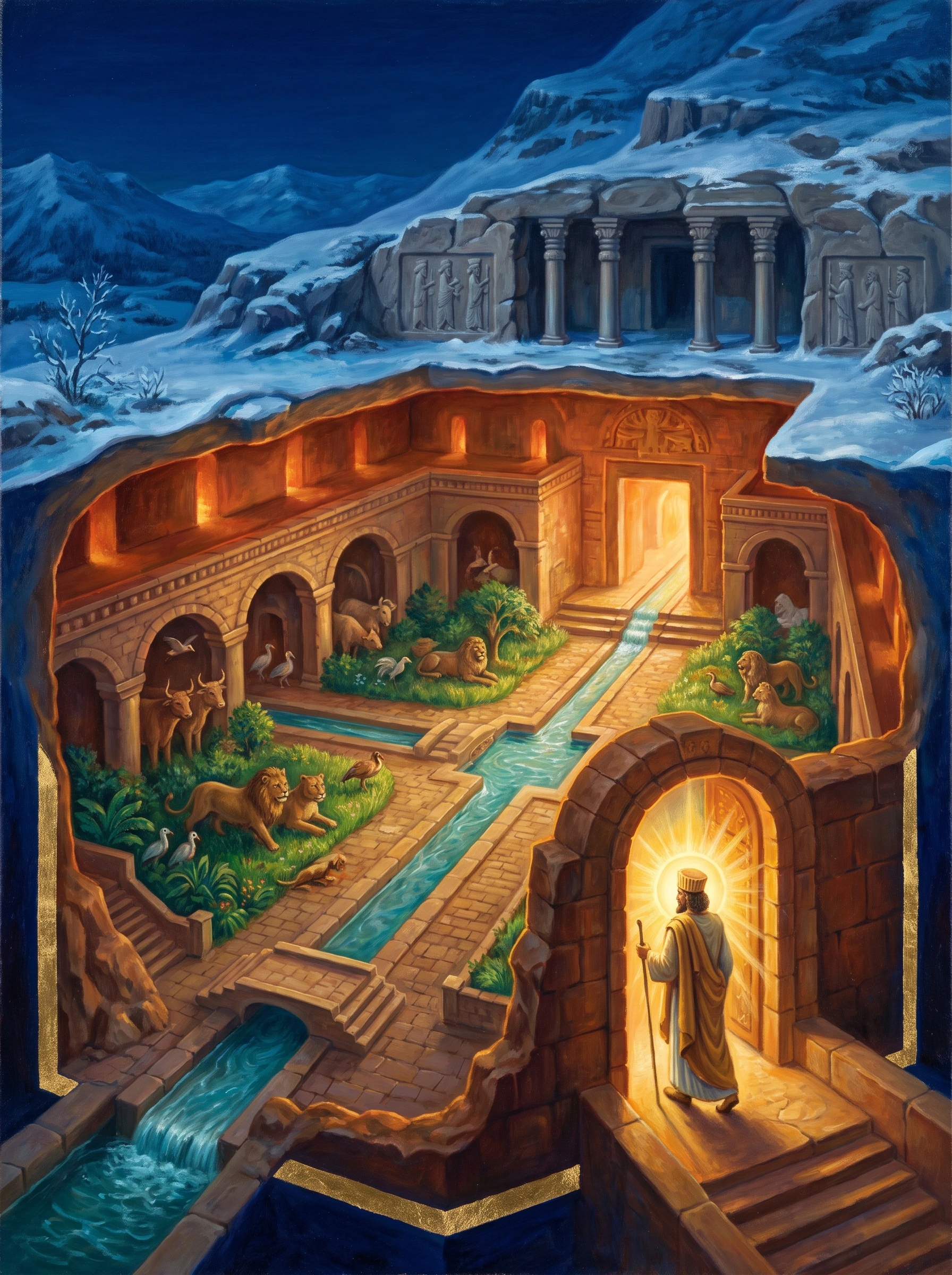
Ahura Mazda offers the religion first to Yima, the good shepherd-king — who will not be its prophet, but agrees to make the world thrive. Three times Yima enlarges the earth with his golden seal when men and flocks overflow it. Then the gods warn him: deadly winters are coming to destroy every living thing. Yima builds the vara — an underground enclosure sheltering the seed of every man, beast, and plant, lit by a false sun — Persia's own ark against Persia's own flood.
The Joy of the Earth
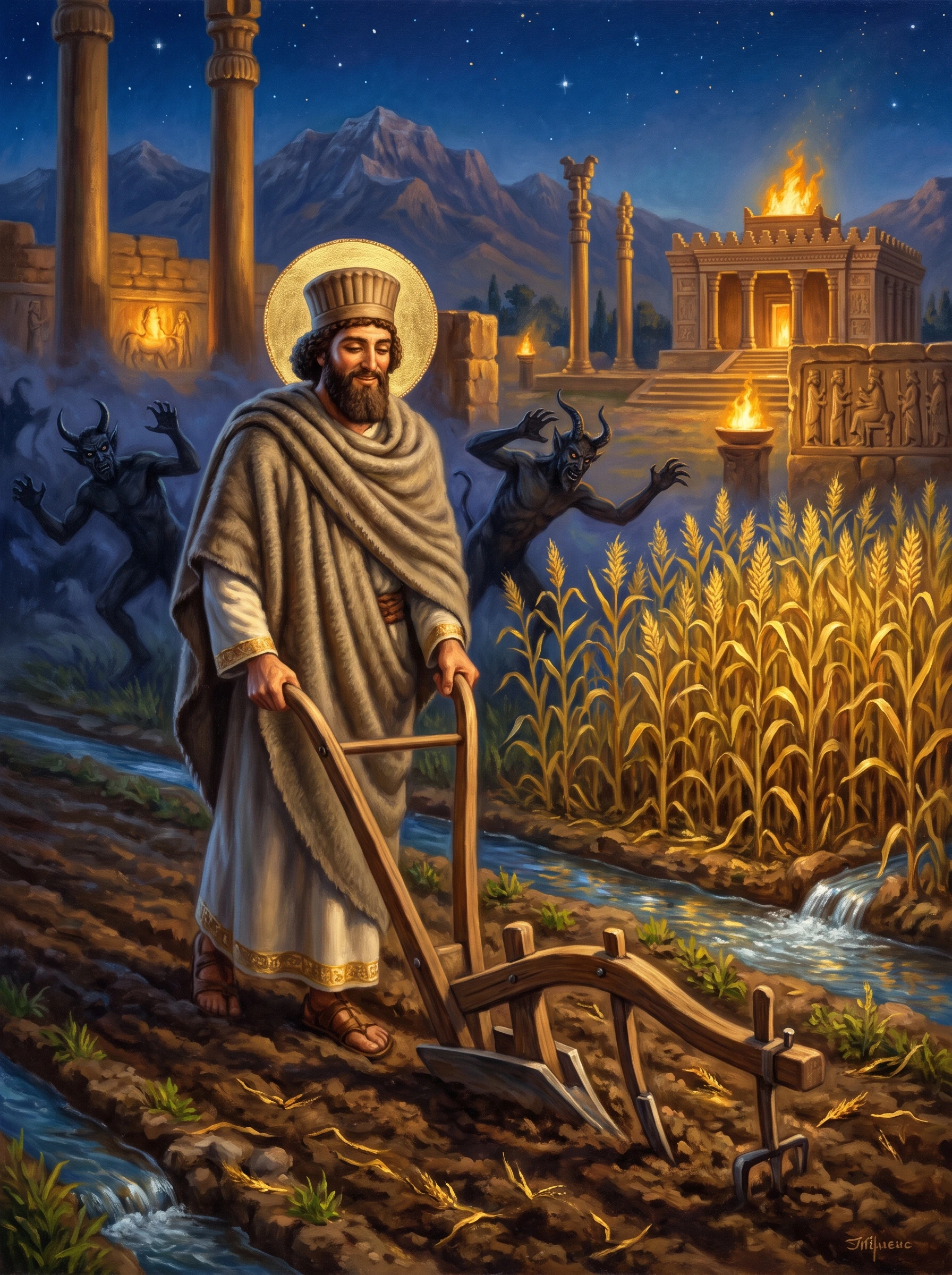
Zarathustra asks where the Earth feels most happy, and the Wise Lord answers: where the faithful man builds his house, tills his corn, waters the dry ground and drains the wet. He who sows corn sows holiness — farming itself is worship in Zarathustra's faith. And because the world runs on trust, the law of the given word follows: the six kinds of contract, the weight of an oath, and the penalties that fall on the man who breaks faith with another.
The Battle with Death
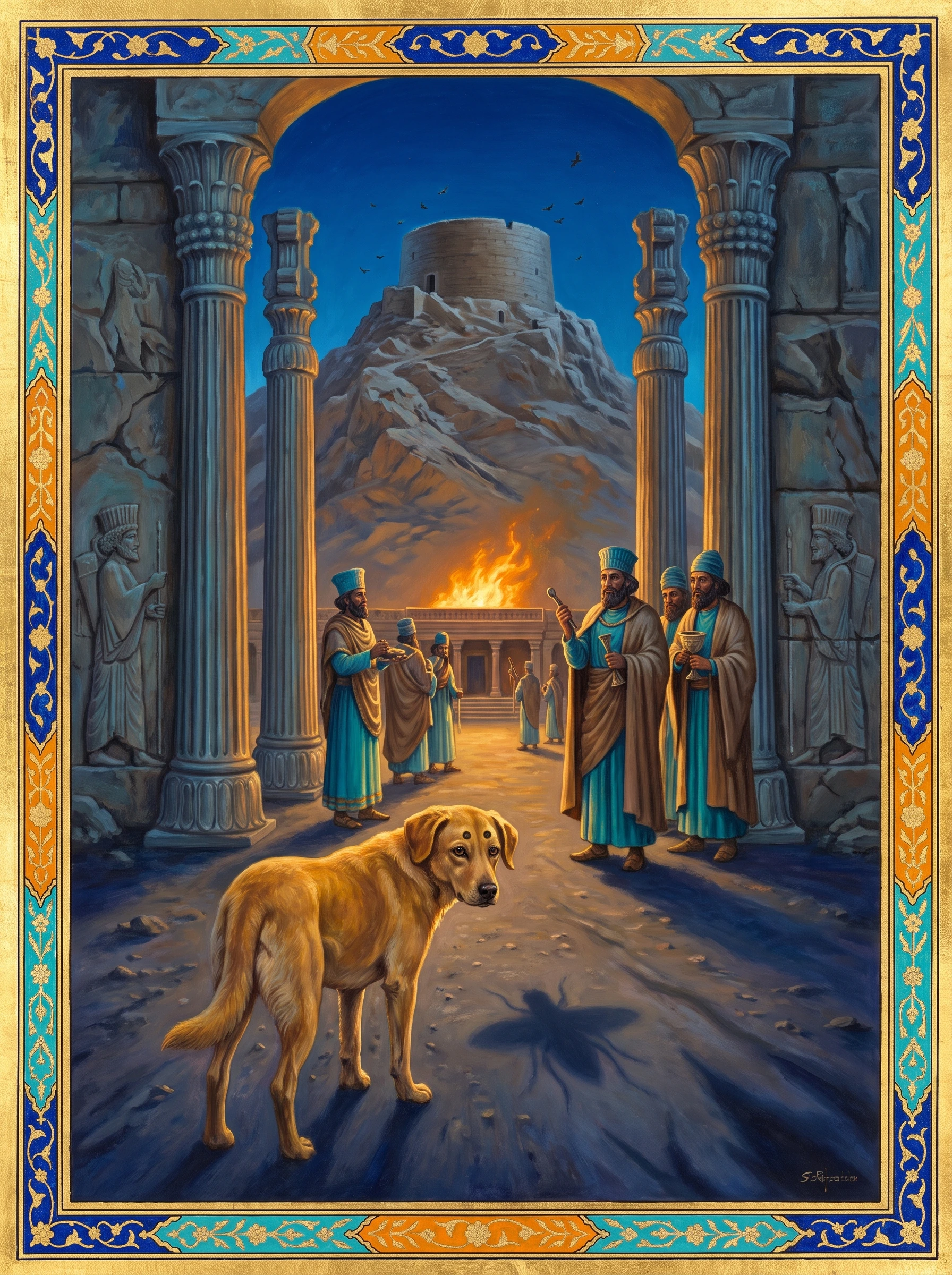
Death is the enemy's weapon, and a corpse is occupied ground: the moment a person dies, the corpse-demon rushes in as a fly from the north. The Vendidad's law of purity is a war manual — why the dead are laid on high places for the birds, never buried in the holy earth nor burned in the holy fire; the gaze of the dog that drives the demon back; the nine nights' cleansing of the defiled; and the ancient spells recited to scour the Lie from the world.
Hymns of Fire and Water
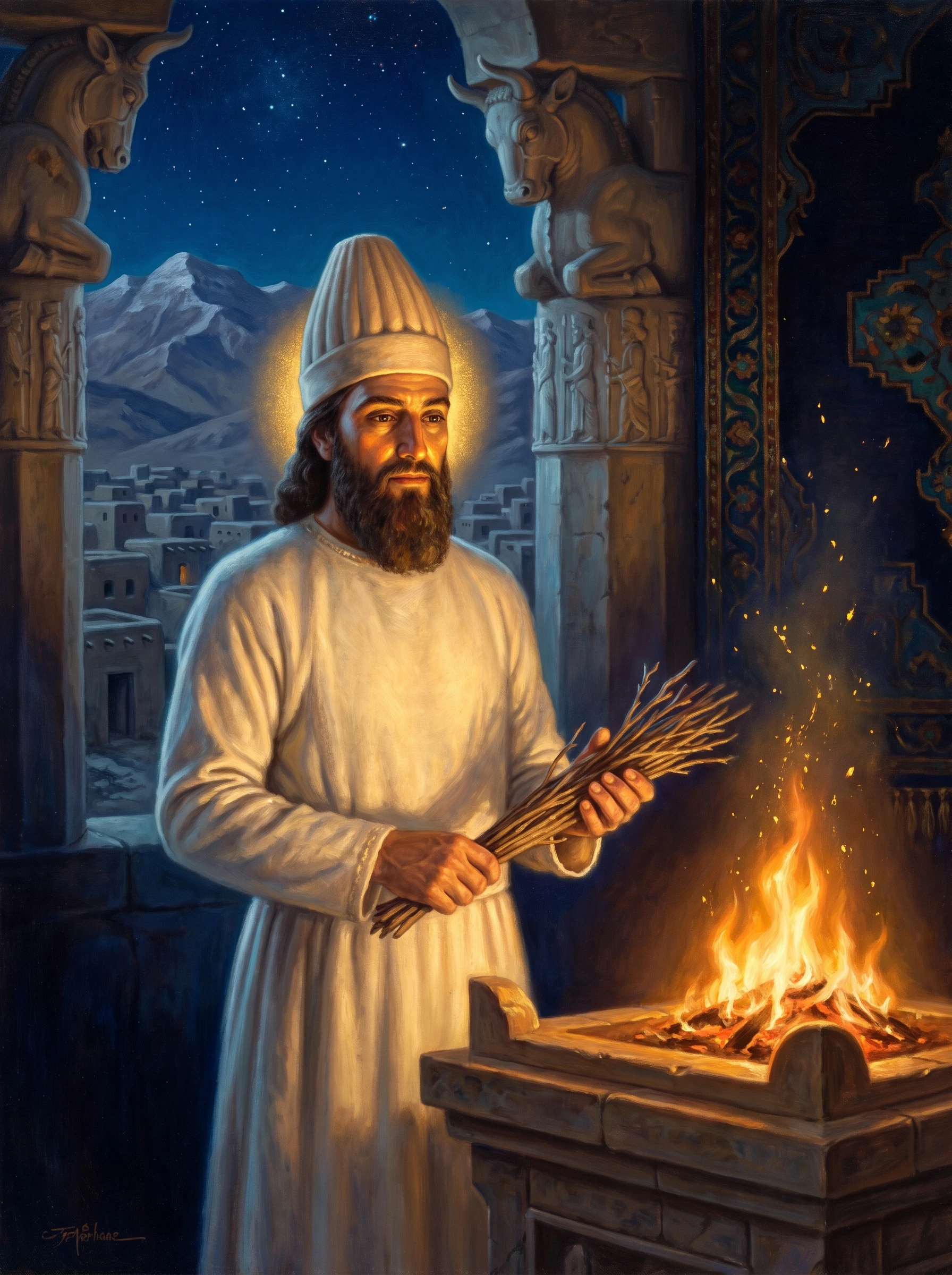
The living liturgy of the faith: a day of worship from dawn to starlight. The priest tends the fire that must never go out and chants the ancient praises — to the waters and plants, to the Bountiful Immortals who surround the Wise Lord's throne, to the soul of the Holy Bull, to rain as a healing power, and to the lights of sun, moon, and stars. Here the Avesta stops legislating and sings.
The Rediscovery
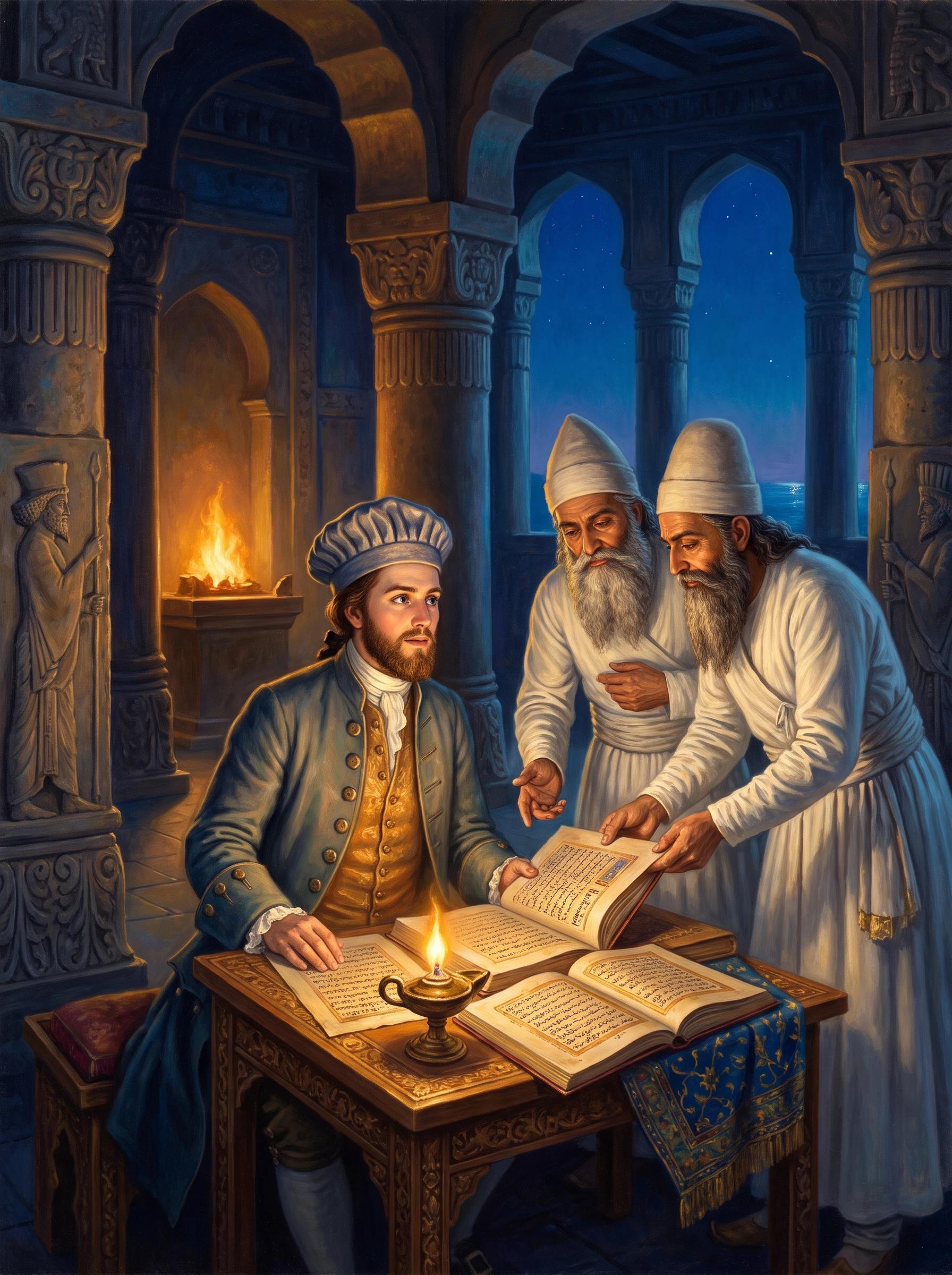
In 1754 a young French scholar, Anquetil du Perron, saw four leaves of an unreadable Zend manuscript — and enlisted as a common soldier to reach India and learn its secret. Years among the Parsi priests of Surat won him 180 manuscripts and the first translation of the Avesta (1771). William Jones and the English scholars mocked it as a forgery too dull to be Zoroaster's; comparative philology vindicated Anquetil after his death. The faith of Cyrus and Darius, scattered by Alexander's conquest, gave its book back to the world.