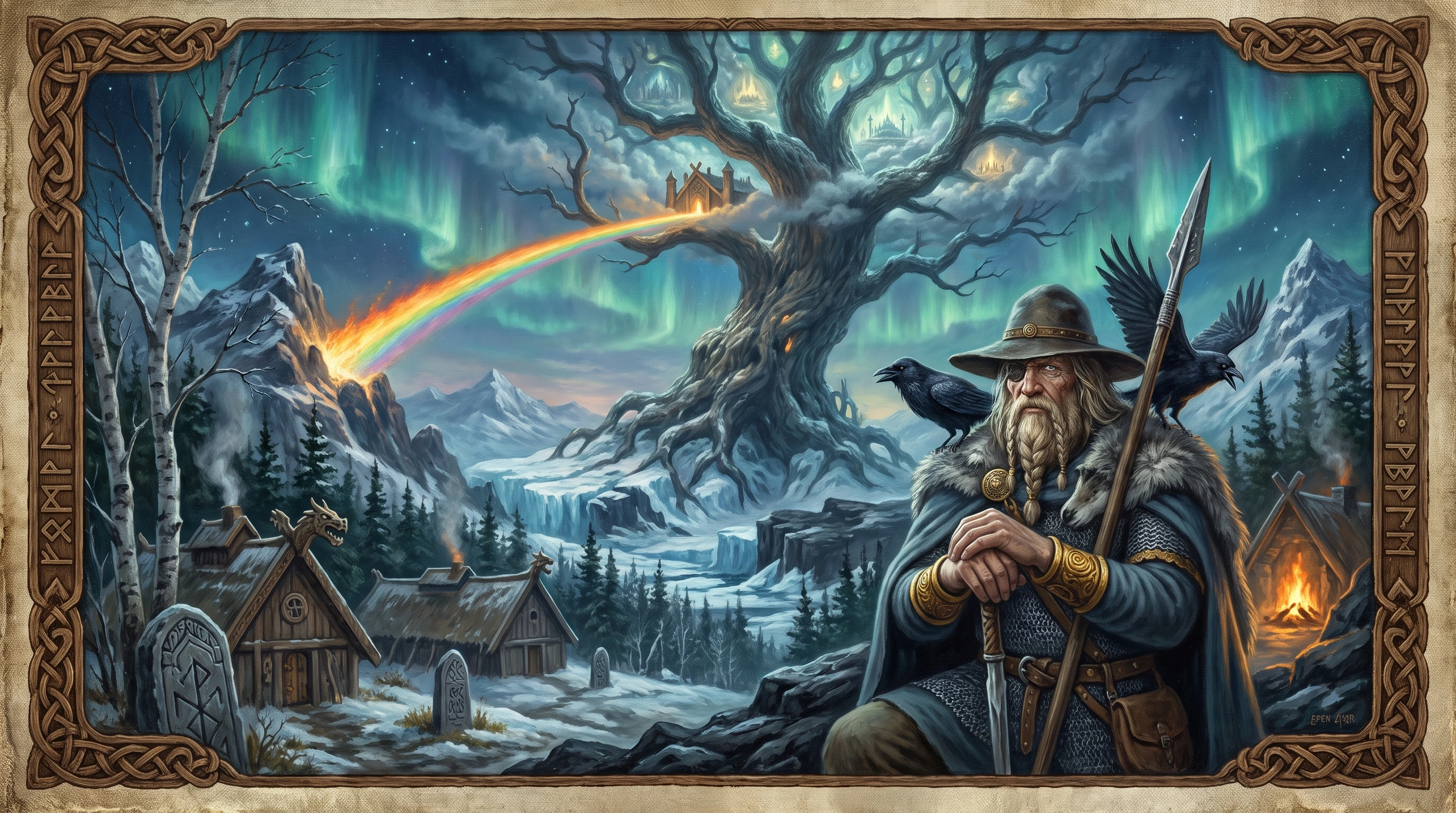
The Prose Edda — The Norse Myths
Snorri Sturluson’s thirteenth-century treasury of Norse mythology, retold from the Rasmus B. Anderson translation — the making of the worlds, Odin and Valhalla, Thor and the giants, Loki’s treacheries, the death of Baldr, and Ragnarok.
Short on Time?
The World That Ends in Fire: Odin, Loki, and Ragnarok
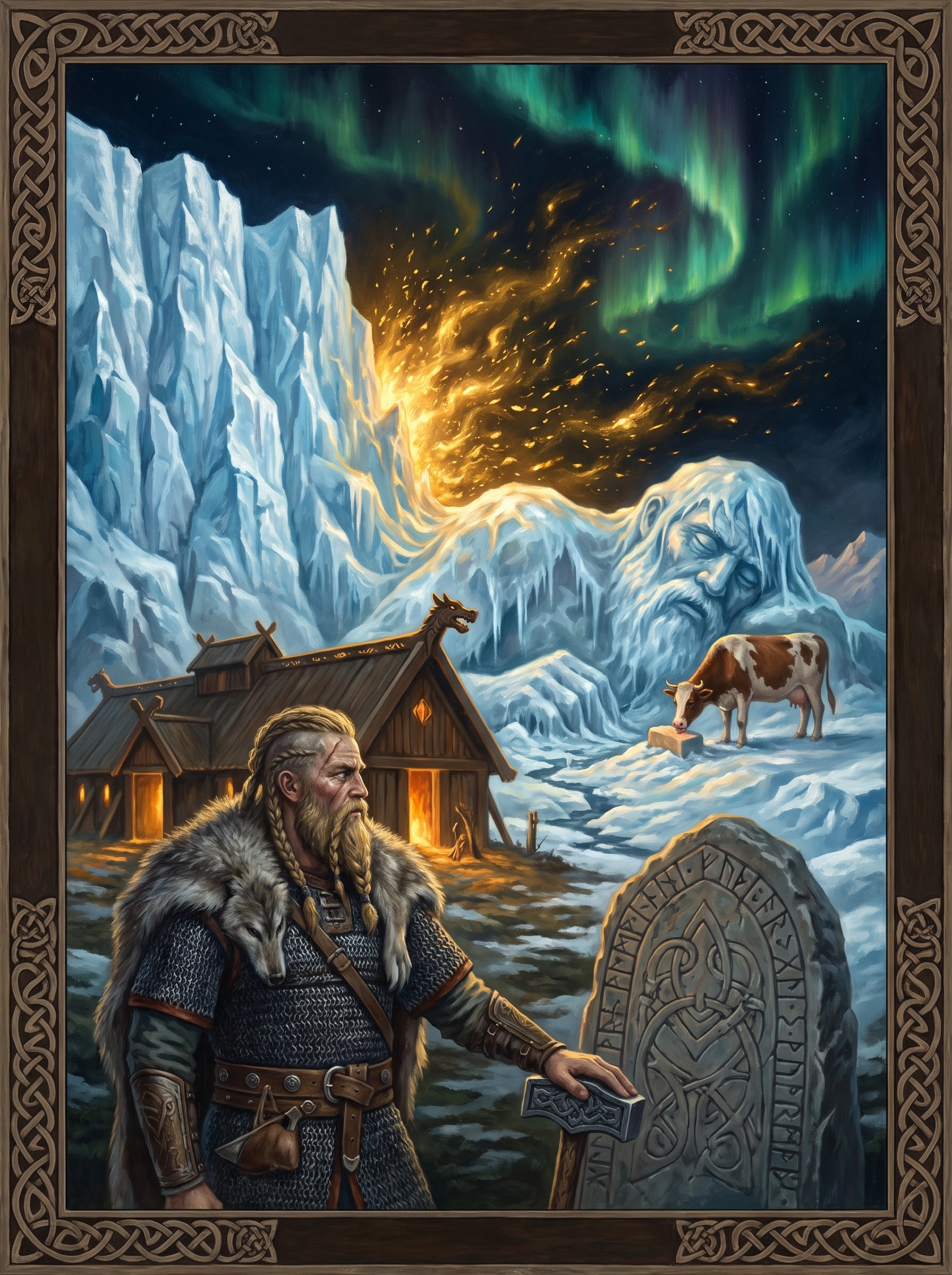
Fire and Ice
Before earth or sky there is only a world of ice, a world of fire, and the yawning gap between them. Where heat meets frost, the melting drops come alive as Ymir, the first giant, fed by the cow Audhumla — whose salt-licking uncovers Buri, grandfather of the gods. Odin and his brothers kill Ymir and build the world from his body: flesh into earth, blood into sea, skull into sky. From two driftwood trees they make the first humans, Ask and Embla, and wall their world of Midgard against the giants who remember.
The World Tree
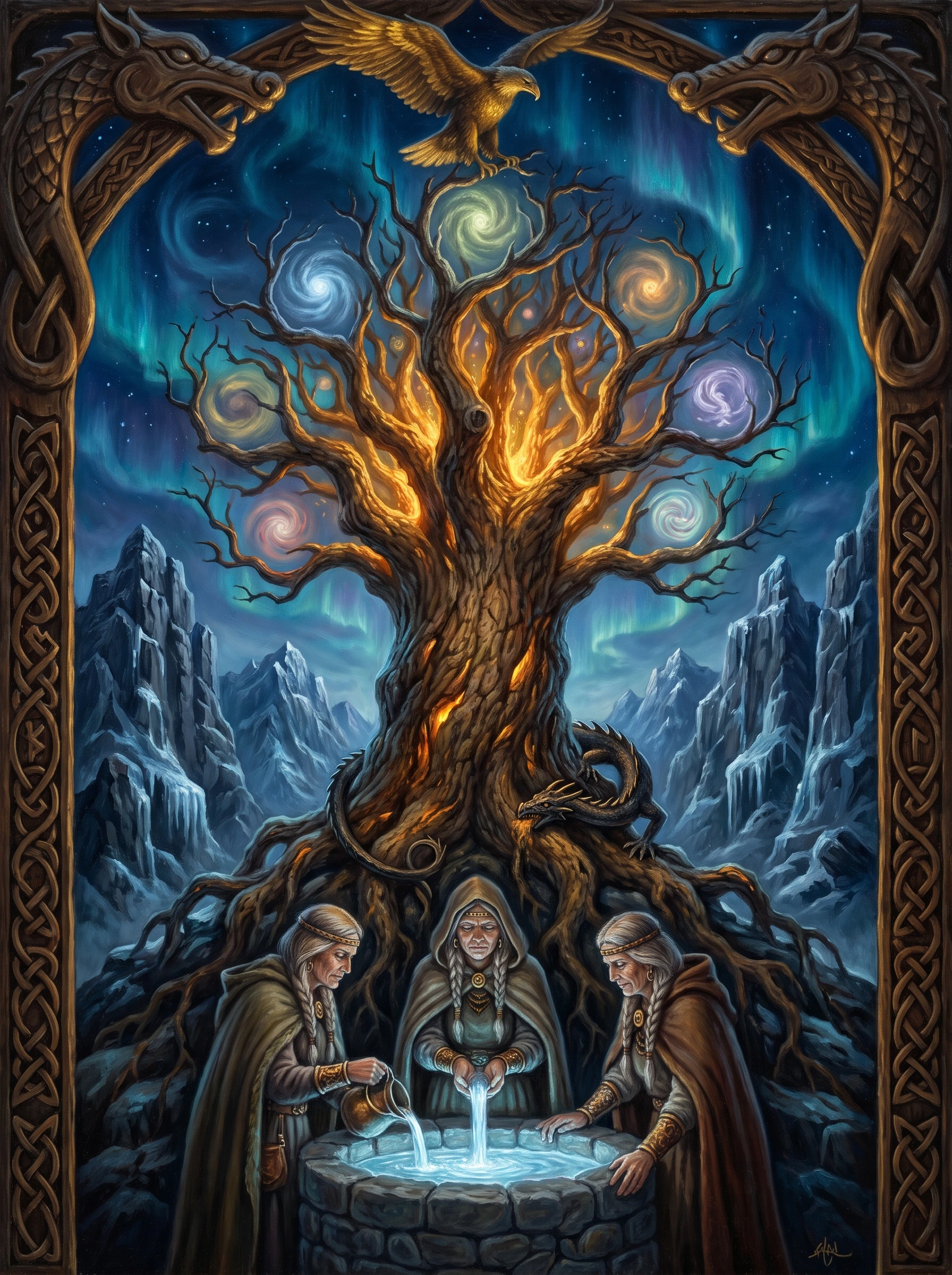
Everything that exists hangs on one colossal ash tree — Yggdrasil, whose branches spread over the sky and whose three roots reach the gods, the giants, and the dead. Nine worlds rest in it, joined by the burning rainbow bridge Bifrost. Beneath one root, Odin pays an eye for a drink of wisdom; beneath another, the dragon Nidhogg chews forever. And beside the well of fate sit the three Norns — Has-Been, Becoming, and Shall-Be — carving destinies that not even the gods can appeal.
The All-Father
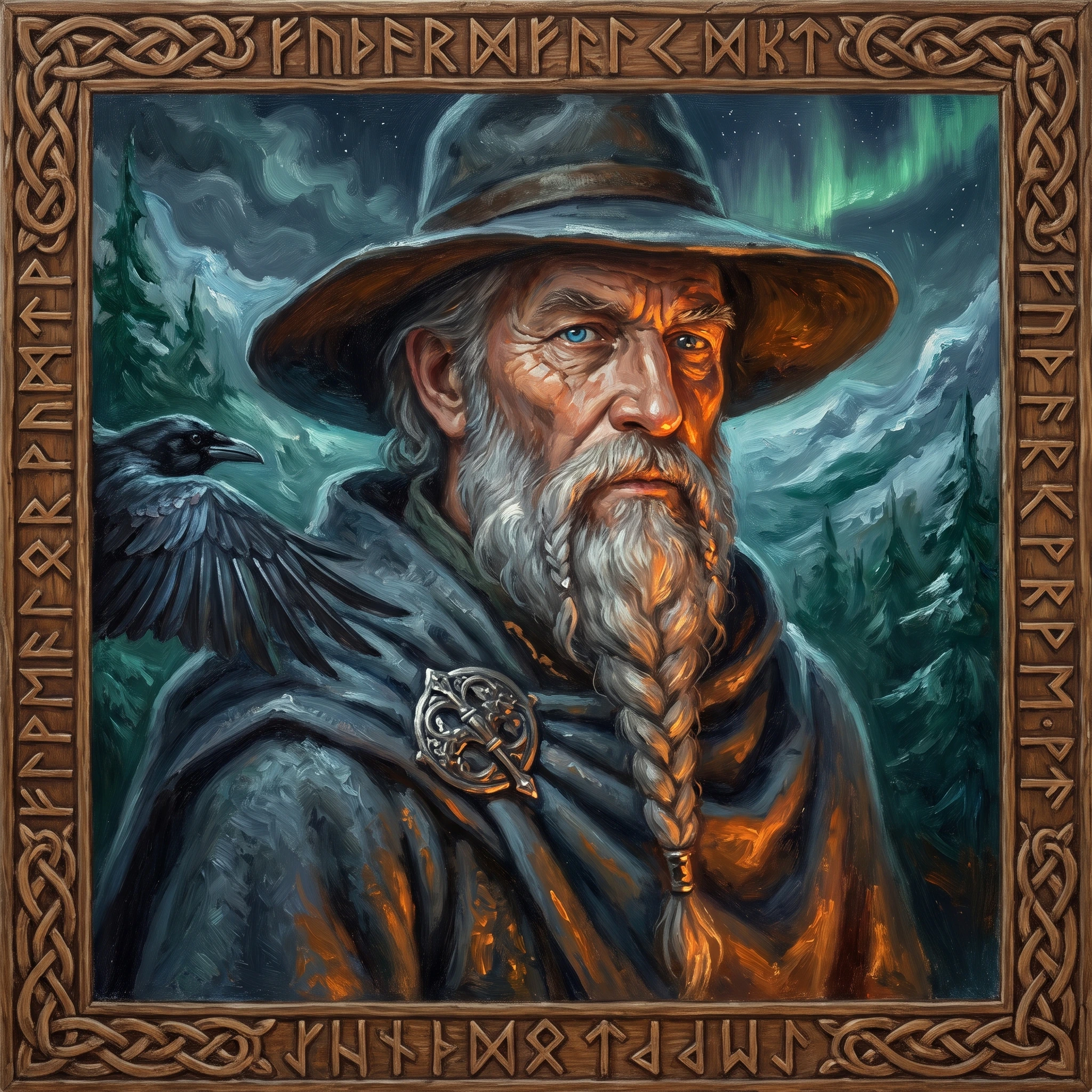
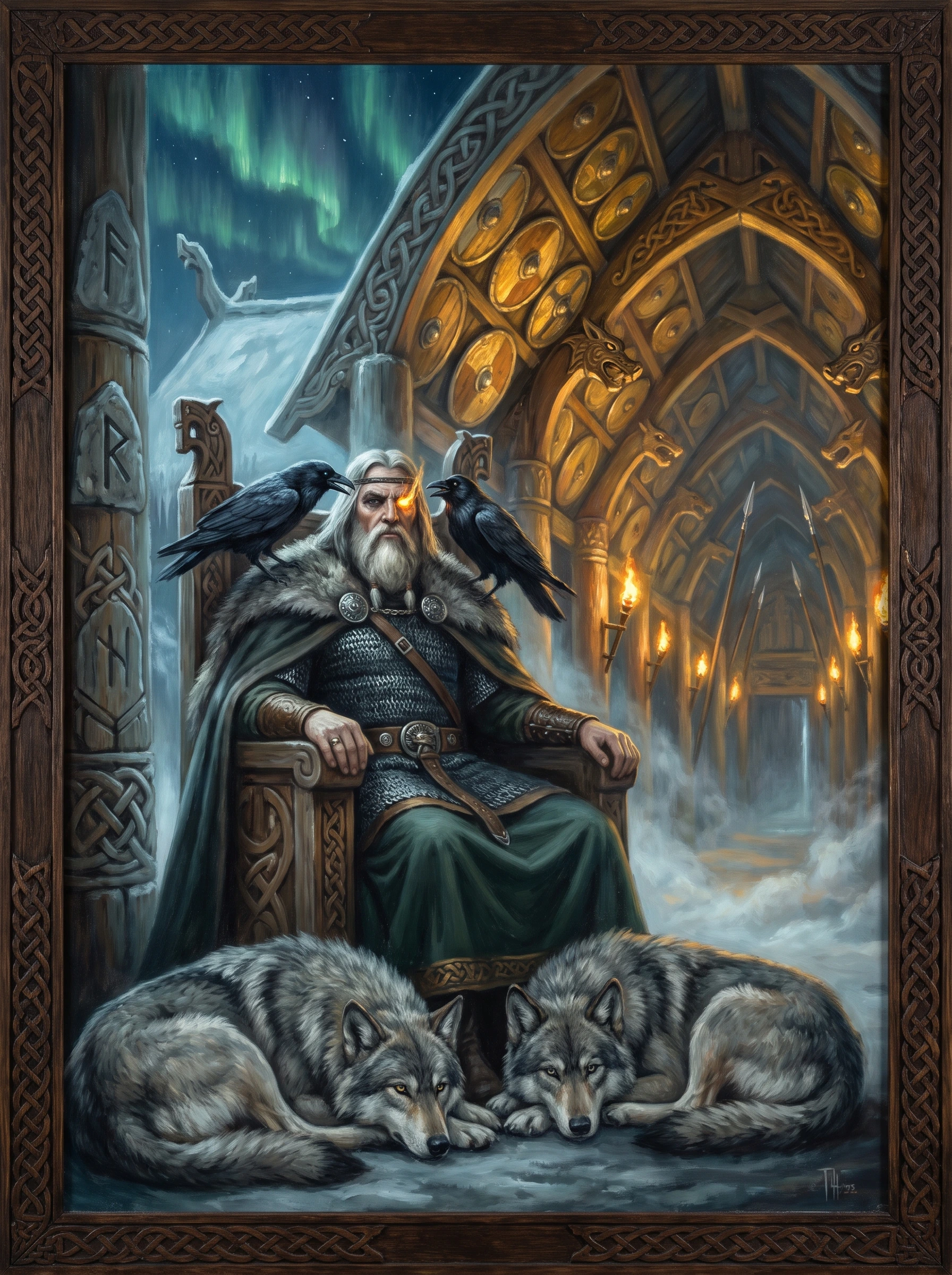
Odin, the one-eyed king of the gods, hungers for one thing: knowledge of what is coming. His ravens Hugin and Munin — Thought and Memory — fly the worlds each day and whisper what they see. His hall, Valhalla, is no paradise but a barracks: the valkyries harvest the battle-dead, and the einherjar — the chosen slain — drill daily for a battle Odin already knows he will lose. Around him gather Frigg, Baldr, Tyr, Heimdall — and one guest who belongs to no category at all.
Thor, God of Thunder
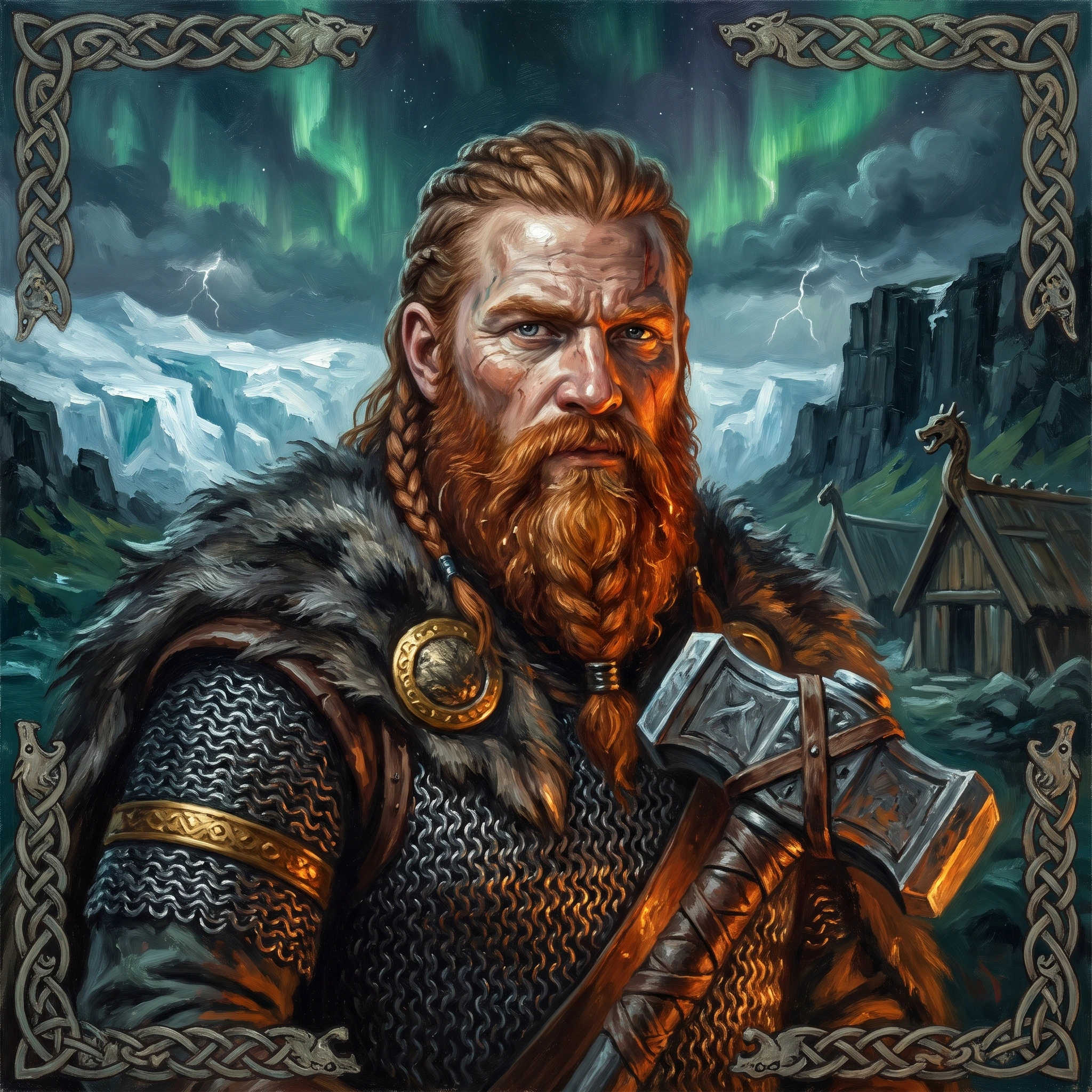
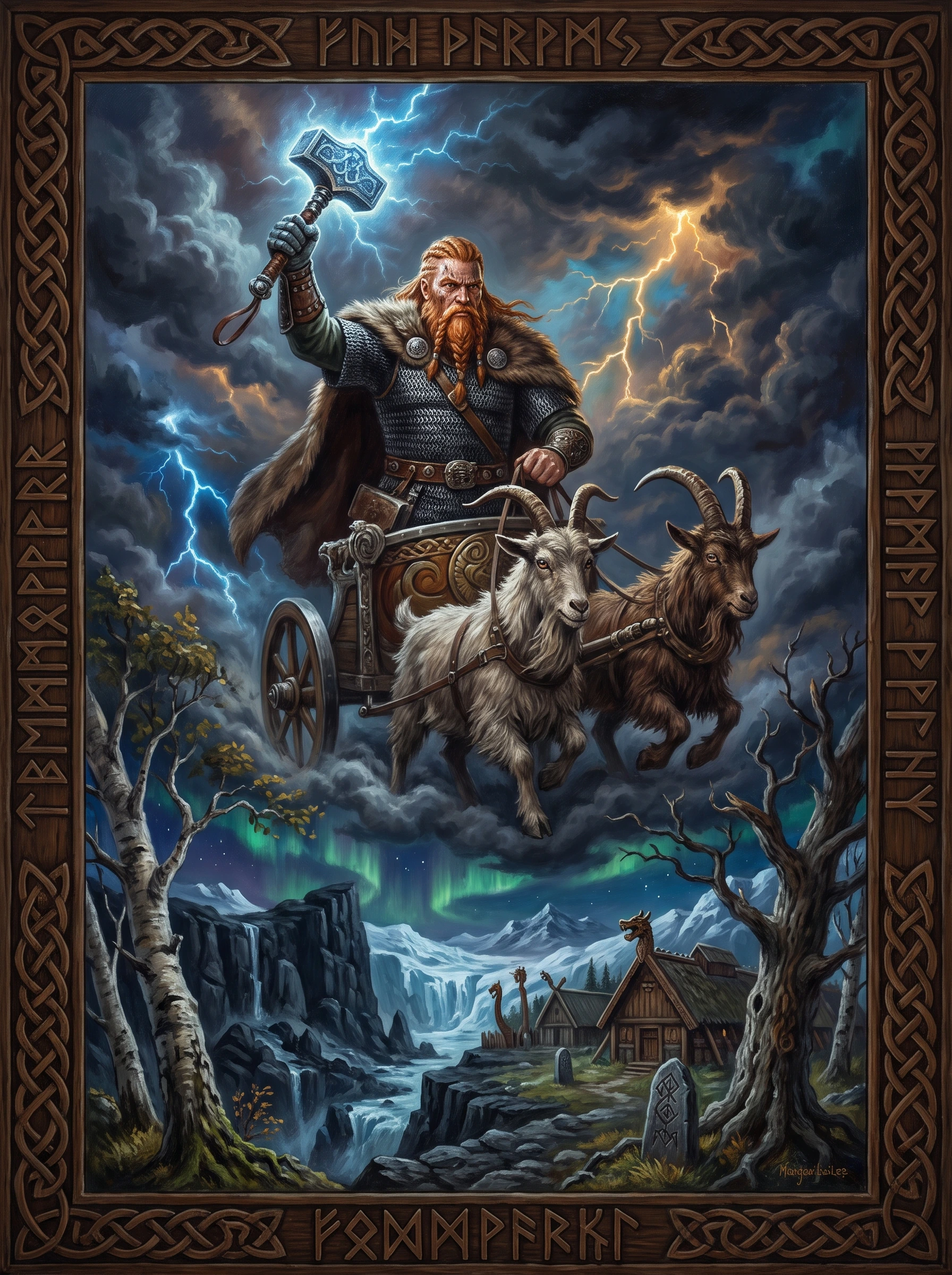
Thunder is a red-bearded god driving goats across the sky on his way to break a giant's skull. Thor — strongest of gods and men, beloved of farmers while kings prayed to Odin — carries three treasures: the hammer Mjolnir that never misses and always returns, a belt that doubles his strength, and iron gloves to grip the hammer's shaft. When a giant builder nearly wins the sun, the moon, and Freyja on a rigged wager, it is Thor's hammer that settles the contract — and Loki's shape-shifting that produces, months later, Odin's eight-legged horse.
Loki and His Children
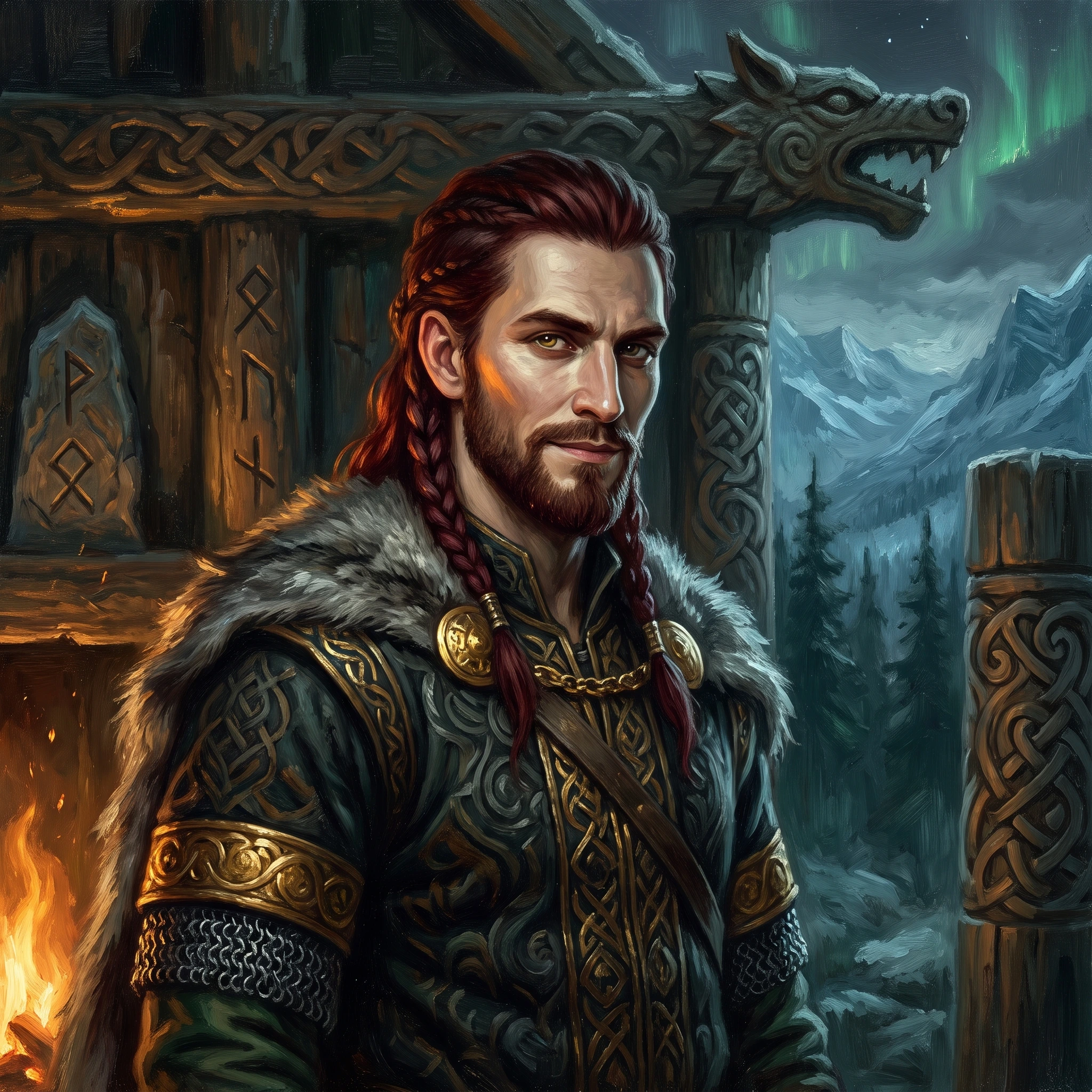
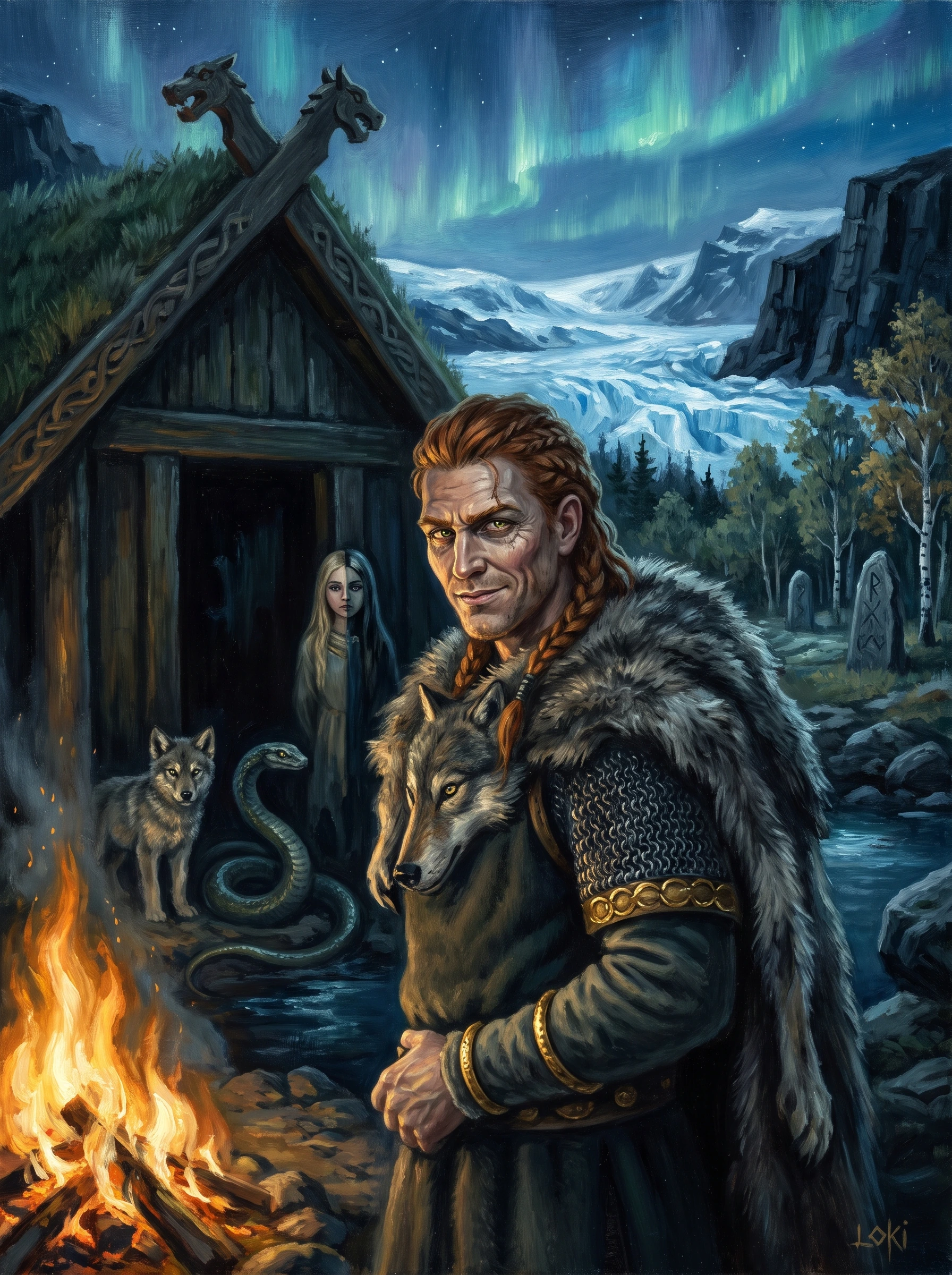
Handsome, brilliant, born of giants, and sworn as Odin's blood-brother, Loki is the fixer the gods cannot do without — and the doom they raised at their own table. In the land of giants he fathers three children: the wolf-cub Fenrir, the serpent Jormungand, and Hel, half living woman, half corpse. Warned by prophecy, Odin throws the serpent into the sea, where it grows to circle the world; banishes the daughter to rule the dead; and keeps the wolf in Asgard — where only brave Tyr dares feed it. Every judgment builds the disaster it was meant to prevent.
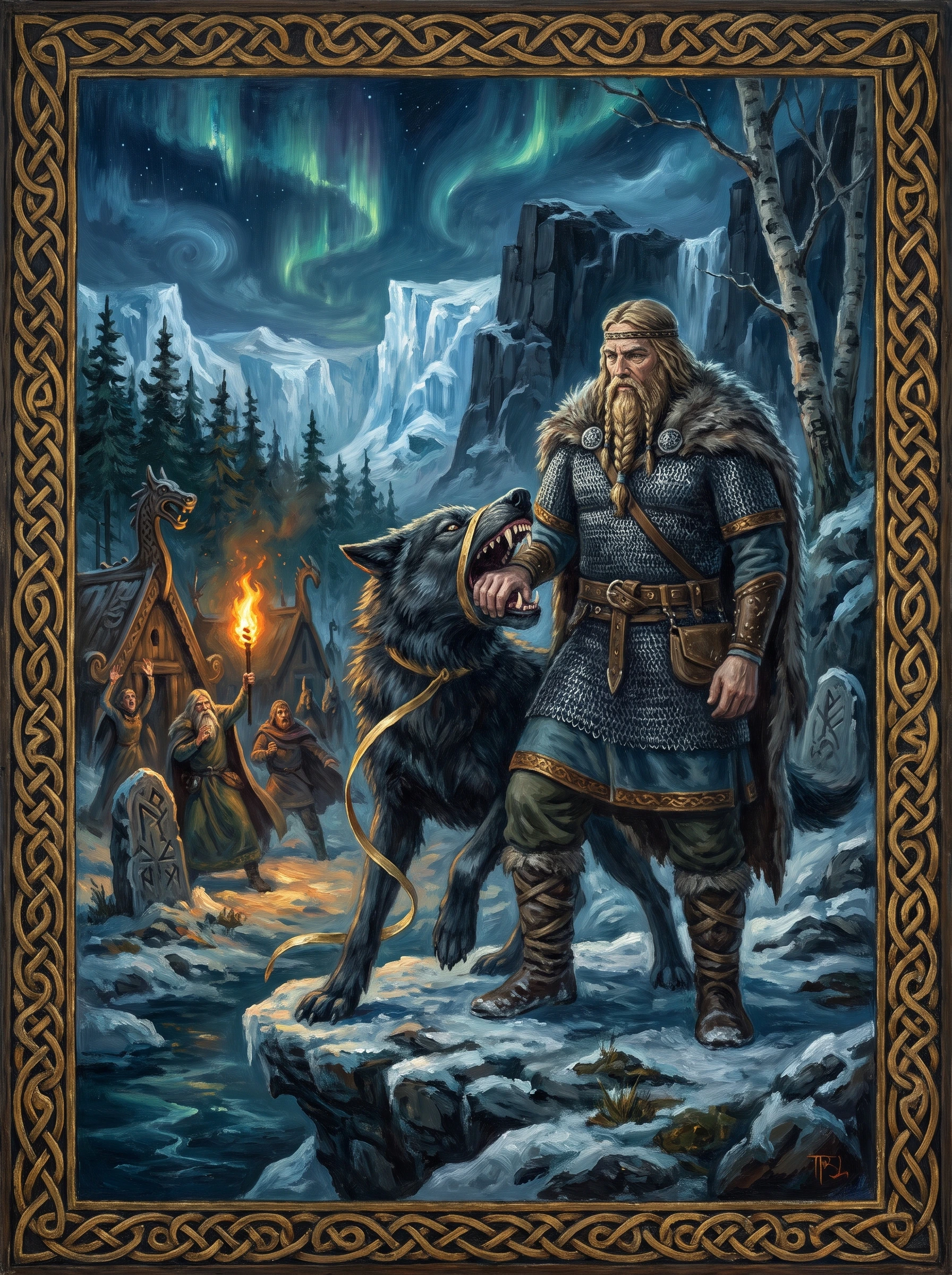
The Binding of Fenrir
The wolf the gods raised grows past all control, and two great chains burst like thread. So the dwarfs forge Gleipnir — a silken ribbon made of six impossible things, from the footfall of a cat to the breath of a fish. Fenrir smells the trick and names his price: a god's hand in his mouth as pledge of good faith. Only Tyr steps forward. The ribbon holds, the gods laugh, the jaws close — and the god of oaths is one-handed forever, the walking price of a promise the gods never meant to keep.
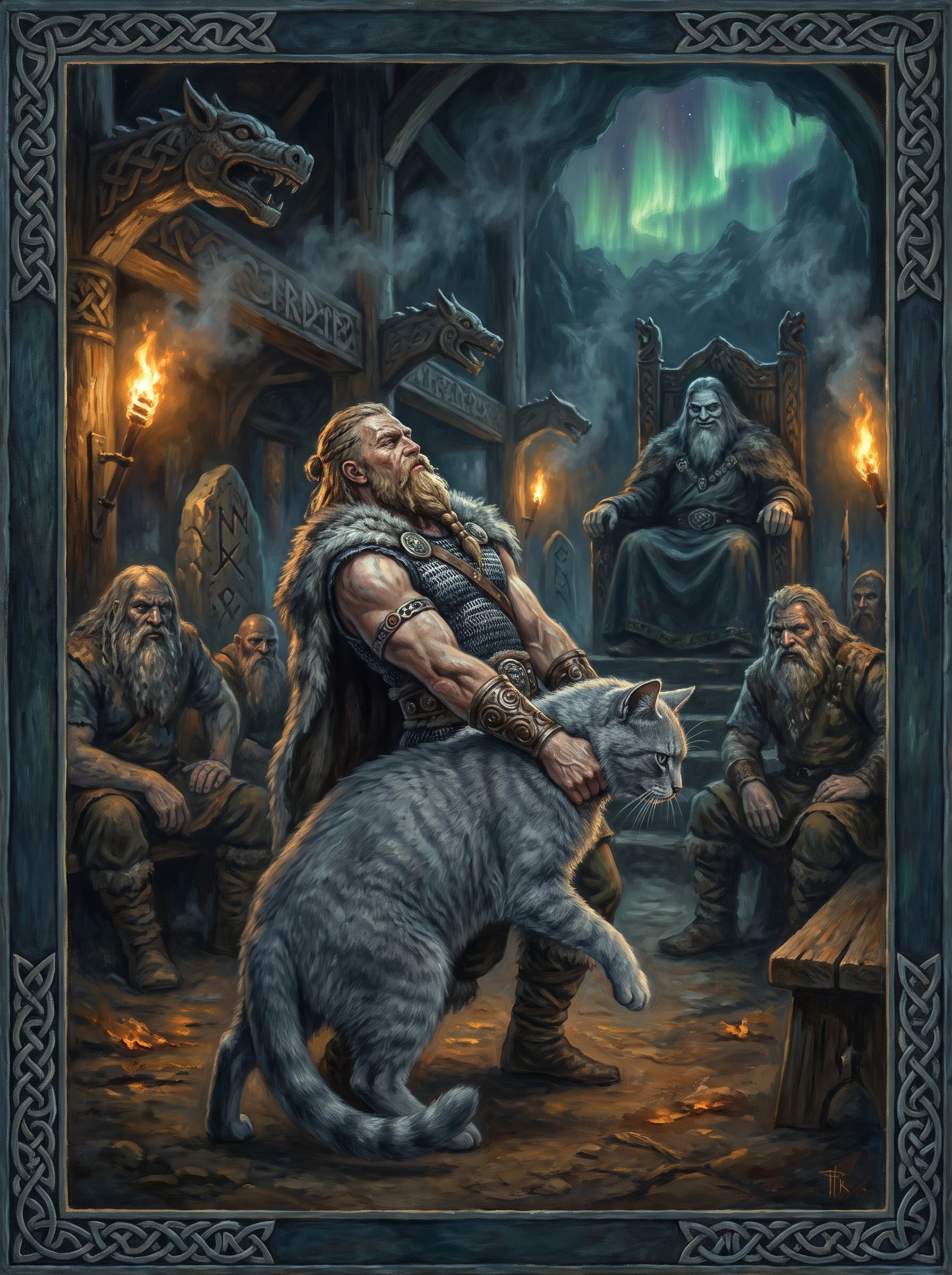
The Journey to Utgard
Thor sleeps in a giant's glove, fails to open a bag of provisions, and dents a mountain with three hammer-blows meant for a snoring skull. In the castle of Utgard, giant king of illusions, the god of strength is beaten at drinking, lifting a cat, and wrestling an old woman — until the morning after, when Utgard-Loki confesses the truth: the horn was plumbed into the ocean, the cat was the World Serpent, and the crone was old age itself, which brings down everyone. Rigged or not, the contests concede the point: nothing that can be fought outfights Thor.
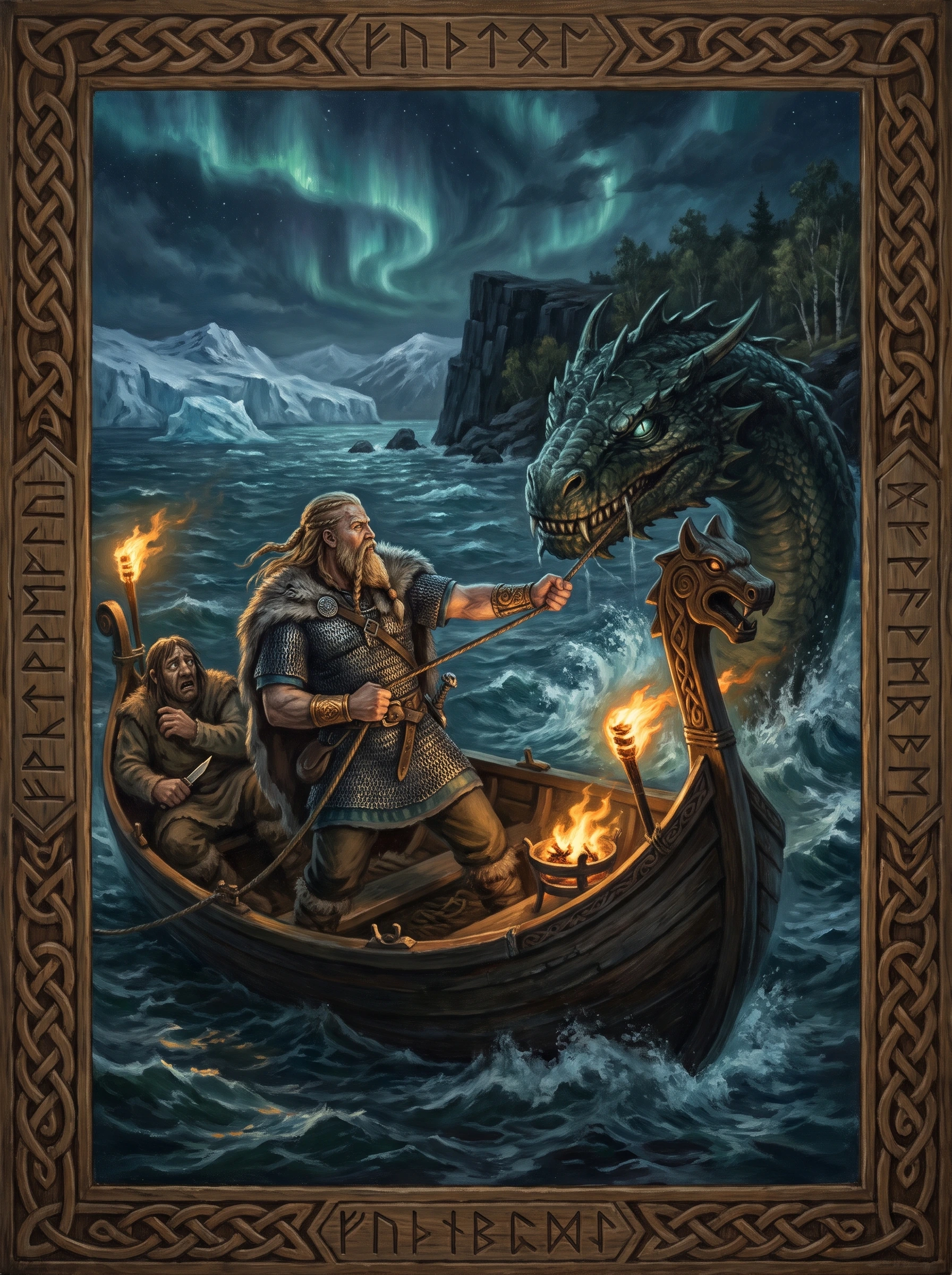
Fishing for the World Serpent
Unable to forget the grey cat of Utgard, Thor rows out with the giant Hymir, an ox-head for bait, and a grudge — far past the fishing banks, over the deep water where the World Serpent lies. Jormungand takes the hook, Thor's feet go through the boat to brace on the seabed, and god and serpent come eye to venom-streaming eye — until the terrified giant cuts the line one heartbeat before the hammer falls. The Norse carved this held breath on picture-stones for centuries: the blow that does not land, the third meeting postponed for the last morning.
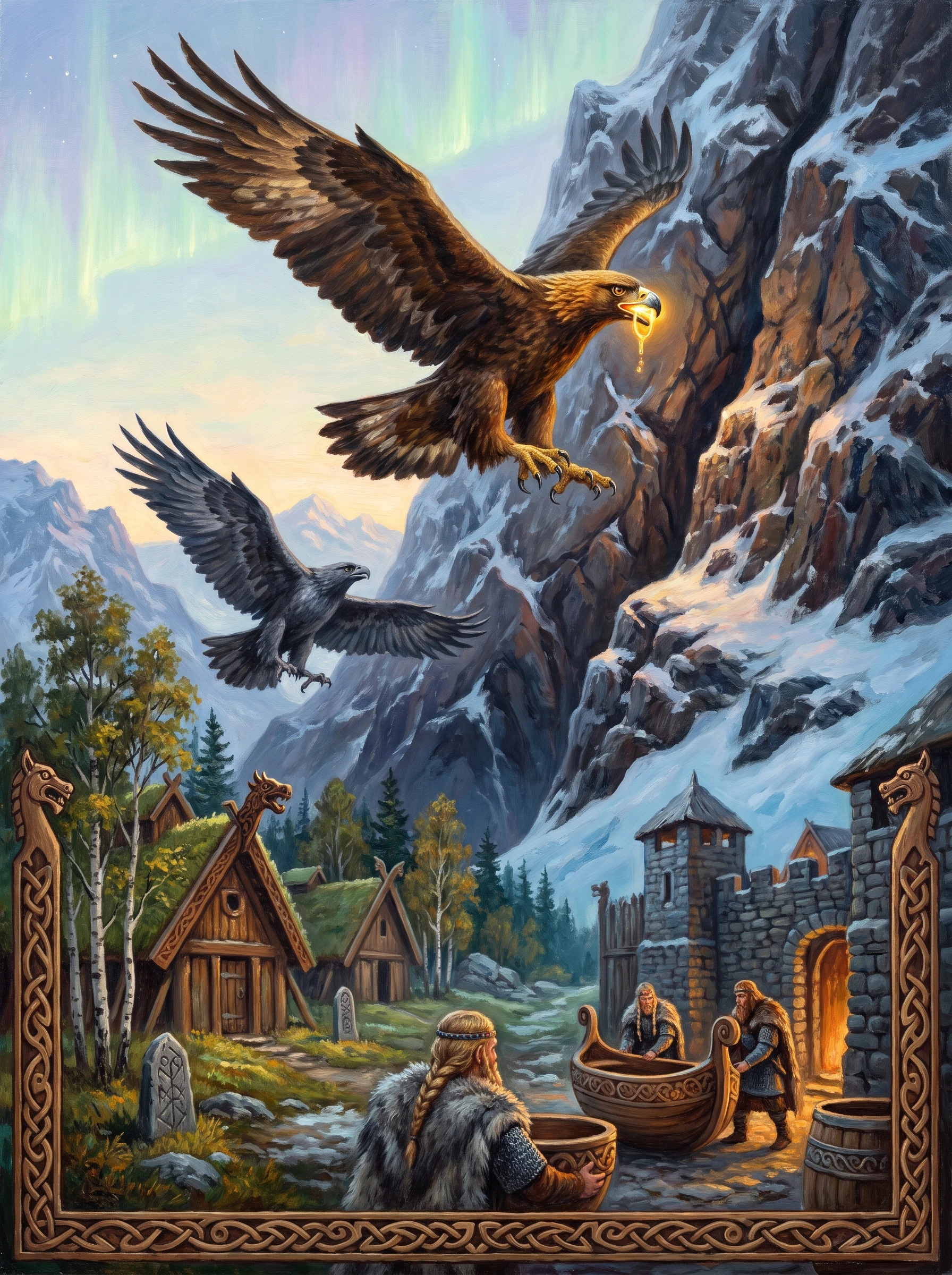
The Mead of Poetry
Poetry is a stolen drink. Kvasir, the wisest being ever made, is murdered by two dwarfs who brew mead from his blood; the mead passes to the giant Suttung, who locks it in a mountain under his daughter Gunnlod's guard. Odin — under his frankest alias, Bolverk, 'worker of evil' — mows a summer's hay, bores through the rock, wins three nights with the guardian, drains all three vessels in three draughts, and escapes as an eagle with the hoarder at his tail-feathers. What he spills on the way is the poetasters' share; what he saves is every true poem since.
The Treasures of the Gods
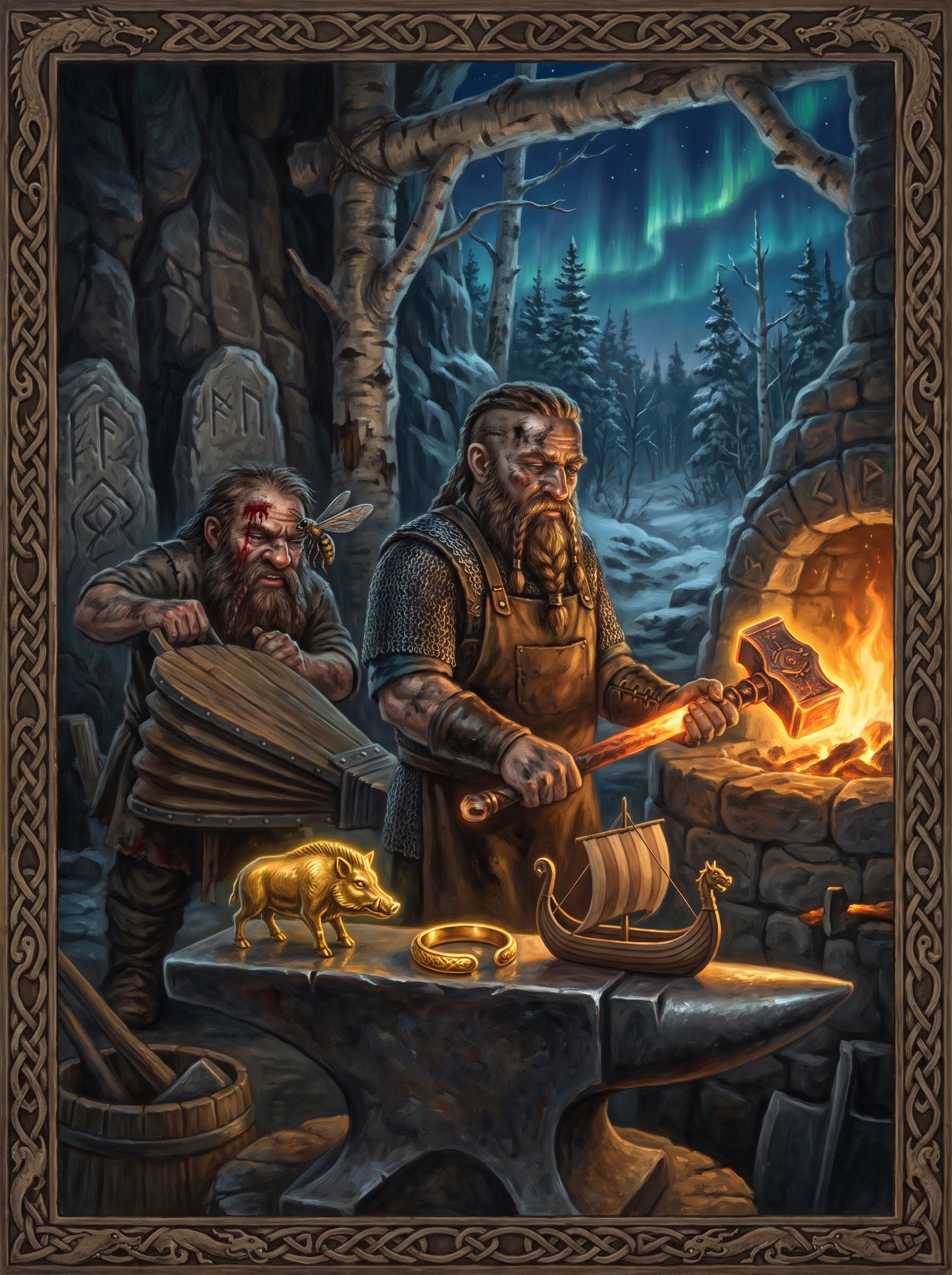
Loki shears the golden hair of Thor's wife Sif as a prank — and the forfeit furnishes Asgard. The sons of Ivaldi forge living gold hair, Odin's unerring spear Gungnir, and the folding ship Skidbladnir; then Loki wagers his head that the dwarf brothers Brokk and Sindri cannot do better. Stung three times by a suspicious fly, Brokk pumps the forge that yields the golden boar Gullinbursti, the self-multiplying ring Draupnir — and Mjolnir, the hammer that guards the world, its handle a hand's-breadth short because of a single lost heartbeat. Loki keeps his head on a technicality and gets his lips sewn shut for it.
The Death of Baldr
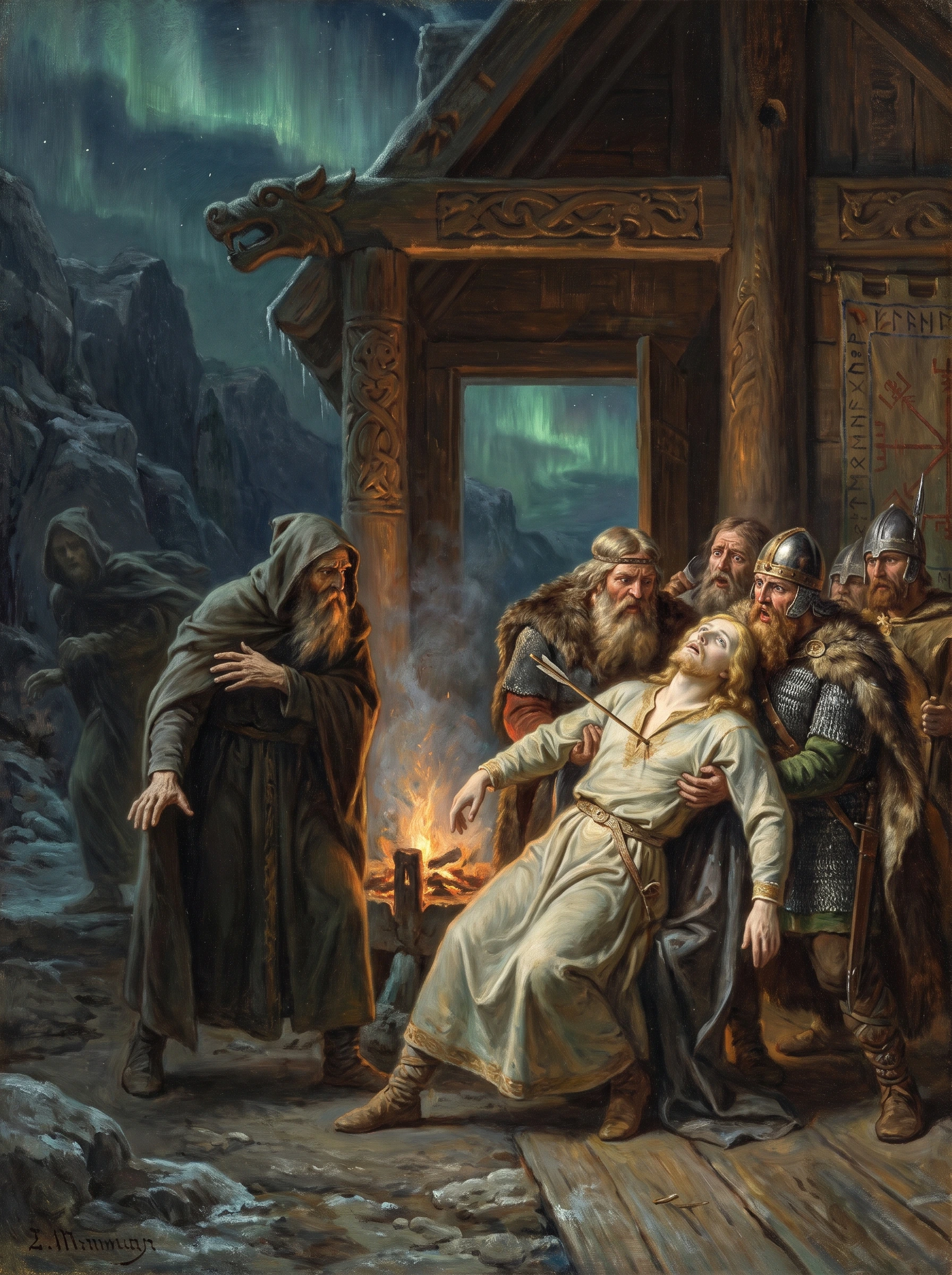
Baldr the beautiful, best-loved being in the nine worlds, dreams of his own death. Frigg exacts an oath from everything in existence not to harm him — everything except one shoot of mistletoe, too young to swear. Loki teases the secret from her, and puts the dart in the hand of Baldr's blind brother Hod, kindly guiding his aim. Hermod rides nine nights to the kingdom of the dead, and Hel names her price: if every thing in all the worlds weeps, Baldr goes home. Everything weeps — except one giantess in a cave, casting the single dry vote. Let Hel keep what she has.
The Punishment of Loki
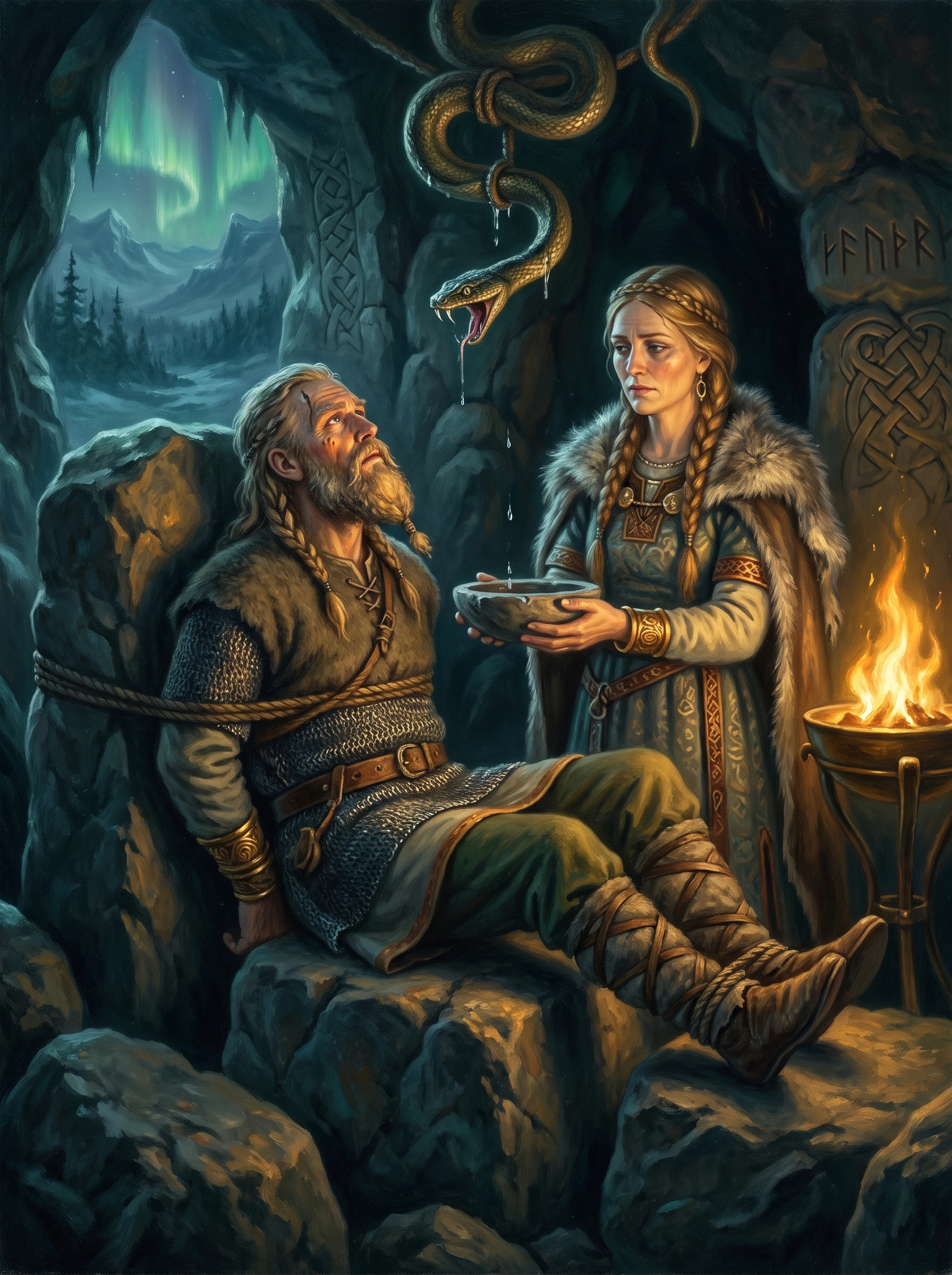
For Baldr there is no fine and no clever escape. Loki hides as a salmon below a waterfall, inventing the fishing net by his own fire — and is caught with it, leaping into Thor's closing fist. The gods' answer is vengeance, not justice: one son turned wolf against the other, and the trickster bound across three stones with his dead child's entrails while a serpent drips venom on his face until the end of the world. Only Sigyn stays, catching the poison in a bowl; when she turns to empty it, his convulsions shake the earth. Every bound thing in the nine worlds now waits for the same morning.
Ragnarok
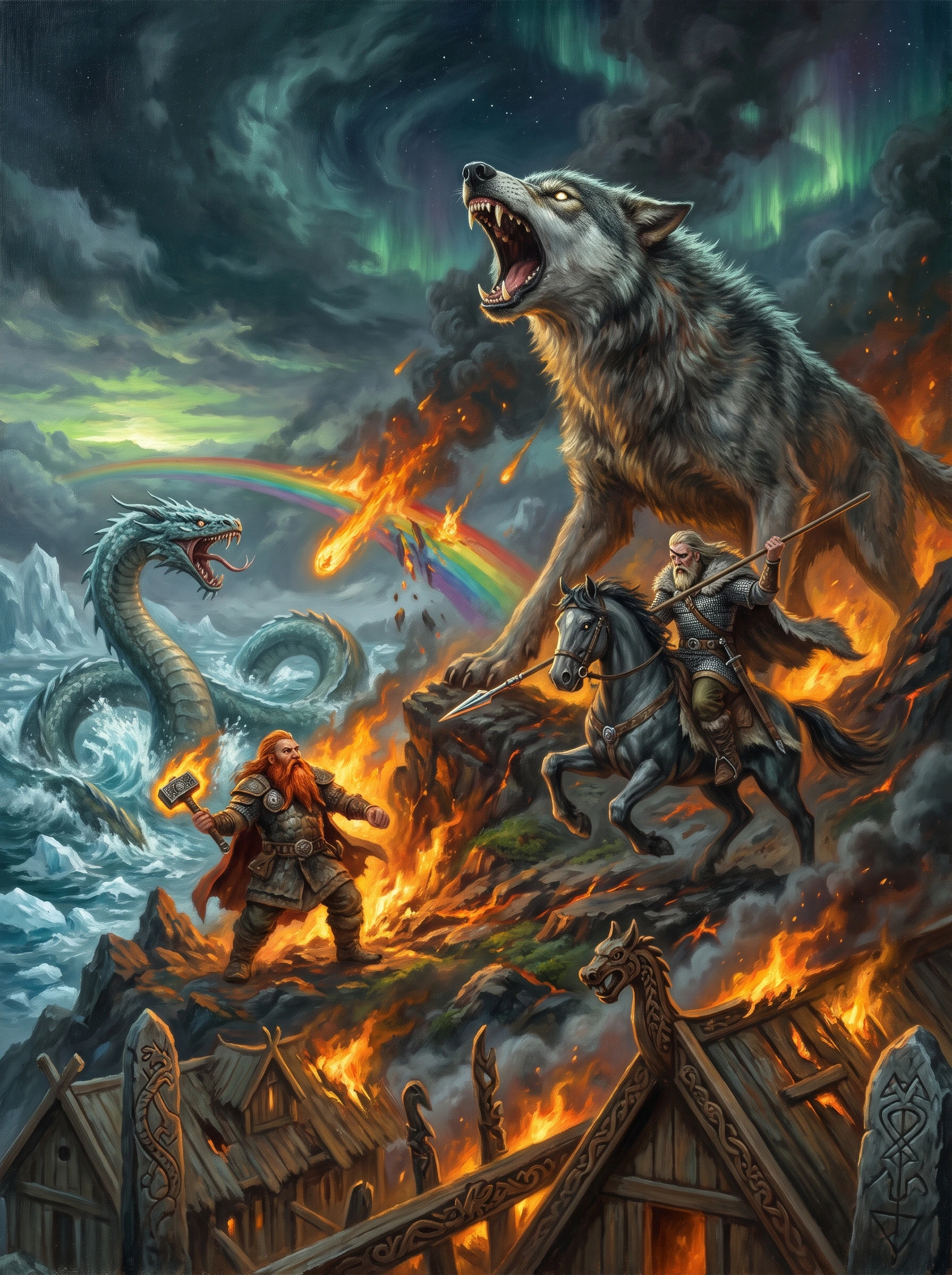
Three winters with no summer, and then every bond breaks: Fenrir gapes from earth to sky, the World Serpent floods ashore, a ship of dead men's nails puts to sea, and Loki steers the hosts of the dead against his blood-brother's family. Heimdall blows the horn, Valhalla's army marches out, and on the plain of Vigrid the long-scheduled duels arrive: the wolf swallows Odin, Thor kills the serpent and falls nine steps later, watchman and trickster end each other, and Surt burns the world into the sea. Then — alone among mythologies — the earth rises green again, Baldr walks home from the dead, and two hidden humans begin the world over.