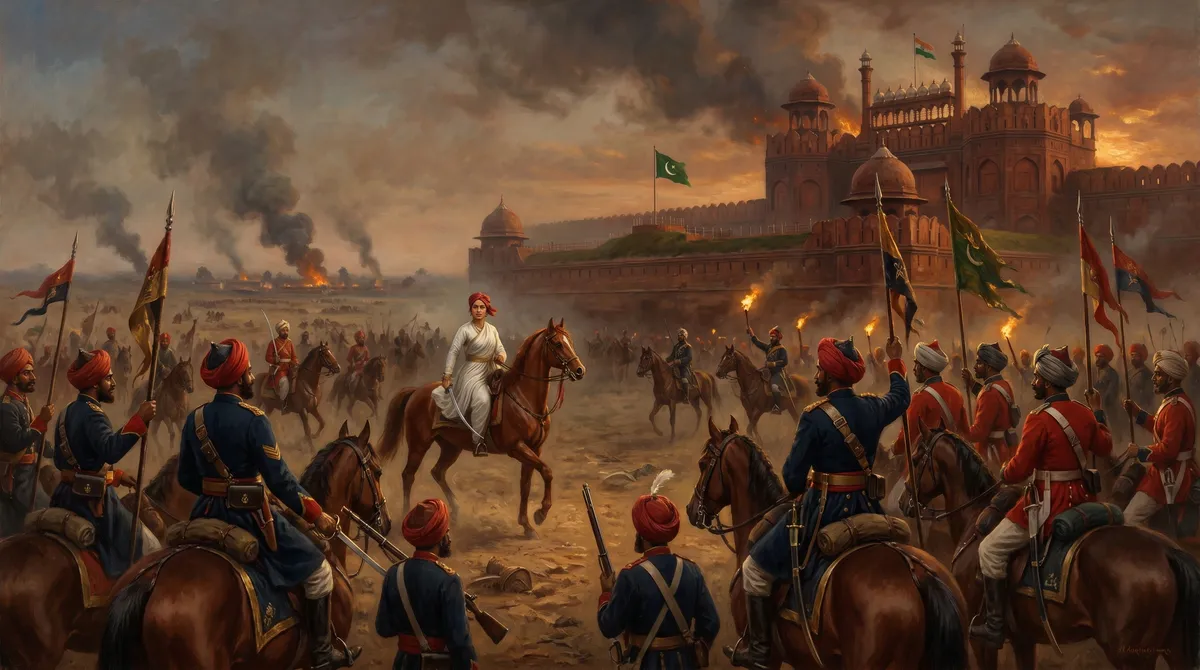
The Indian Mutiny of 1857
11 Chapters · The Great Revolt
Eleven chapters on the Great Revolt of 1857 — the uprising many call India's First War of Independence — from the greased cartridges at Barrackpore to the Rani's last charge at Gwalior. Adapted from the public-domain accounts of A.R. Hope Moncrieff and G.B. Malleson, weighed against modern Indian scholarship, and told from the Indian perspective.
A narrated documentary on the spark of the revolt — the greased-cartridge crisis at Barrackpore — adapted from Chapter 1.
Short on Time?
The Great Revolt of 1857
The Spark
3 chapters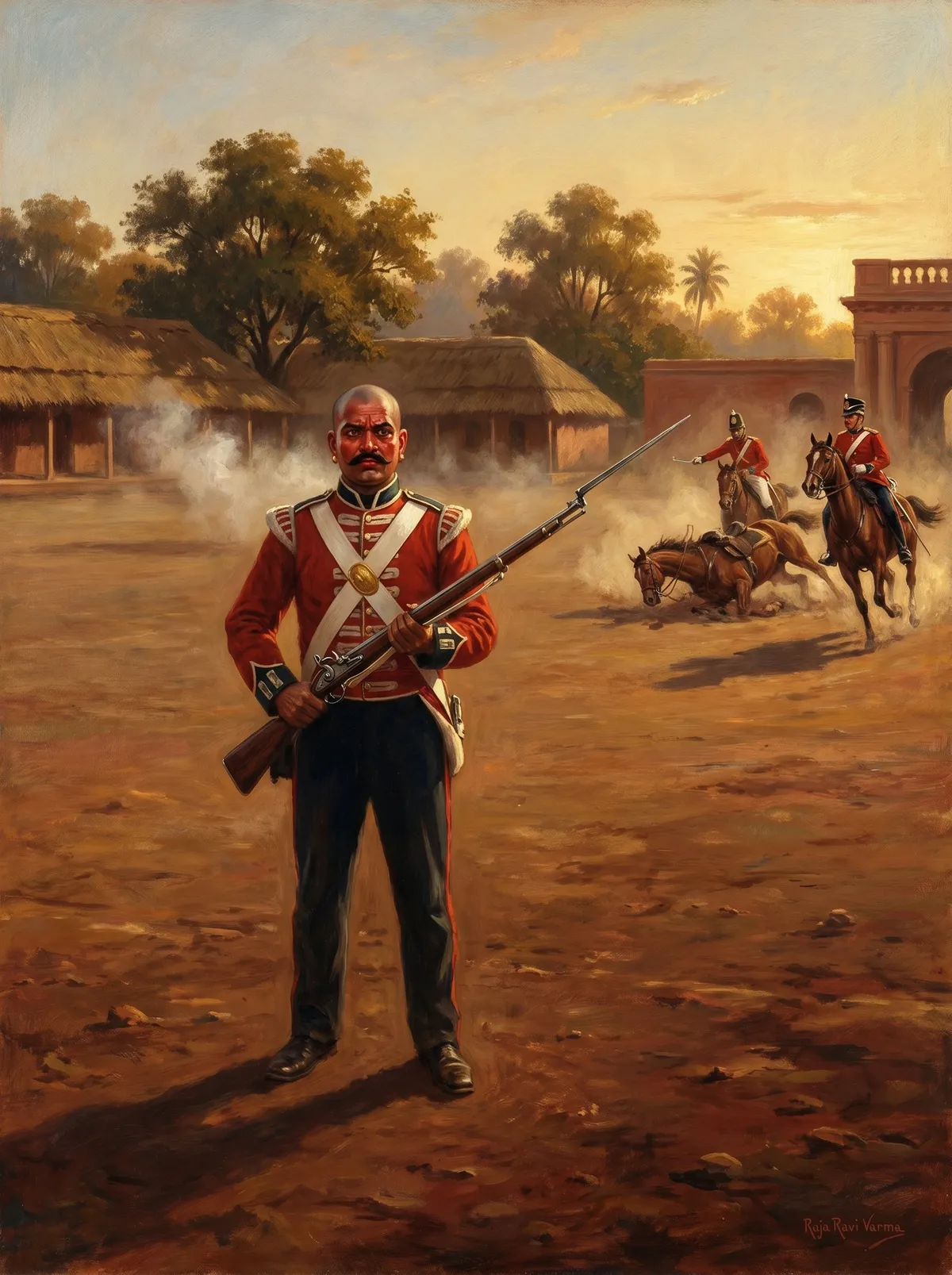
The Cartridge and the Spark
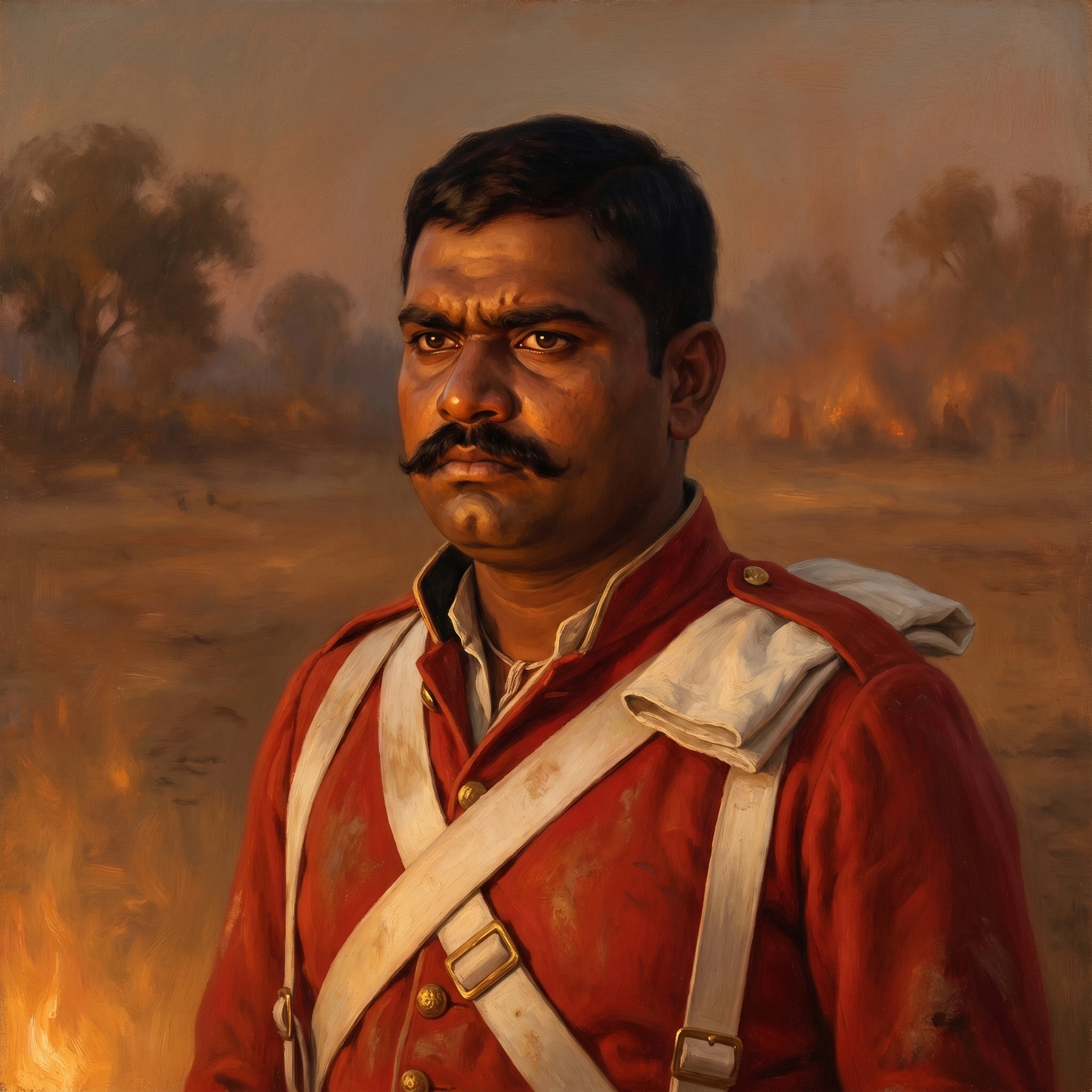
The mysterious chupattis passing hand to hand, village to village. The greased Enfield cartridge in every sepoy's hand. Mangal Pandey, bhang-drunk and resolute, walking alone onto a Sunday parade-ground at Barrackpore in March 1857 — the first martyr of the war that would follow.
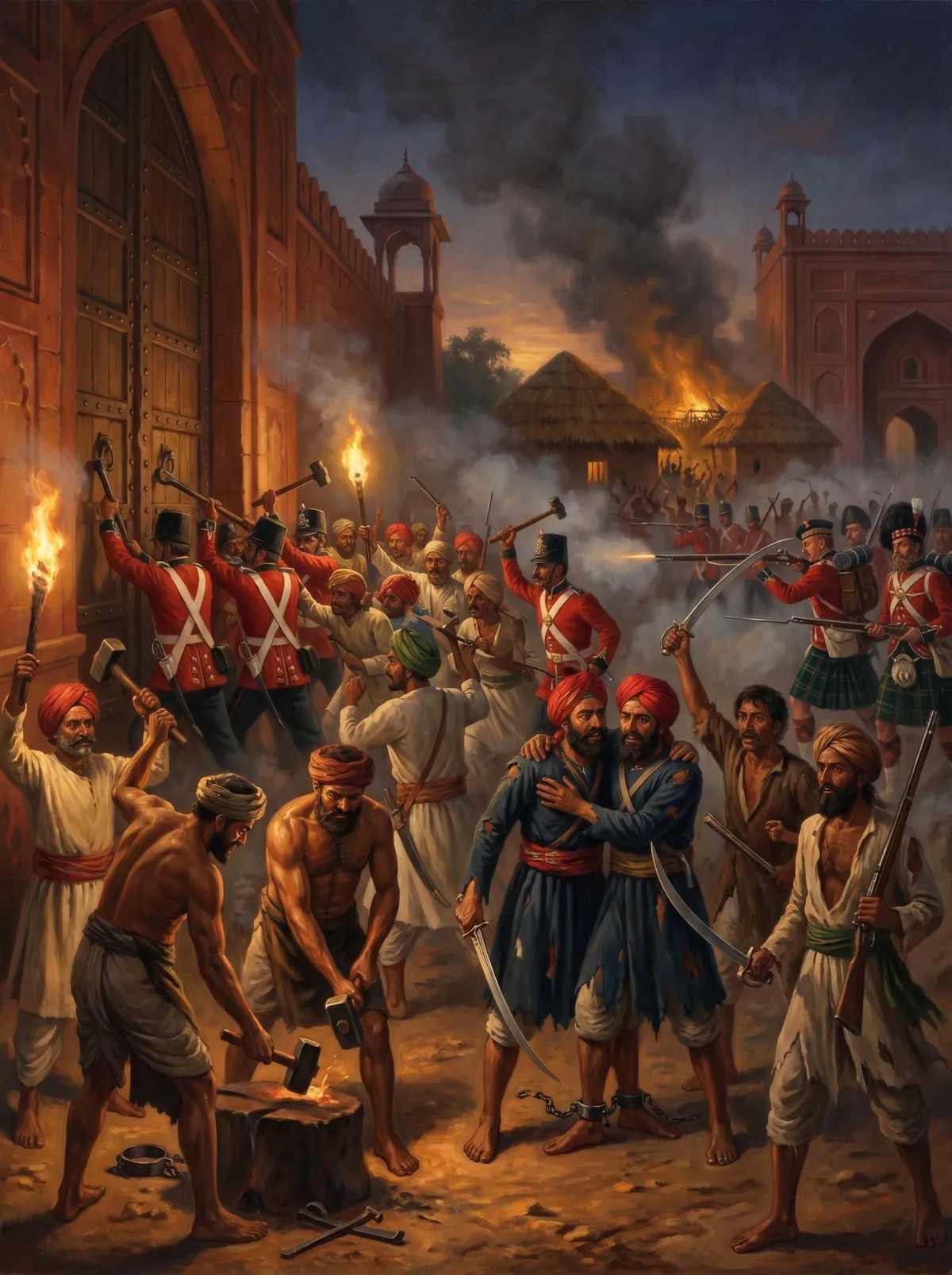
The Meerut Rising
Eighty-five sowars in chains on a Saturday parade-ground. On Sunday evening as the church bells rang, the bazaar broke loose, the jail was opened, and three regiments rode for Delhi through the night.
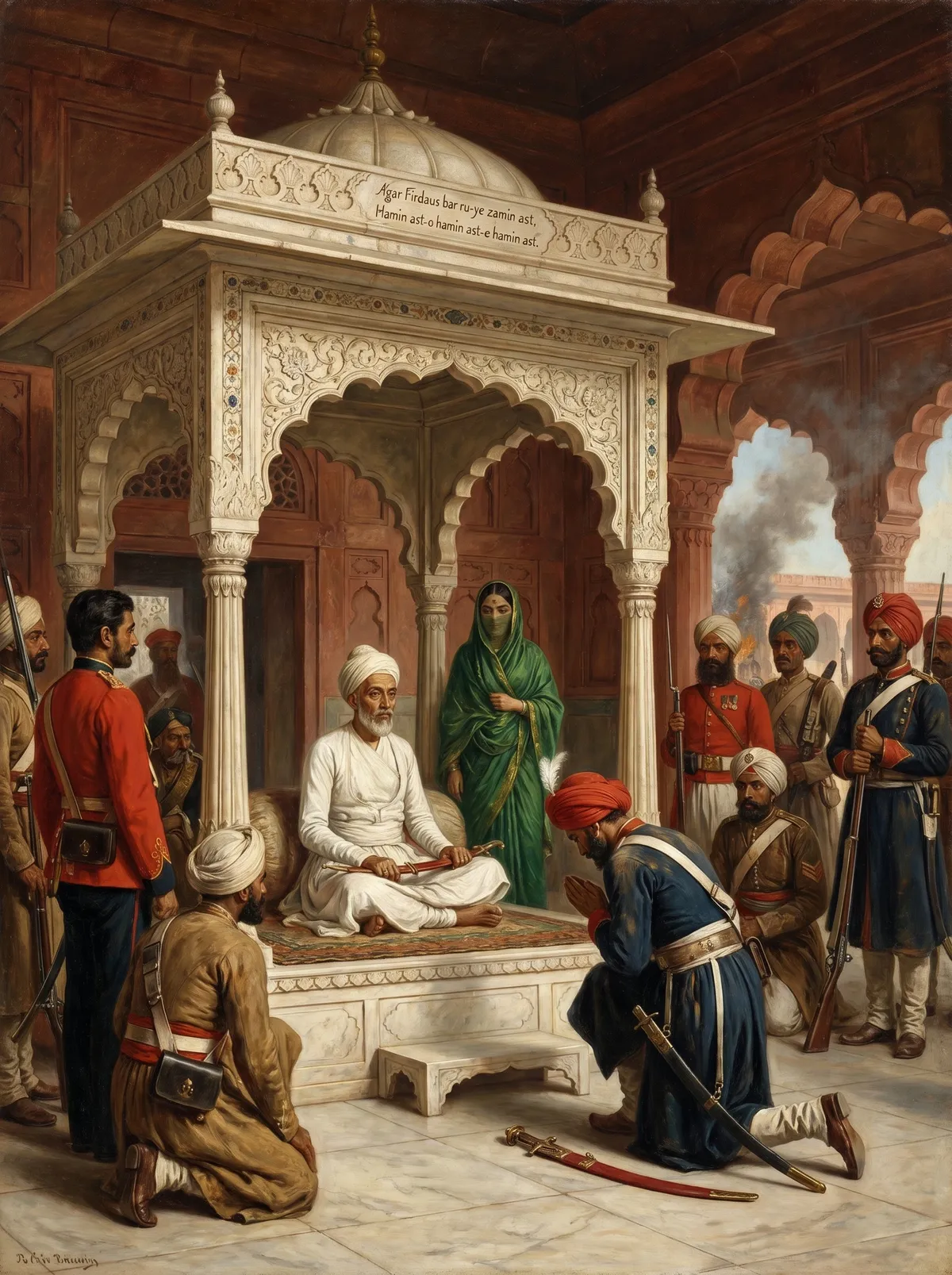
The Throne of Delhi
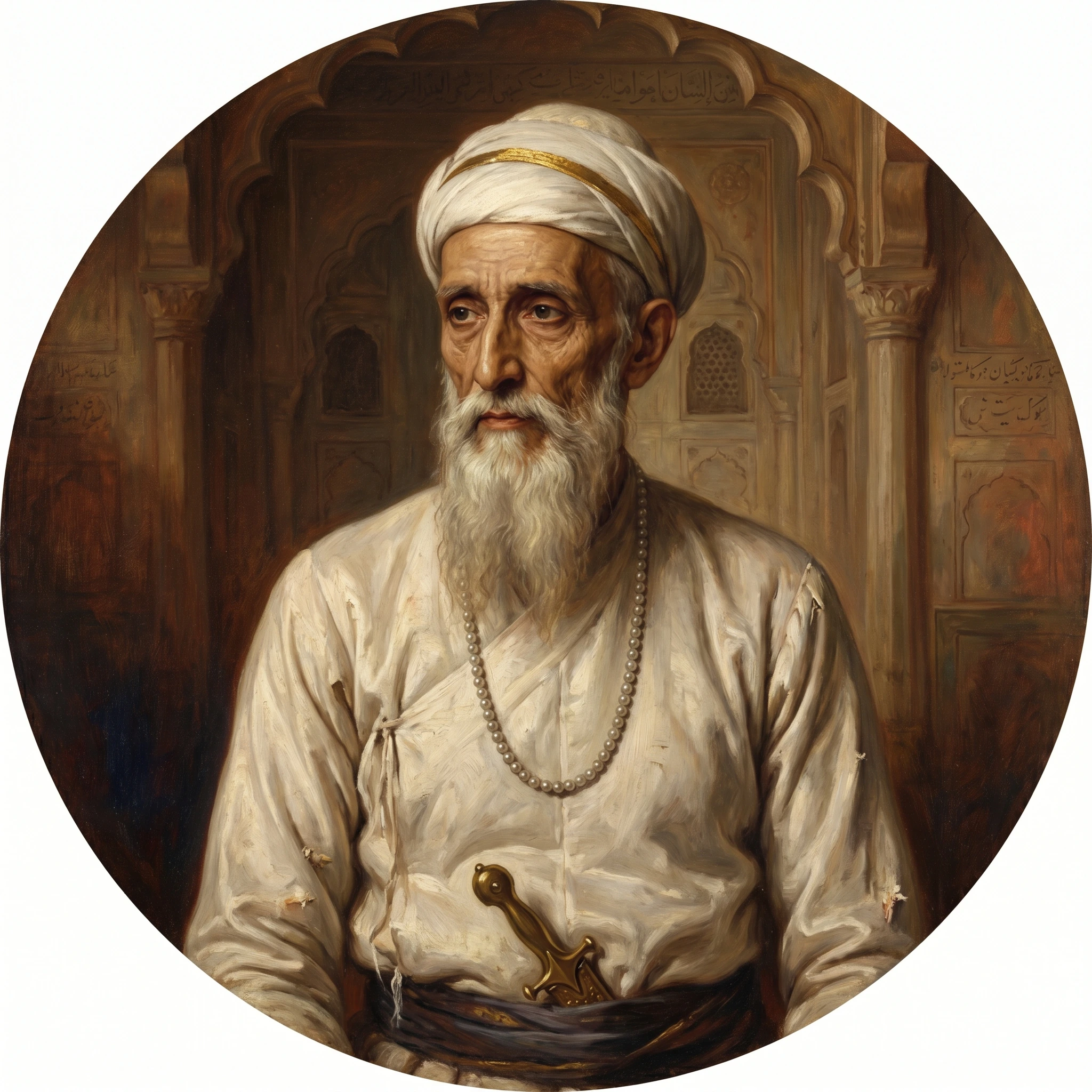
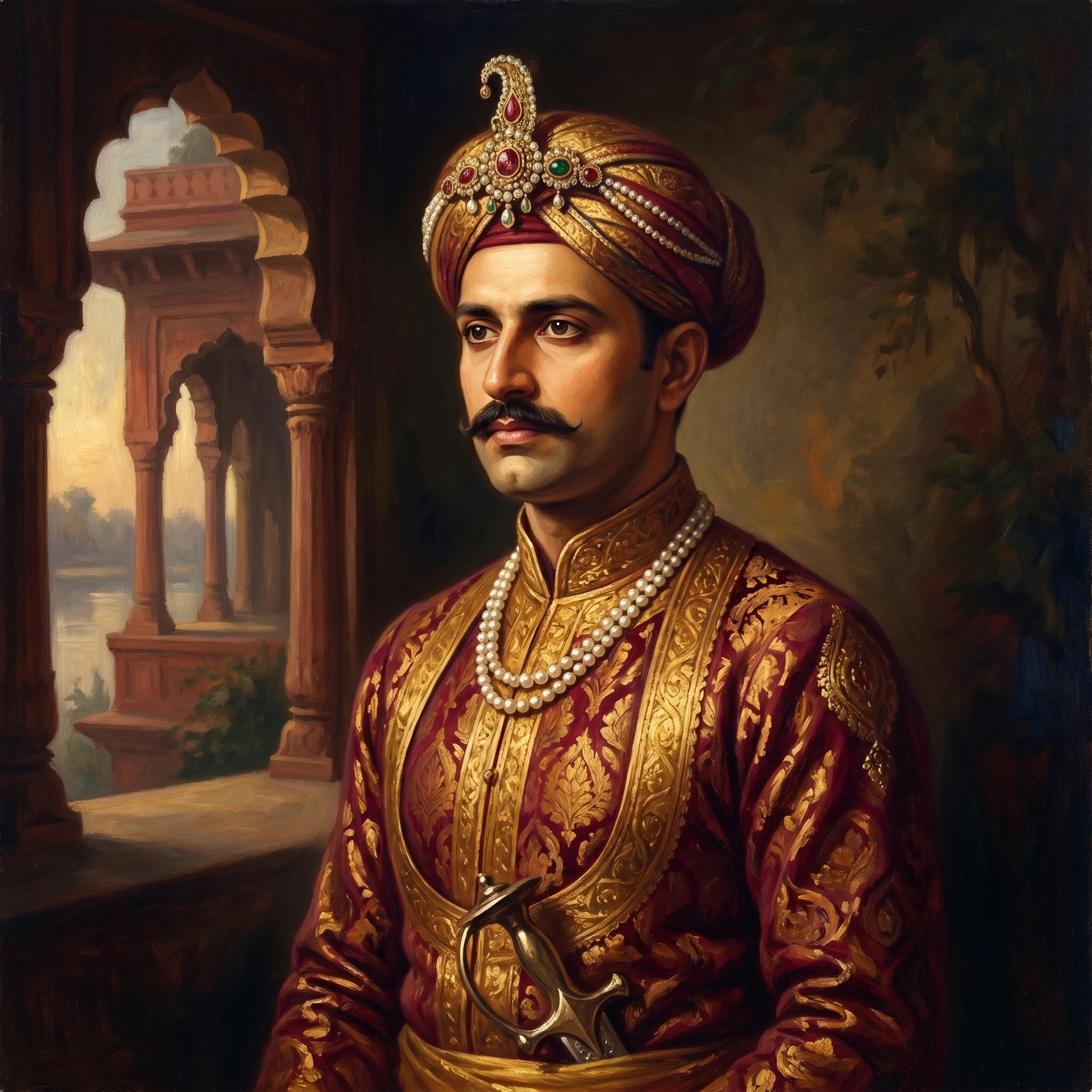
Eighty-two-year-old Bahadur Shah Zafar, last Mughal of India, looks down from his marble window. The sowars from Meerut ask for nothing but his name. He gives it. In one hour a forgotten emperor becomes the symbol of a war.
The Sieges
2 chapters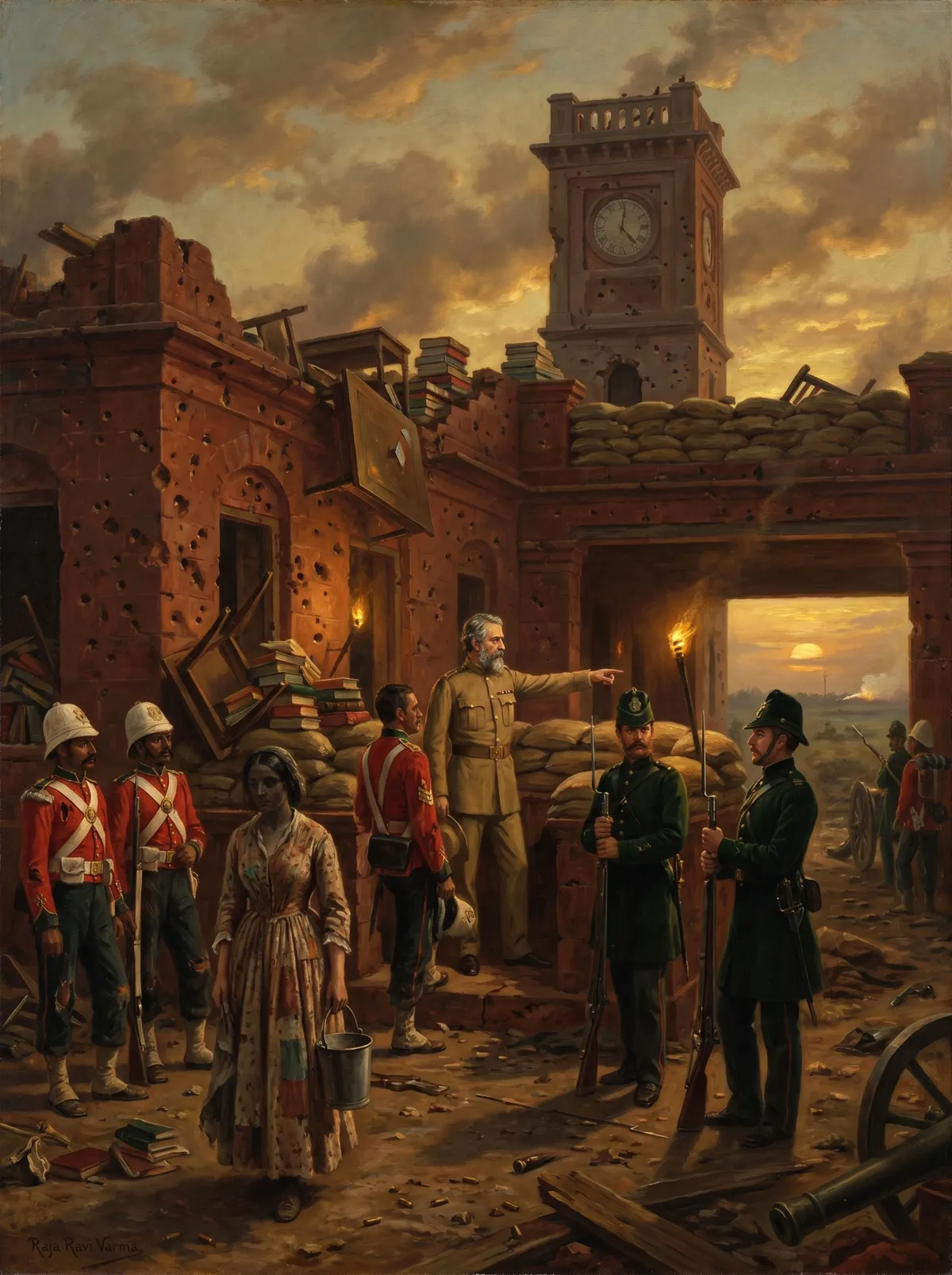
The Residency at Lucknow
Sir Henry Lawrence, the most loved Englishman in India, defending a small compound on a knoll above the Goomtee with 1,720 souls against 60,000 rebels. The eighty-seven-day siege that became one of the great holding actions of the nineteenth century.
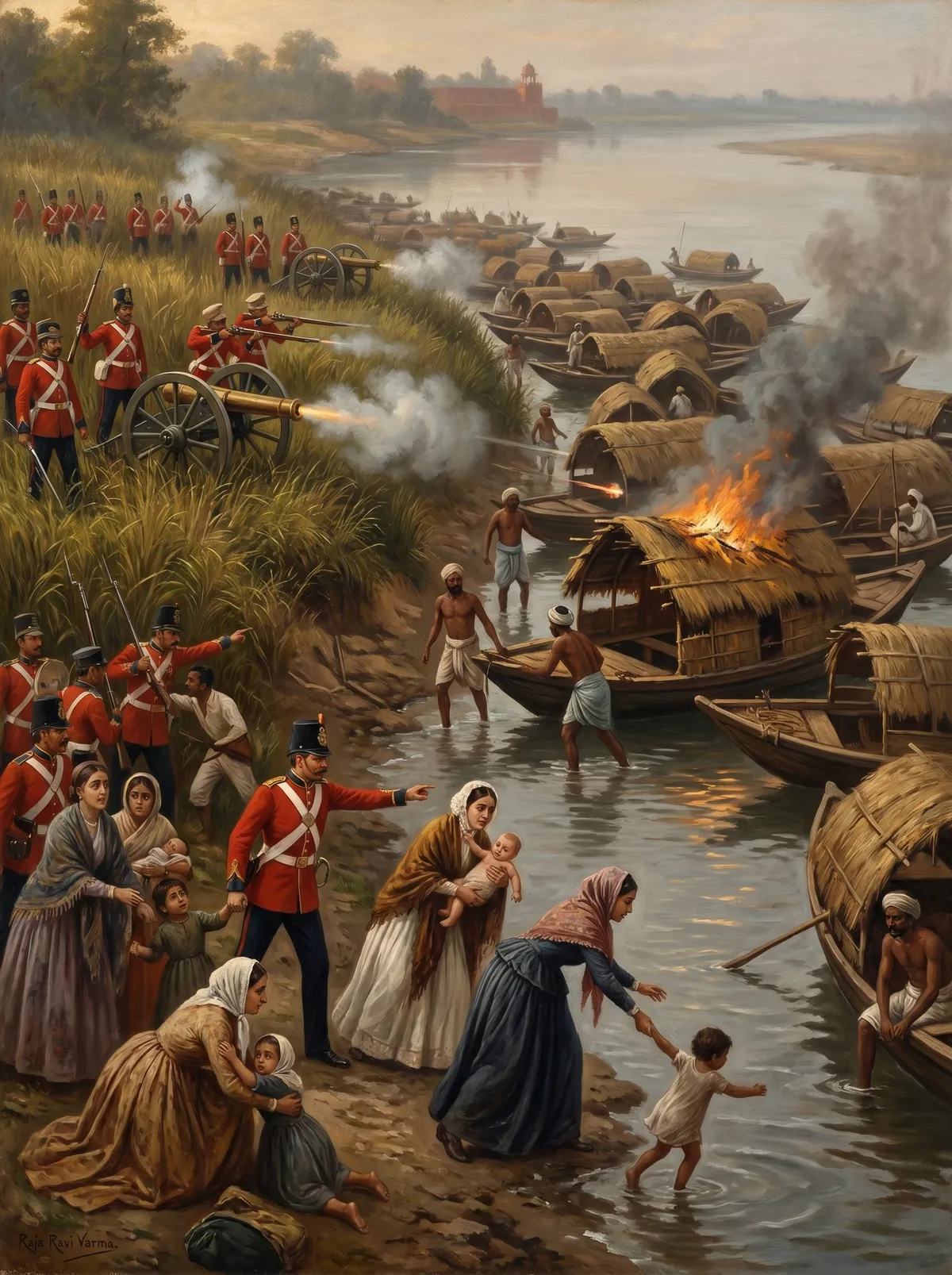
Kanpur — The Well at Bibighar
Nana Sahib's grievance, the entrenchment at Wheeler's barracks, the treaty at Sati Chaura Ghat, and the killing at the Bibighar — the act for which there could be no return, and that broke whatever restraint the British still owned.
The Long Year
3 chapters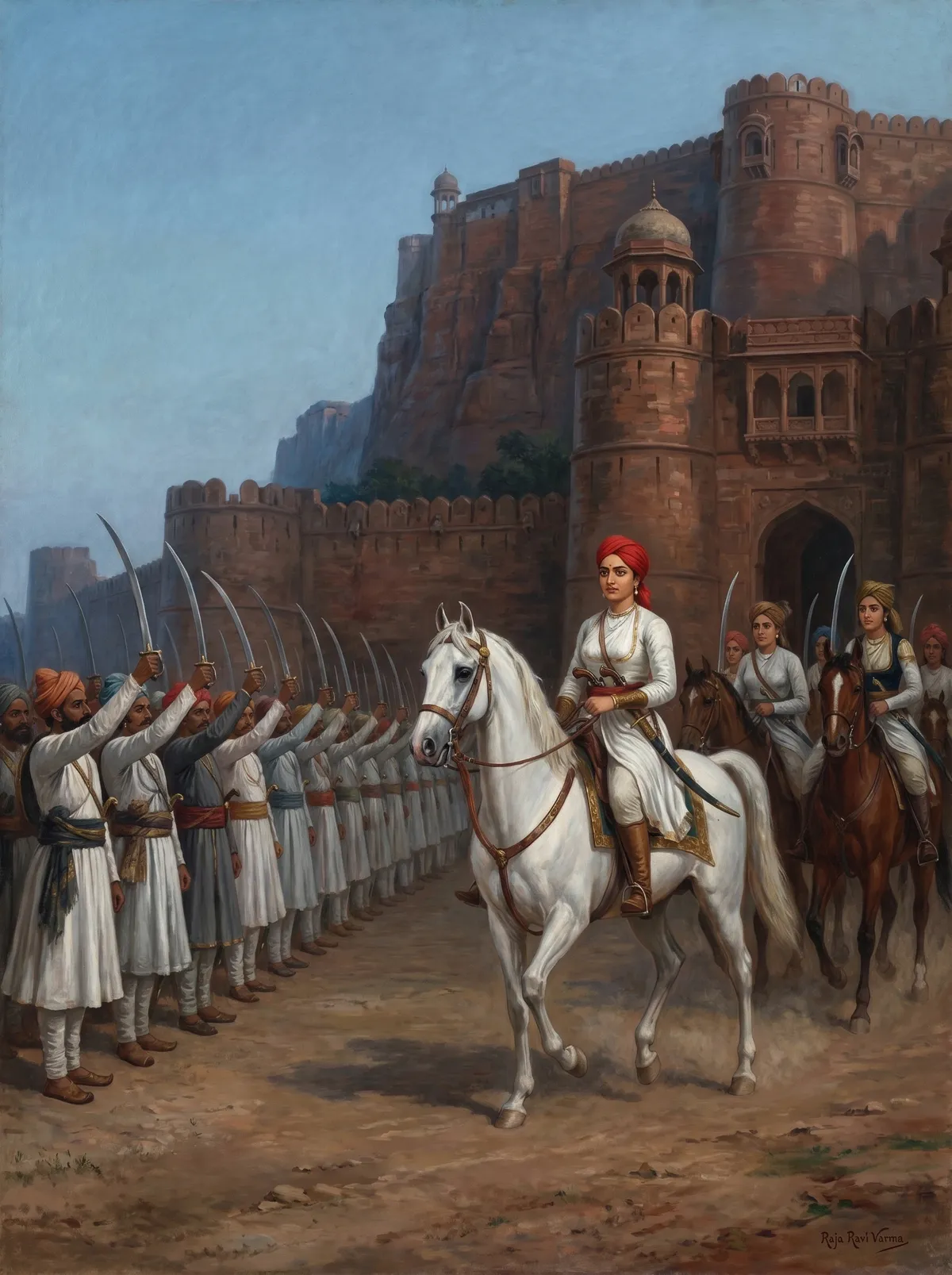
The Rani of Jhansi
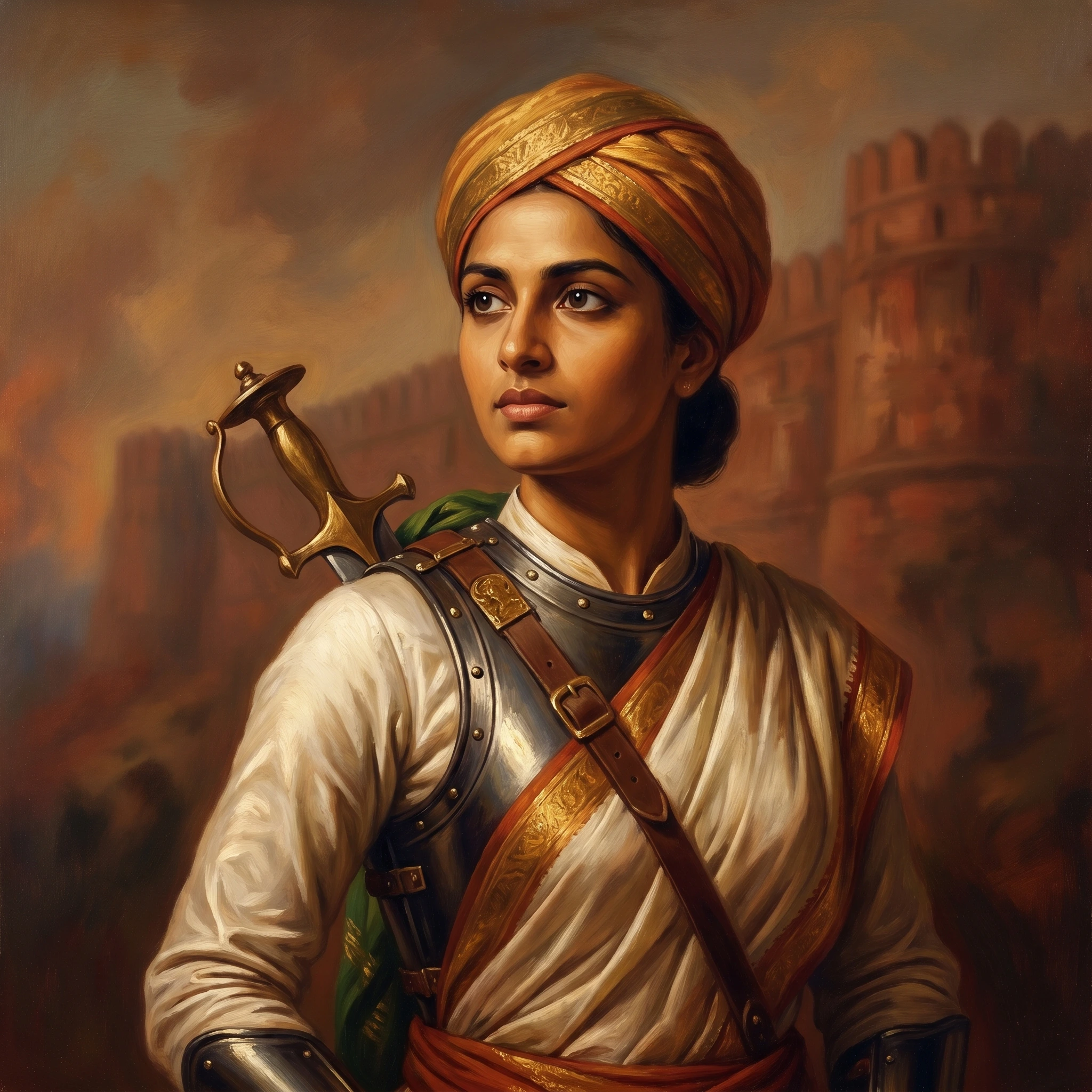
Manikarnika of Bithoor, widowed and dispossessed by Dalhousie's Doctrine of Lapse, becomes the Rani Lakshmibai. Twenty-nine years old, four sabres at her belt, twelve thousand troops at her command, ten months of sovereign rule from her rock-built citadel at Jhansi.
The Ridge of Delhi
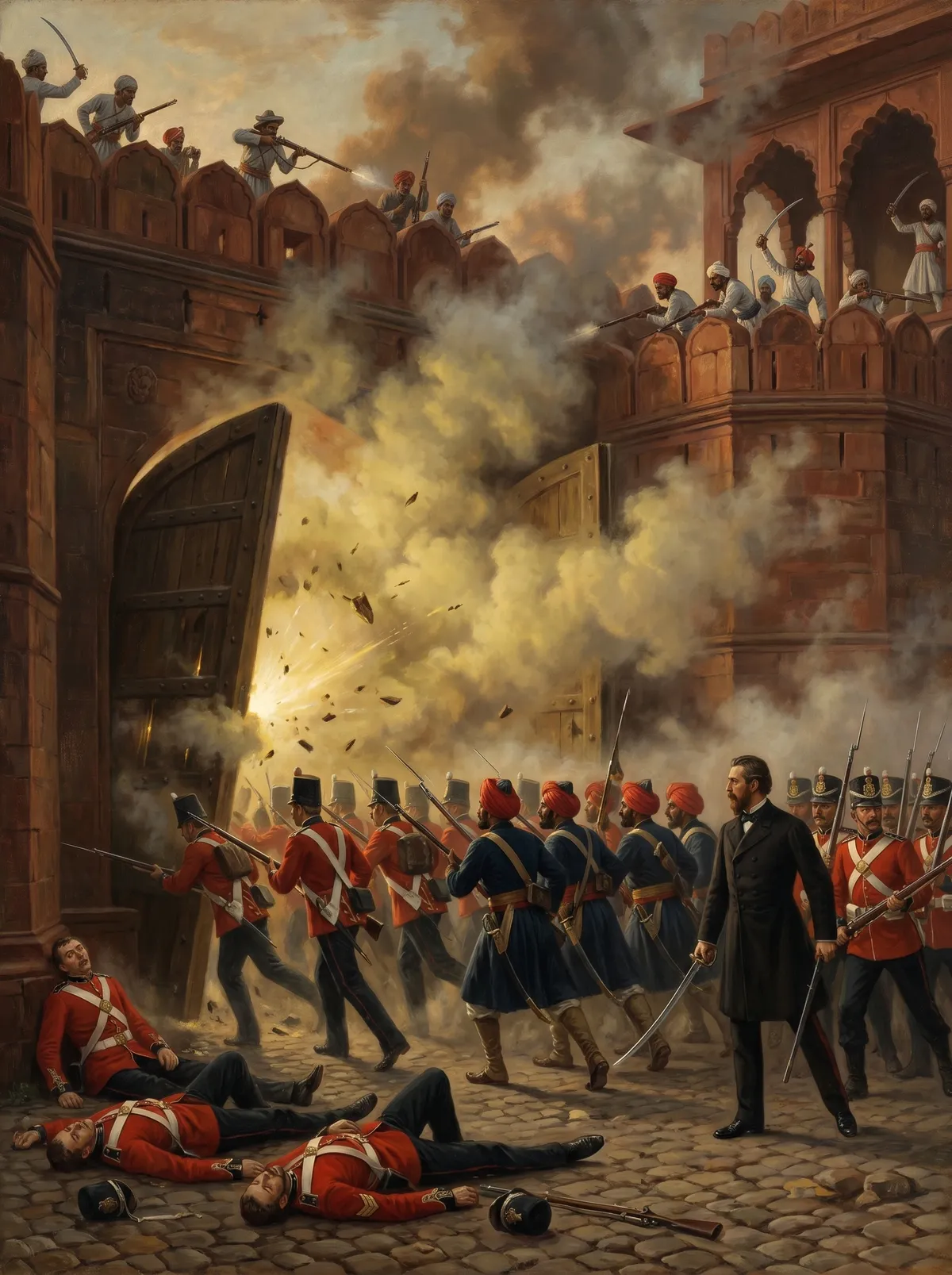
Ninety-eight days on a razorback hill above the Kashmir Gate. The siege train at last arrives. Nicholson, six feet four and burning with intent, leads the assault and dies of his wound. The Emperor surrenders at Humayun's Tomb; his sons are shot in the road at the Khooni Darwaza.
The Begum of Oudh
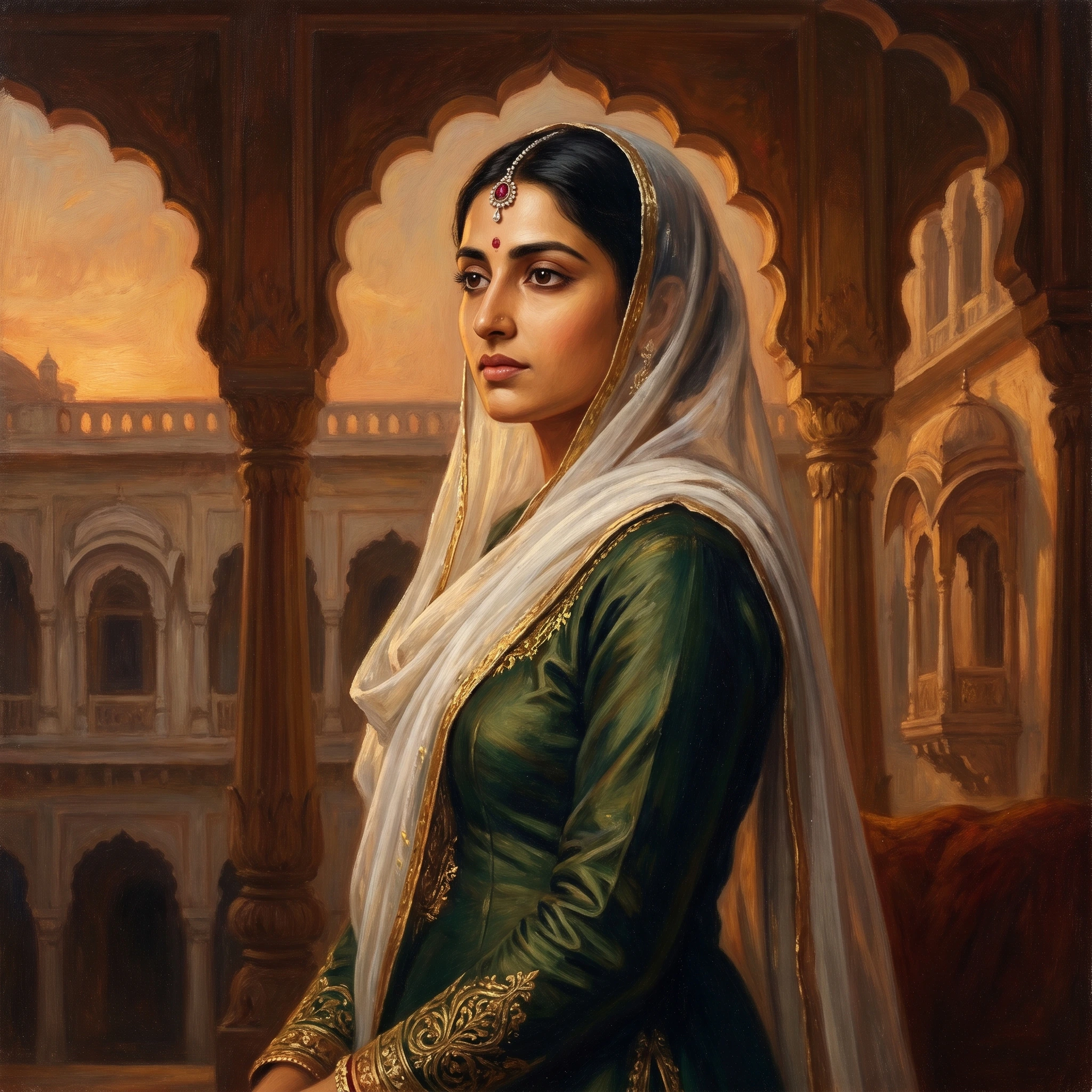
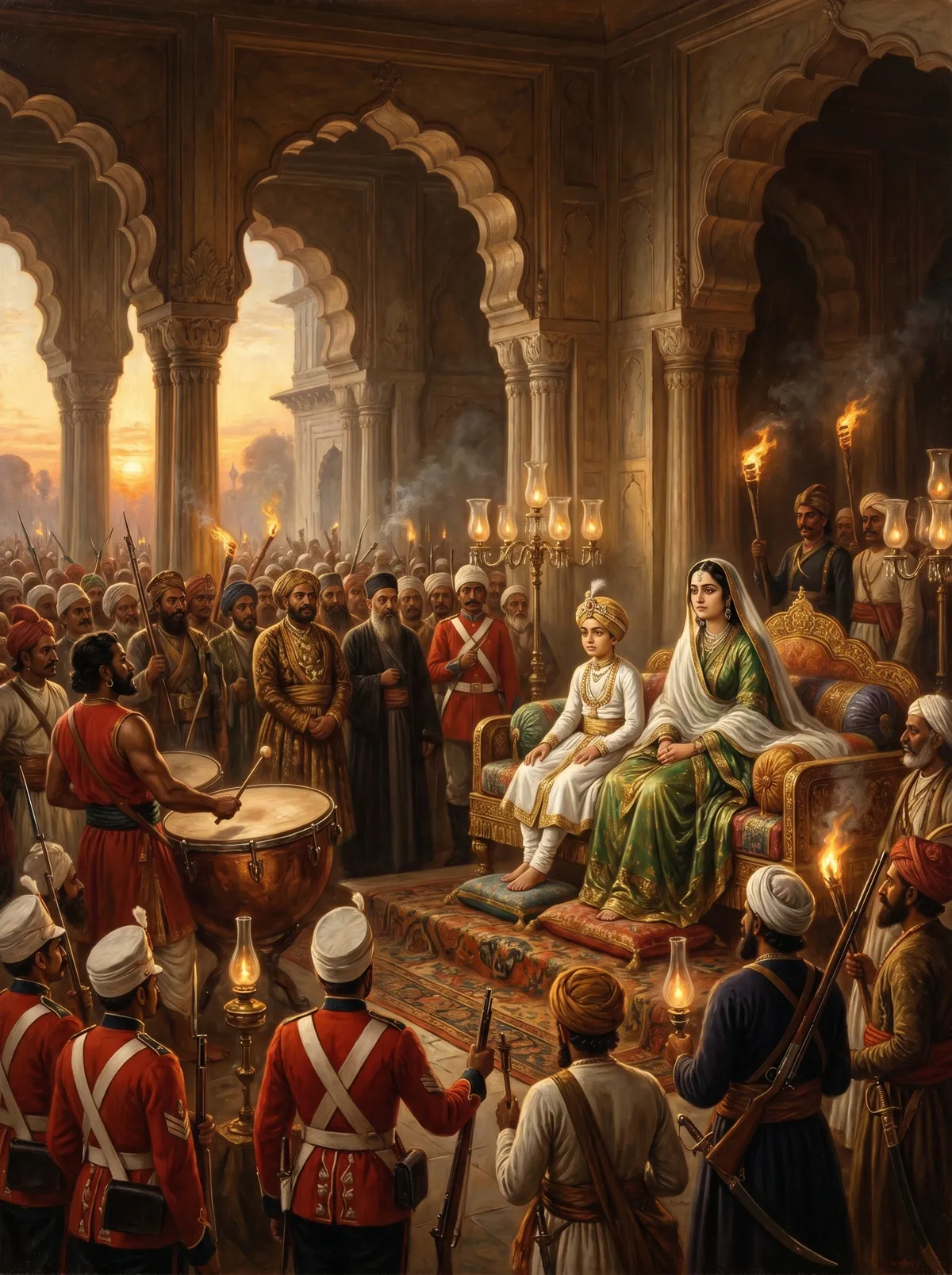
Begum Hazrat Mahal — former dancing-girl, now regent — crowns her eleven-year-old son Birjis Qadr king of Oudh and rules from the Chattar Manzil for ten months. She refuses three offers of British pardon. She walks out the back gate of Lucknow into exile in Nepal and never returns.
The Last Stand
3 chapters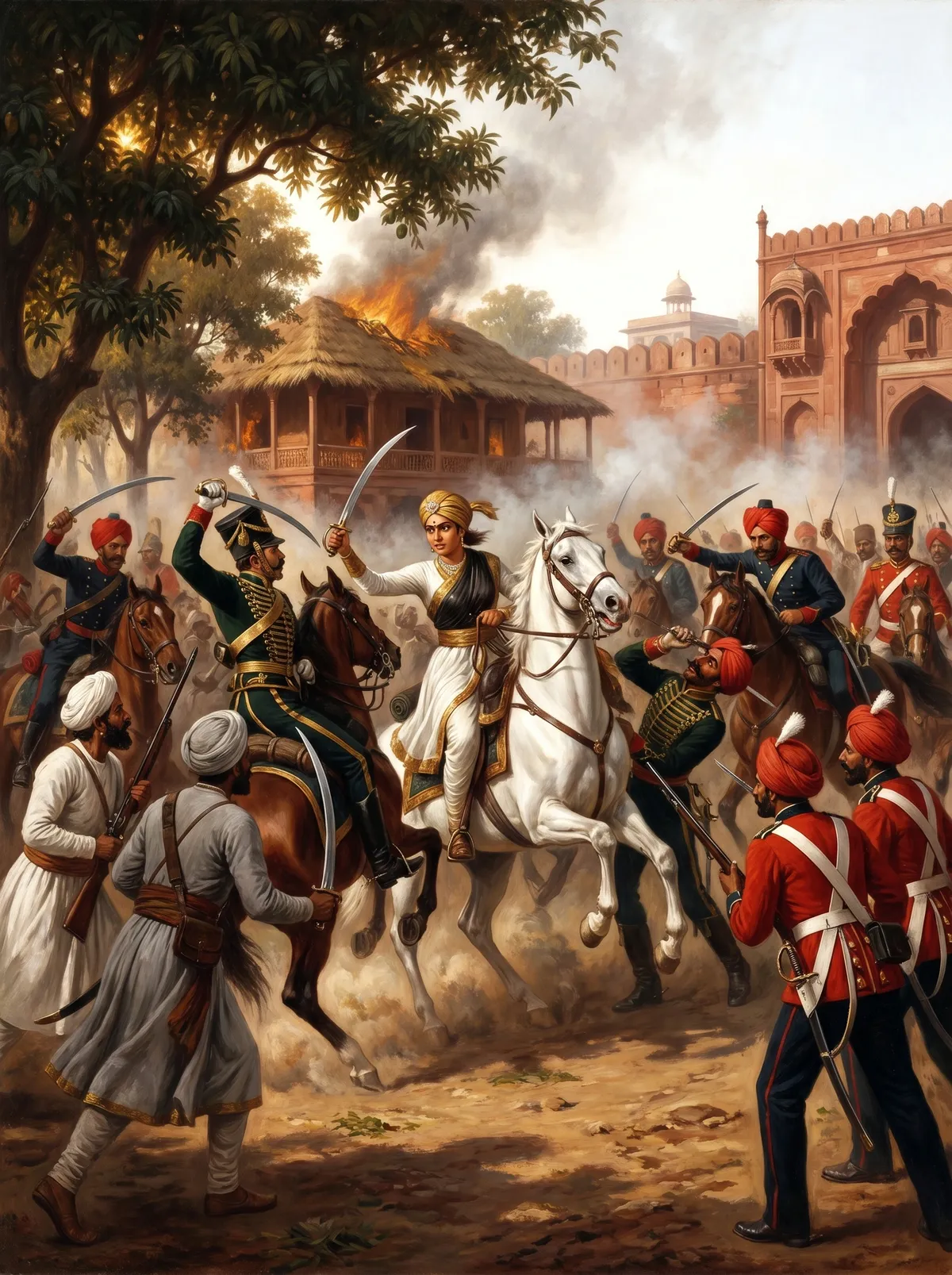
The Last Charge at Gwalior
The Rani rides out of burning Jhansi at midnight with her son tied to her back. She joins Tantia at Kalpi, takes the great fortress of Gwalior without a shot, crowns Rao Sahib Peshwa — and on June 18, 1858, at Kotah-ki-Serai, charges a regiment of Hussars sword-in-each-hand and dies fighting at twenty-nine.
The Hunting of Tantia Tope
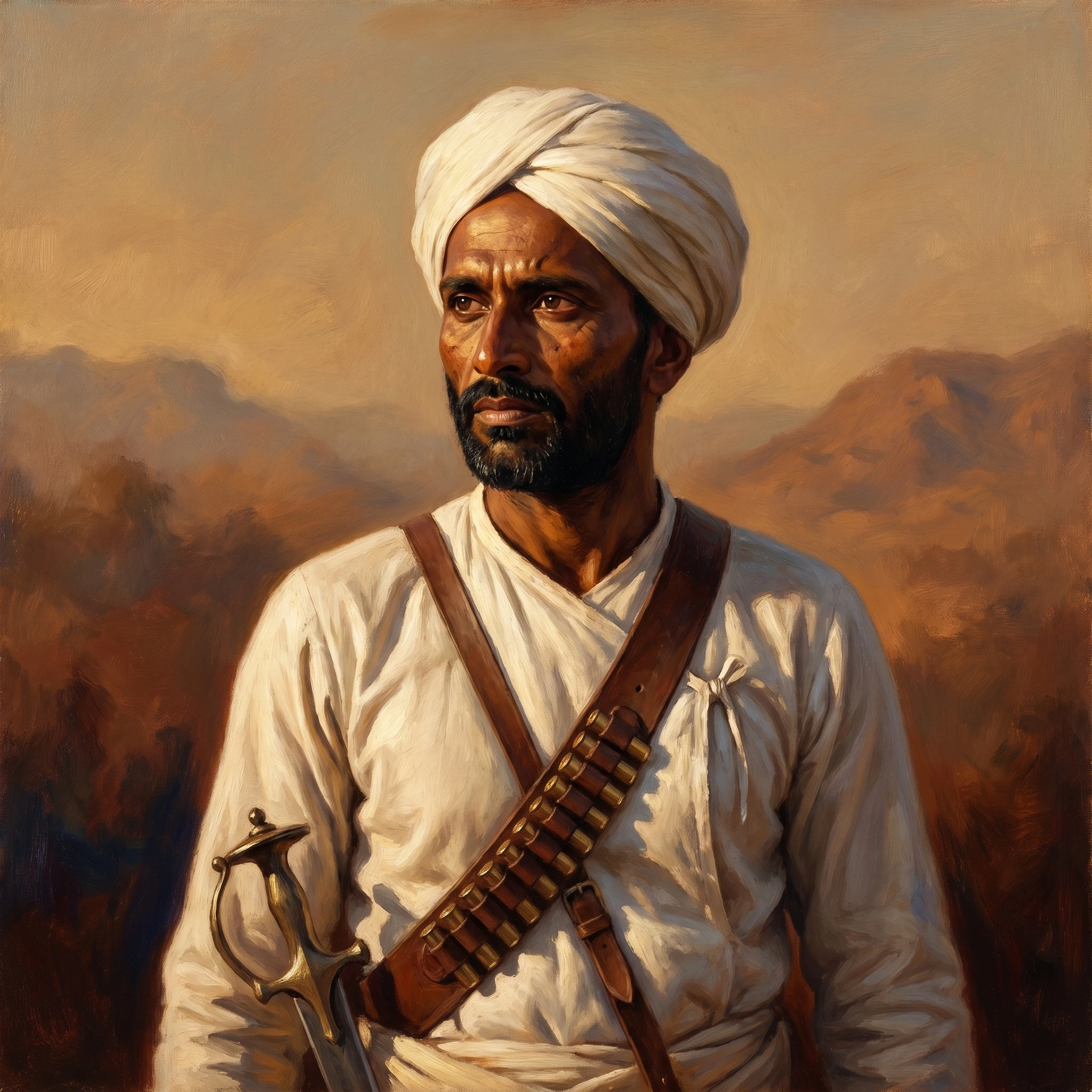
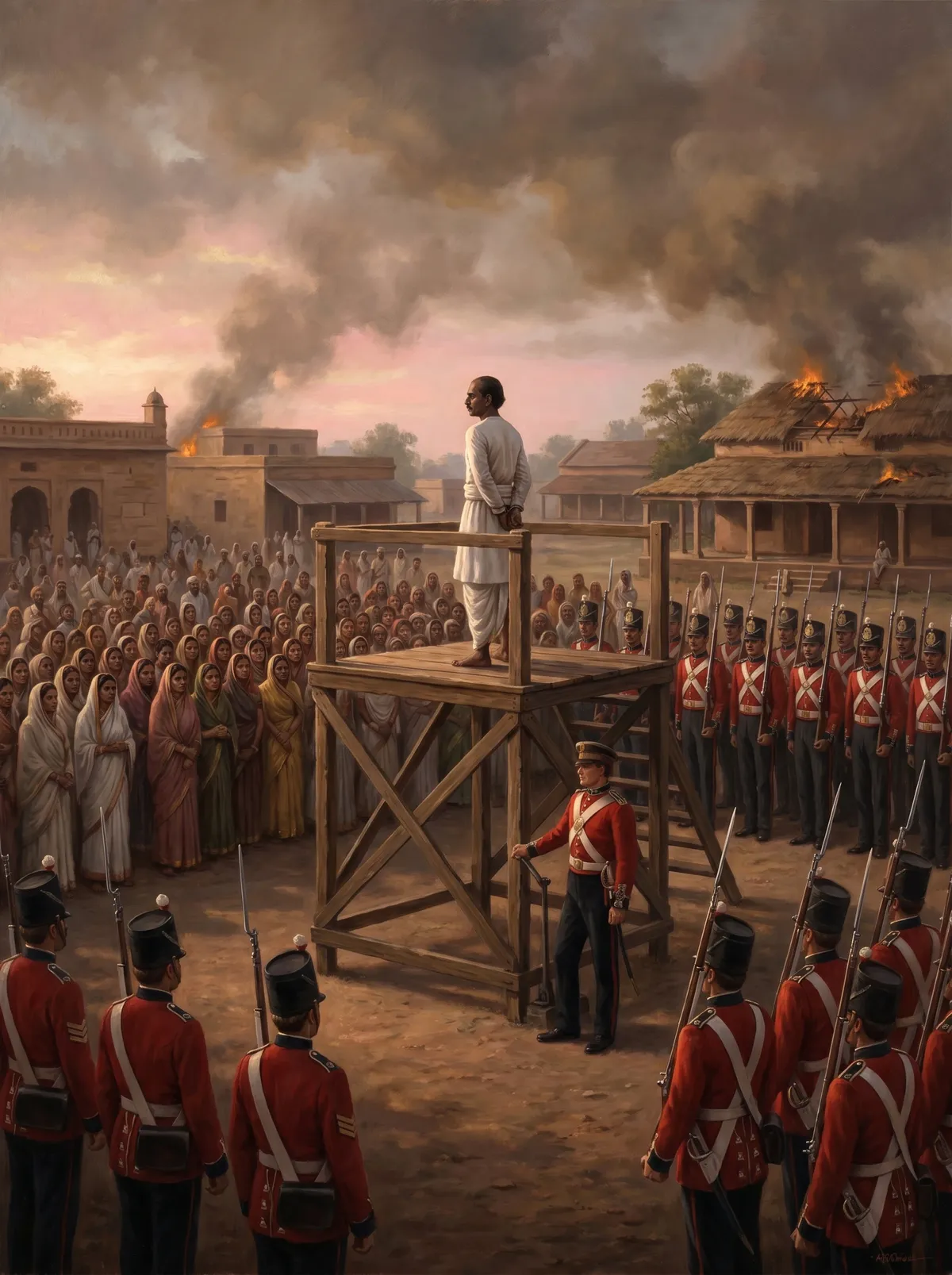
For nine months and nineteen days after the Rani's death, the last Maratha general of the war keeps the column moving — three thousand kilometres, twenty-seven actions, six British columns in pursuit and none catching him. Betrayed in his sleep in April 1859 by a chief he had trusted. Hanged at Sipri before a silent crowd.
The Crown Takes the Throne
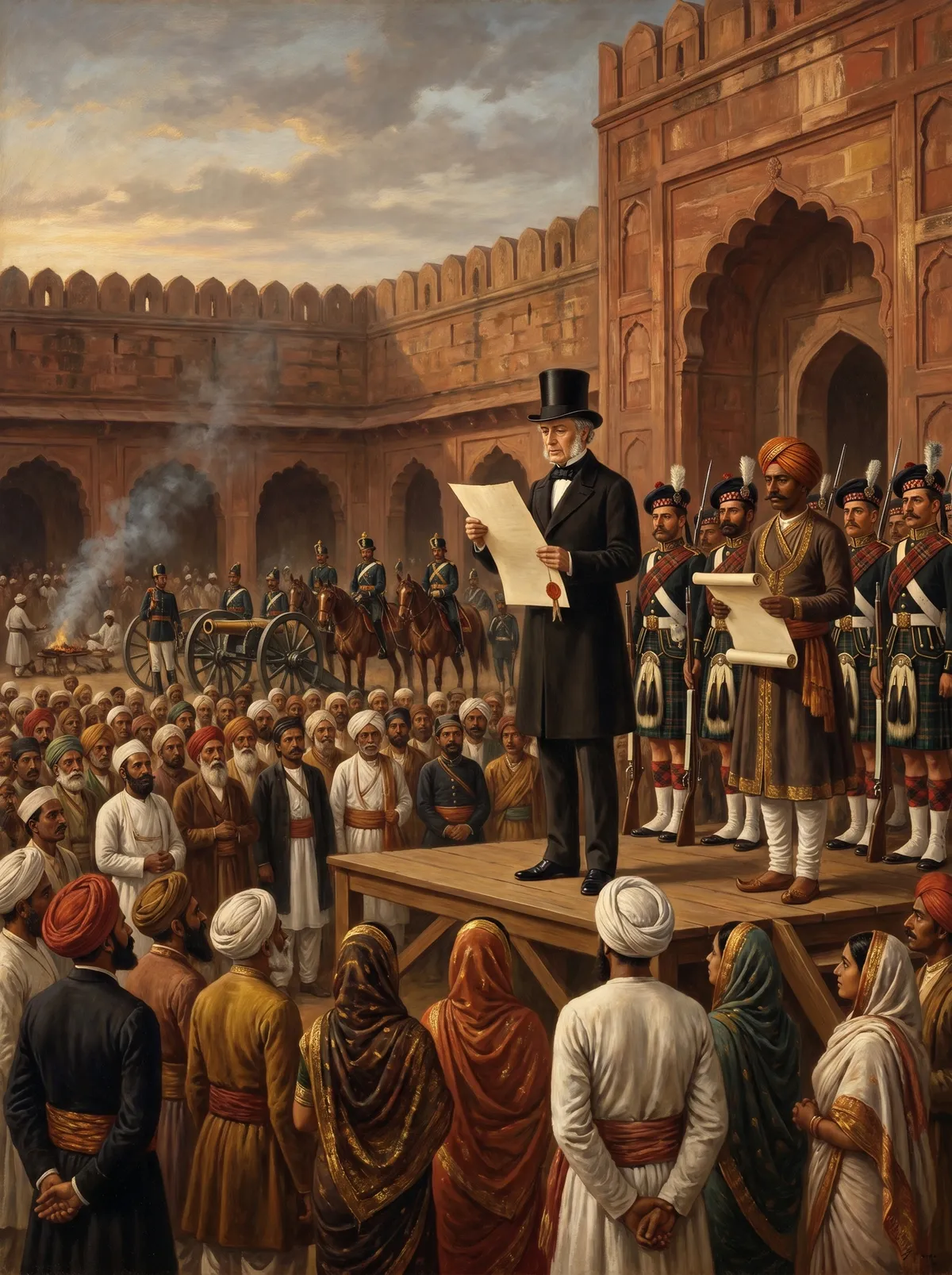
November 1, 1858: the Queen's proclamation at Allahabad ends the East India Company and the Doctrine of Lapse forever. Bahadur Shah dies in Rangoon, his grave deliberately unmarked. Ninety years later, at the same Red Fort, a Kashmiri Brahmin in a khadi cap raises a different flag.